Re-Examining the Marcos-Trump Trade Deal: What Did We Gain?


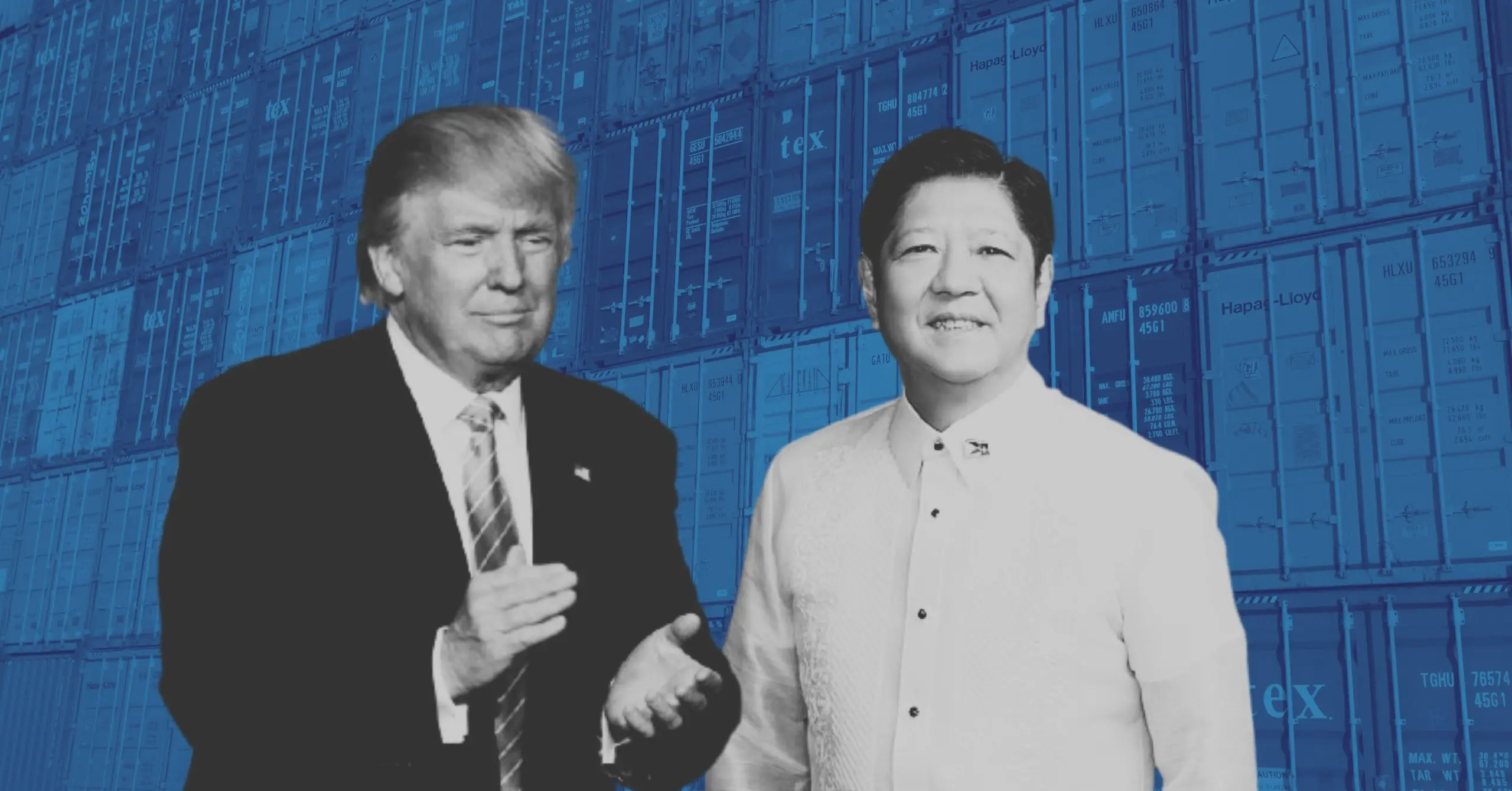
How much will a 1% tariff reduction for the Philippines and open trade for the US affect local businesses? The Business Manual takes a closer look at the Marcos-Trump trade deal.
On July 22, President Marcos met with US President Donald Trump in Washington to renegotiate the 20% tariff on Philippine goods entering the US. Marcos walked away with a 1% reduction in tariffs while granting the US open trade for its goods. Now that more details are emerging, The Business Manual takes a closer look at the trade deal, what happened in the meeting, and what both sides actually gained.
Both President Marcos and President Trump called the meeting a success. Trump praised the Philippine president, calling him a “very tough negotiator.” Marcos meanwhile hailed the new trade deal with the United States as a “significant achievement.” But beyond the rhetoric, what does this mean for Filipino consumers and businesses in the Philippines?
On the Table
On the table during the historical Marcos-Trump meeting were discussions about trade—the so-called Trump tariffs—and defense—notably, concerns about the 800-pound panda in the room, China.
In April, the US slapped a 17% tariff on Philippine goods, which rose to 20% before the Marcos-Trump meeting. This rate remains one of the lowest in the region, signifying that the Philippines is on the United States’ “good” list. Singapore has the lowest tariffs at 10%, while other Southeast Asian countries range from 19% to 49%
Prior to Marcos’ visit, Indonesia had successfully lowered its tariffs from 32% to 19%. Marcos’ government sought to achieve similar results, according to PBS. PBS further stated that the government was prepared to offer zero tariffs on US goods in exchange for a favorable deal.
Marcos’ three-day visit also underscored the importance of the defense alliance between the two countries. As China becomes increasingly aggressive in the West Philippine Sea, the limits of the partners’ treaty were tested.
The 1% Tariff Reduction: What It Means
President Marcos was quick to label the 1% reduction in tariffs as a success. He added, “Now, one [percentage point] might seem like a very small concession. However, when you put it into real terms, it is a significant achievement.”
Put into perspective, the tariff reduction potentially affects around US$73.27 billion in exports, as the US is the Philippines’ largest export destination, accounting for 16.6% of total exports in 2024.
However, this isn’t the case. According to a report by the Inquirer, Trump further expanded the list of products in Annex II of exemptions. This annex exempts key export industries from tariffs, such as the semiconductor industry. After the exemptions, only around 31 percent of Philippine exports are subject to the 19% tariff.
It is important to note that the Philippines exports to America more than it imports US goods. As of 2024, this trade surplus amounted to US$4.9 billion.
On the flipside, the US will enjoy an open market when exporting to the Philippines.
On his social media platform, Truth Social, Trump said, “It was a beautiful visit, and we concluded our Trade Deal, whereby The Philippines is going OPEN MARKET with the United States, and ZERO Tariffs.”
Marcos said the Philippines would increase imports from the US and charge zero tariffs. “Because we have a tariff on American automobiles, we will open that market and no longer charge tariffs on that,” he said. Marcos added that he was looking to increase imports of soy, wheat products and medicines.
Reaffirmation of Defense Treaty
Aside from trade negotiations, the Philippine delegation also sought to strengthen defense ties with the US, meeting with both President Trump and US Defense Secretary Pete Hegseth.
For the Philippines, the United States has long been a key partner in defense. The US-Philippines Mutual Defense Treaty, signed in 1951, commits both nations to mutual defense in the event of an armed attack in the Pacific area. Crucially, this “Pacific area” includes the West Philippine Sea, where tensions with China have been high.
“Our strongest partner has always been the US,” Marcos said. Meanwhile, Trump said the two allies would also work together militarily but gave no details.
According to the Inquirer, the meeting with Defense Secretary Hegseth resulted in a reaffirmation of US support in the West Philippine Sea, including “the clearest policy definition of mutual defense treaty” with regard to freedom of navigation in the Pacific.
“This pact extends to armed attacks on our armed forces, aircraft, or public vessels, including our Coast Guards, anywhere in the Pacific, including the South China Sea,” Hegseth said.
Frequently Asked Questions
The deal reduces planned United States tariffs on Philippine exports from 20% down to 19% while opening local Philippine markets to zero tariffs on select American goods.
Local exporters face higher costs compared to previous baselines, placing a substantial financial burden on critical domestic trade sectors including garments, agricultural products, and manufactured goods.
The semiconductor sector remains highly vulnerable because it missed broad exemptions, though zero tariffs on incoming US capital equipment may partially offset operational costs for domestic facilities.
Manila conceded zero tariffs on specific US products like automobiles to secure the 1% tariff reduction and stabilize vital geopolitical and defense alliances with Washington.
The 19% tariff matches Indonesia’s rate and undercuts Vietnam’s 20% rate, offering a slight competitive advantage within Southeast Asia despite failing to secure complete US exemptions.

More From Money Management