Business 101 July 03, 2026
Bookmark feature is for subscribers only. Subscribe Now to save your favorites.

People, Process, Tech: The Framework for Scaling Your Business Sustainably

FacebookXEmailCopy Link
Sustainable business scaling relies on a disciplined strategy that expands revenue while keeping operating costs controlled.

Sustainable business scaling relies on a disciplined strategy that expands revenue while keeping operating costs controlled.

Scaling a business, when done right, creates value for a business. A company creates two-thirds of its value when scaling and captures a larger share of its target market, according to 2019 statistics published by management consulting firm McKinsey & Company.

The act of scaling a business, however, is not merely ramping up operations on a whim. Sustainable scaling needs a thought-out plan, as a business expands with intention and preparation. 

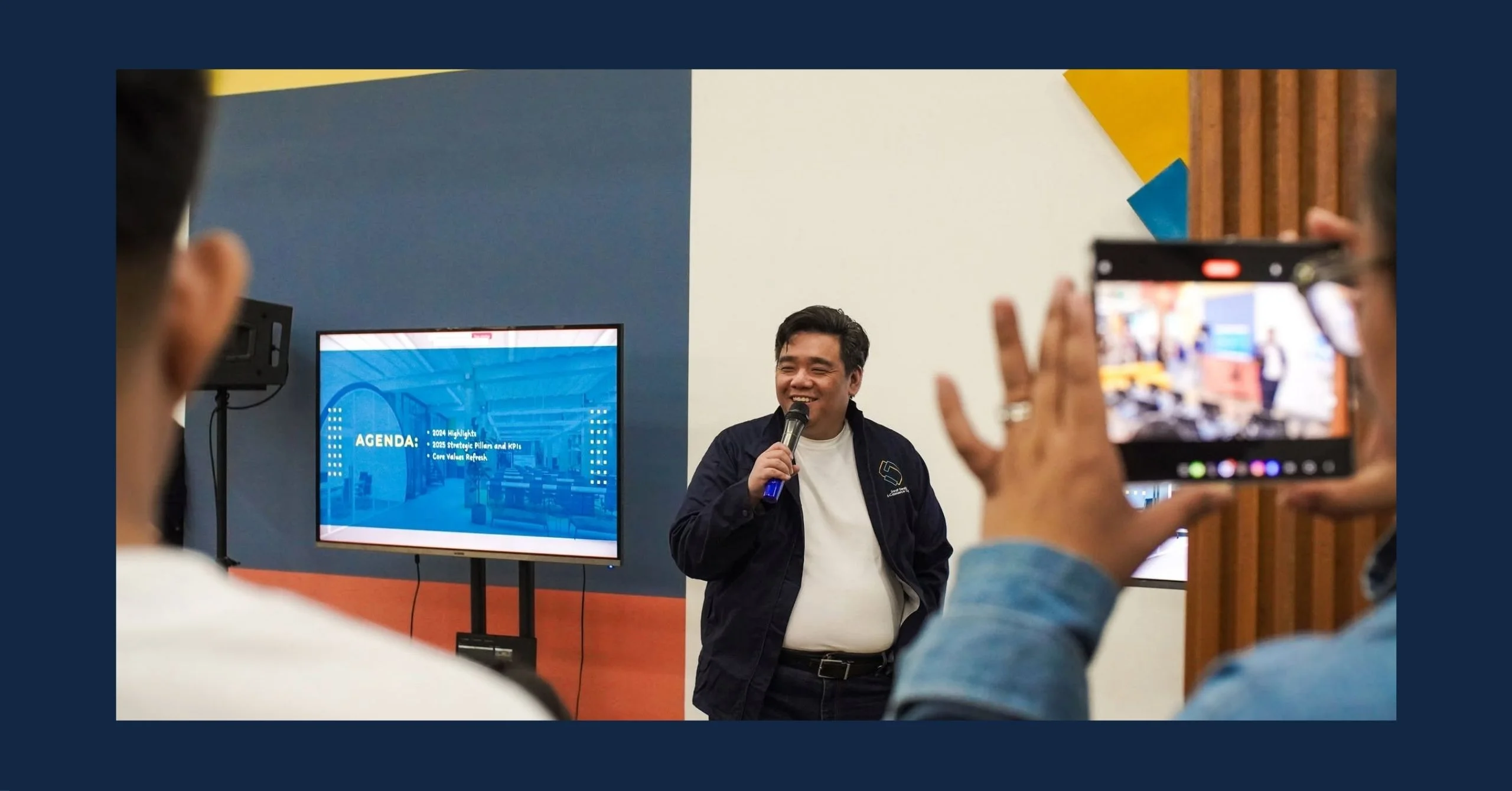
Steve Sy, founder-CEO of e-commerce firm Great Deals and CEO Awards honoree, can put his “framework” for business scaling in three words: People, Process, and Tech.

His realizations came to him when he looked at his balance sheet. What he noticed was that although Great Deals' annual revenue increased to billions, profits remained flat.

The company was growing, but it was not scaling.

In an interview with The Business Manual on March 2, 2026, Sy shares his thoughts on what scaling should look like and imparts advice to business owners on the three-step framework he devised through his experience scaling Great Deals into a P1 billion giant.

The Core Distinction Between Growth and Scaling

Sy explains that “growing a company” means the exponential increase of both top-line revenue (total revenue from selling products or services) and operating expenses. 

“Scaling a business” means the increase of top-line revenue without increasing operating expenses at the same rate.

Sy and his team adopted a “scaling mindset” rooted in discipline, which meant controlling operating expenses while still increasing revenue.

“Typically, for entrepreneurs, pag may problema, ang normal sagot ng managers mo is ‘Sir, kailangan natin ng pagdagdag ng tao,’” Sy said.

(Typically, for entrepreneurs, when there is a problem, the normal answer managers tell you is “Sir, we need to add more people.”)

The solution, he said, is to automate the process, create systems, and then add people.

"If you keep on adding people, you keep on adding operational expenses.”

An Overview of the ‘People, Process, Tech’ Framework

Sy offers a step-by-step framework for automating the process that enables scaling: People, Process, Tech.

This content is available to our subscribers. Join our community to access premium content and elevate your business knowledge.

Already a subscriber? Login
OR
ANNUAL
1,000
per year
SEMI-ANNUAL
500
per six months
QUARTERLY
250
per three months
MONTHLY
100
per month

Frequently Asked Questions

Growing means revenue and operating expenses increase at the same rate. Scaling means revenue increases without expenses rising proportionally. Great Deals founder-CEO Steve Sy identified this gap on his own balance sheet, where revenue reached billions but profit stayed flat.

It's a three-step scaling framework: identify the "vital seats" a business needs and hire the right people for them, manually build and adjust processes before automating, then apply technology to simplify and automate those processes once they're proven to work.

"Vital seats" are the roles a business needs to function, independent of who holds them — for example, the positions that must stay filled even if revenue dropped 80%. Sy advises identifying these seats first, then hiring people suited to fill them.

Sy says automation is expensive, and a flawed process — often caused by hiring the wrong person — gets locked in if automated too early. Building processes by hand first lets a business adjust and correct mistakes before investing in technology.

"AI natives" are Sy's term for employees, largely interns, who grew up AI-savvy the way earlier hires were "digital natives." Great Deals is having these younger employees introduce AI-powered tools and processes to streamline operations, since older staff are less AI-fluent.


Mikael Borres

Mikael Borres

Writer

Mikael Borres is a writer for The Business Manual, authoring articles about Philippine small businesses, economics and finance. His work with the publication has a strong focus on uplifting Philippine micro, small, and medium enterprises (MSMEs) with fundamental business lessons and leadership insights.

Mikael has written pieces on evolving business trends and technology, as well as articles on branding and human resources. He also writes people-centred feature articles highlighting the work and stories of Filipino entrepreneurs and executives. He also covers events for the The Business Manual, highlighting developments in the Philippine business scene.

Mikael graduated from the University of San Carlos with a Bachelor of Arts in Political Science, majoring in International Relations and Foreign Service (IRFS).

More From Business 101

Business 101

What is the EPR Law?

Business 101

Climate Resilience in Philippine Office Design: Strategies for Developers and Landowners

Business 101

How Should Companies Measure the ROI of AI Investments?

Business 101

What Entrepreneurs Must Give Up to Scale a Business

Learn straight from the top CEOs and business leaders. Access exclusive articles and videos.

Subscribe Now