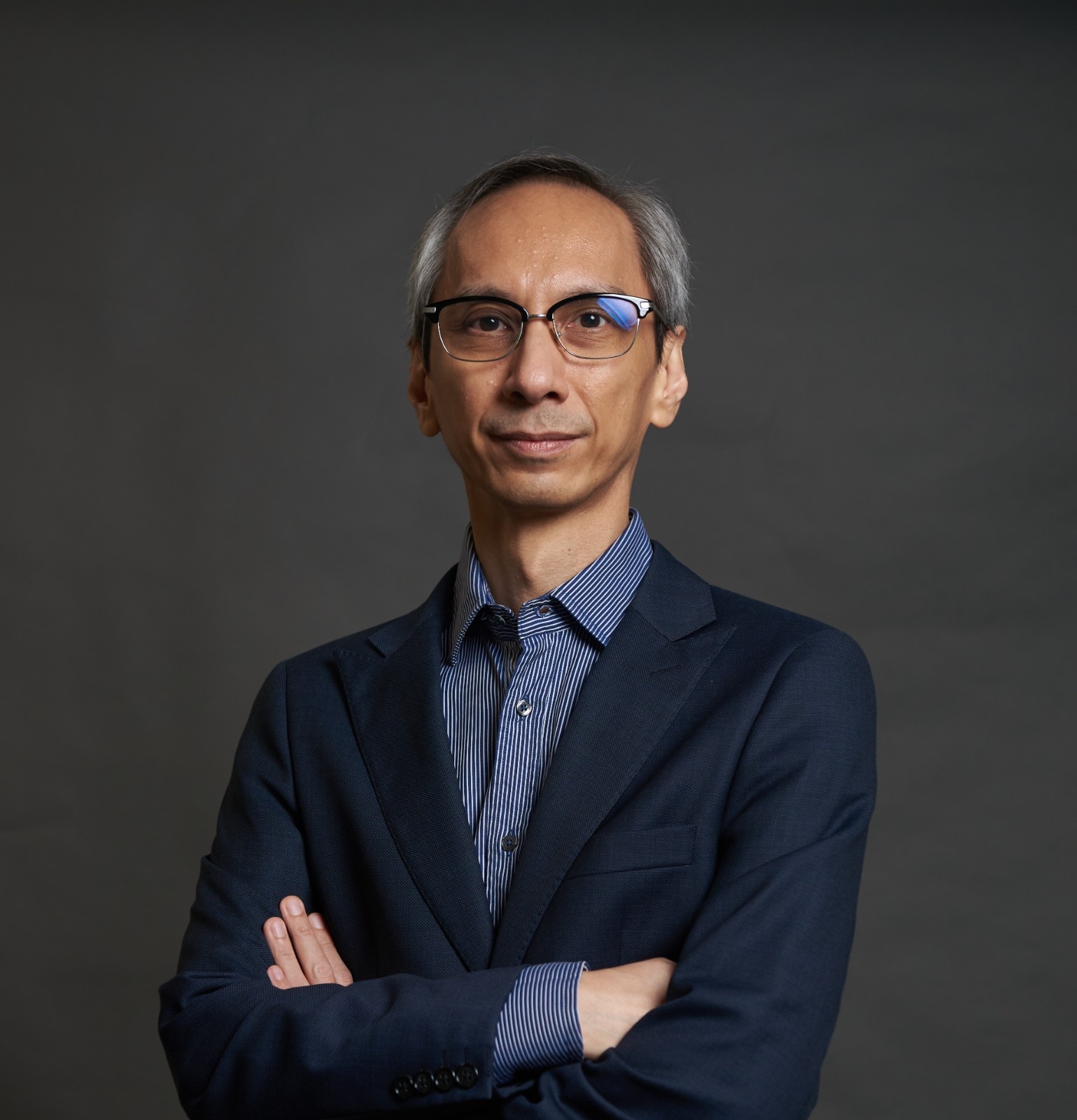
When Social Responsibility Meets Market-Conquering Entrepreneurship: The Evolving Leadership of Cecilio Pedro, Founder of Lamoiyan Corporation


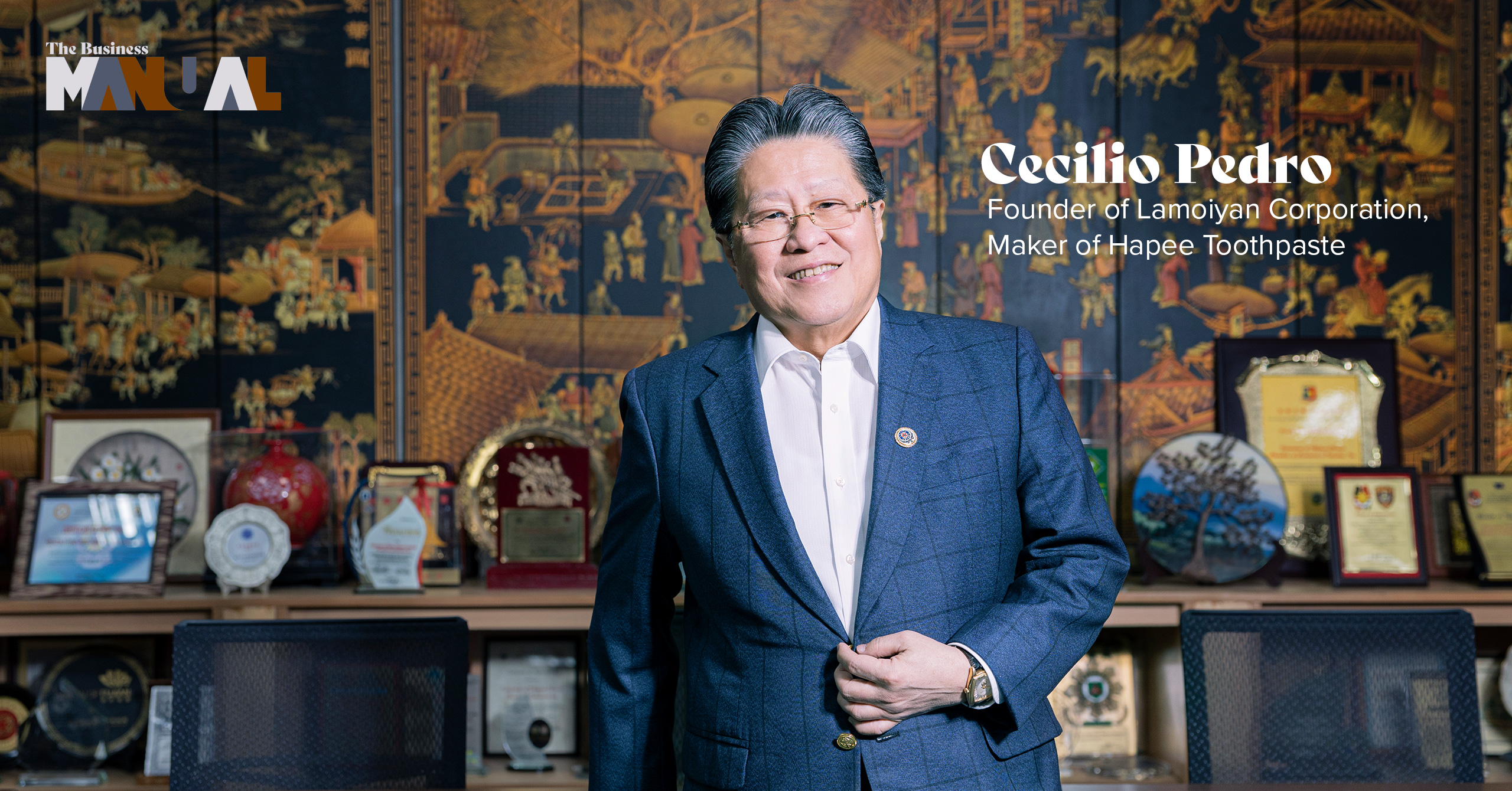
From hard lessons learned through failure, Cecilio Pedro led Lamoiyan Corporation to become a model Filipino company that provides a shining example for entrepreneurs in the Philippines.
The story of how Cecilio Pedro and Lamoiyan Corporation challenged market-dominating multinationals Unilever and Colgate-Palmolive–and won a place among them–has reached legendary proportions. Lamoiyan, led by the Hapee toothpaste brand, is among the first names that spring to mind when people think of world-class Filipino companies. And yet, this is only half the story.
Less known, but of equal significance, is how Cecilio Pedro, Lamoiyan Corporation’s founder and president for over 30 years, has been unceasingly helping the Filipino Chinese community as well as deaf and hearing-impaired communities throughout the years. His leadership is testament to how social responsibility and entrepreneurial success are not at odds with each other, and can, in fact, be complementary goals.
Today, Cecilio Pedro is the President of the Federation of Filipino Chinese Chambers of Commerce and Industry Inc. (FFCCCII), having passed on the reins of family-owned Lamoiyan Corporation to his son Joel. This marks a new chapter for Pedro, one where community building is front and center. In other ways, it is a continuation of his social work in previous chapters of his life. Recently, The Business Manual sat down with Pedro, now 70 years old, to discover not only the key elements to his success as a titan of entrepreneurship but also to learn the role social responsibility played–and continues to play–in his unique leadership.
Fail Hard, Fail Fast: The Challenges of Entrepreneurship
Decades before Silicon Valley popularized the phrase “Fail Hard, Fail Fast, Fail Often,” Cecilio Pedro was already putting the adage into practice and learning from these difficult lessons. At the age of eight, he took an interest in business and soon found himself on the losing end.
He recalls, “I talked to my dad and wanted to do some business. Sabi ko [I said], ‘Dad give me some money to buy some ballpen. I’d like to sell it to my fellow classmates,’ And true enough, my dad gave me a box of Bic ballpen and I began selling it to my classmates.”
Problems arose when Pedro’s classmates, many of whom came from lower income brackets, asked to purchase the pen first and pay later. It wasn’t long until the fledgling business went bankrupt.
Pedro considers his first entrepreneurial failure–and his learnings from this failure–saying, “The first lesson I learned when I was in grade one: a sale is not a sale unless you collect it. So do not extend credit if you cannot collect.”
Learning of Cecilio’s failure, his father told him to forget about business, and focus on his studies. He could return to business after graduation, he said. When Pedro graduated from the Ateneo de Manila with a degree in Business, he wasted no time in returning to entrepreneurial pursuits. Together with friends from Ateneo, he put up a factory. Eventually, this venture led him to put up a factory of his own, producing aluminum collapsible tubes for the brands Colgate and Close-up in 1978. Pedro named the business Aluminum Containers Inc., which he wholly owned.
For many entrepreneurs in the Philippines, a plum business as a supplier to Unilever and Colgate-Palmolive would be the pinnacle of their success. But for Cecilio Pedro, it was an opportunity to fail harder, learn, and try again.
In 1986, the industry switched from using aluminum collapsible tubes for their toothpaste products to using plastic laminated tubes. Purchases dropped to zero and Pedro was left with a warehouse of unsold aluminum tubes. He closed Aluminum Containers, Inc. in 1987.
He recalls, “Sabi ko, ‘Anong gagawin ko sa mga makina ko?’ Sabi nila [Unilever and Colgate] sa akin, ‘Bahala ka, eh, negosyo ito. Pinalitan namin yung packaging. Gagawin naming plastic.’ Wala. Sarado ang negosyo.” [“I said, ‘What do I do with my machinery?’ They told me, ‘It’s up to you, this is a business. We changed the packaging. We’re making it plastic.’ We couldn’t do anything. We closed the business.”]
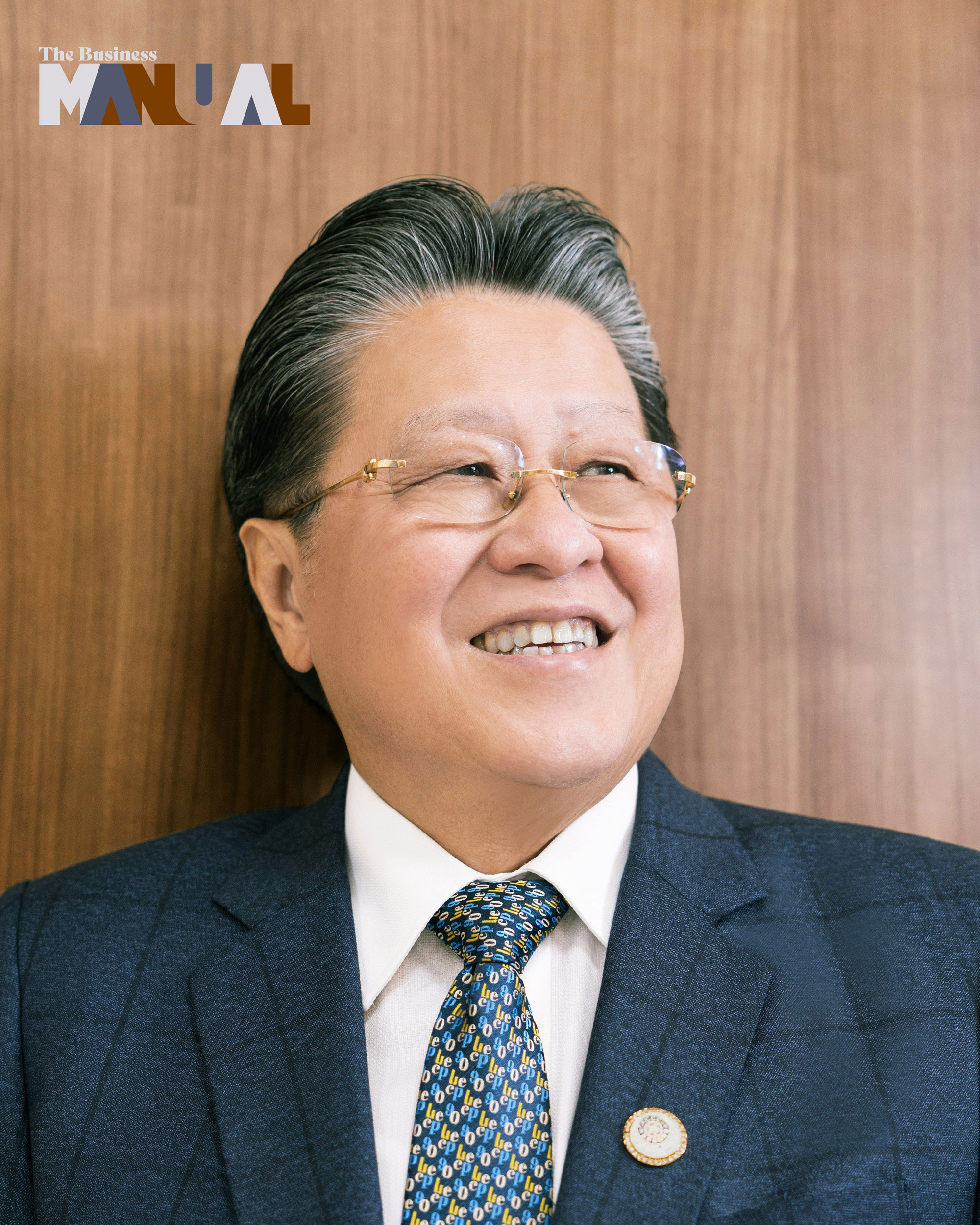
A Calling to Entrepreneurship
Despite this crippling blow, Cecilio Pedro would go on. For support and guidance, he turned to his faith. As a devout Christian, he prayed and read the bible. And in an ironic twist, he was also inspired by the story of another devout Christian, William Colgate, the founder of the company that would become Colgate-Palmolive.
“I was inspired by the stories,” Pedro shares. “Sabi ko [I said], ‘Lord, maybe this is what you want me to do here in the Philippines, to be the Colgate in the Philippines.’ So that started this dream of making toothpaste in the Philippines and competing with Colgate and Unilever.”
Today, many business gurus talk about “finding your passion.” But the experience Pedro describes goes beyond passion and bears more resemblance to a calling. What’s more, this calling would color, inform and guide the mission and vision of his new company.
In 1988, Cecilio Pedro decided to manufacture toothpaste under the brand name Hapee. He named the new company Lamoiyan Corporation after his grandmother, a luminary of his family who introduced them to the Christian faith. And this faith is visible for all to see in the company’s motto, “Making the difference for the glory of God.”
It was an audacious plan: Using the remaining stock of aluminum tubes and the machinery from Pedro’s old factory, Hapee toothpaste would go toe-to-toe with Colgate and Close-up, masters of manufacturing, marketing, and worldwide distribution.
“The rest is history,” Pedro says at this point in the interview as if the hard part was over. But many hurdles remained.
Taking On the Giants
“So throughout this journey, the level of competition goes higher and higher,” Pedro says of competing with multinationals. “Initially… hindi kami pinapansin ng Unilever atsaka Colgate. ‘Wala yan,’ sabi ng kaibigan ko sa Colgate, ‘Wala yan, ang liit-liit na kompanya, how can they compete with us?’ [Initially, Unilever and Colgate paid us no attention. ‘They’re nothing,’ my friend from Colgate said, ‘They’re just a small company, how can they compete with us?’]”
And yet, Lamoiyan Corporation did compete. While Hapee toothpaste’s primary advantage was its price, it also needed to employ marketing strategies to match its rivals.
The year of Lamoiyan Corporation’s founding, 1988, was also the same year as the Seoul Olympics, and Pedro was approached by the Philippine Olympic Committee to support the Philippine team. This was a golden opportunity for Hapee toothpaste.
“So we came up with a very simple commercial,” Pedro recalls, “Hodori, [who] was the mascot used in Seoul, running up the platform and announcing ‘Hapee, the official toothpaste of the Philippine Olympic team.’”
“And I was using the big Olympic rings on top and then maliit lang yung [in small letters] ‘Official toothpaste of the Philippine Olympic team.’ Akala ng tao I sponsored the Olympics [People thought I had sponsored the Olympics],” he adds candidly. “So Hapee became well-known at that time and sales started going up.”
Building on that success, Hapee toothpaste launched a commercial with celebrity endorser Ruffa Gutierrez in 1989. Pedro says, “That was the first commercial na nagkaroon ng [that had] impact, recall. Hapee is identified with ‘Kumukuti-kutitap [Sparkling].’