How to Disrupt Banking, as Told by UnionBank President and CEO Edwin Bautista


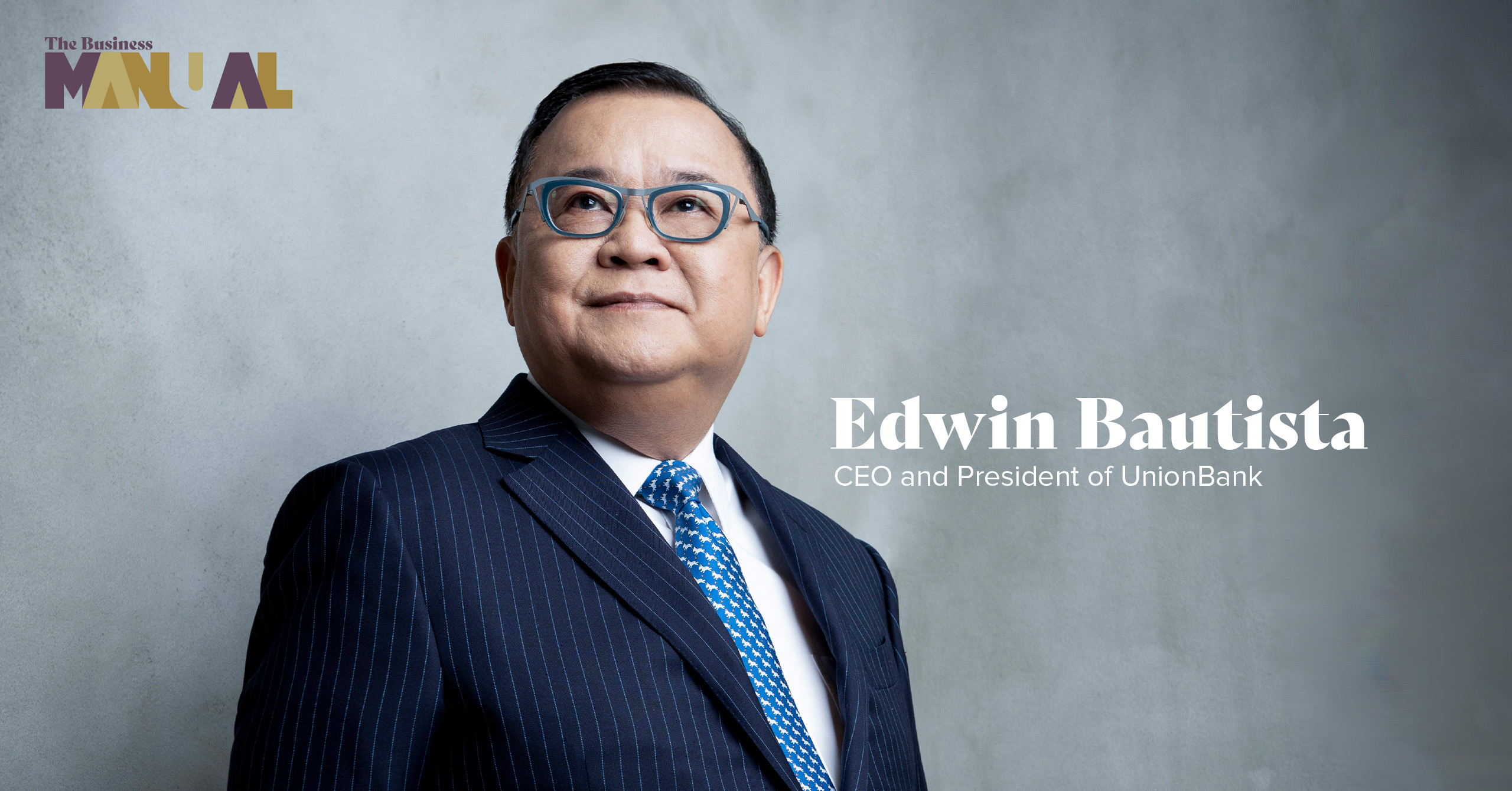
From engineer to marketer, and now, banker. UnionBank President and CEO Edwin Bautista reveals how he redefined the old ways of banking to make it future-ready.
Although Edwin Bautista took on the role as the President and CEO of Union Bank of the Philippines (UnionBank) just last 2016, he has made waves—not just within the company, but also in the banking industry as a whole.
Since his induction into the position, Bautista can be credited for turning UnionBank into a multi-awarded universal bank, with prestigious titles like “Digital Bank of the Year” 5 years in a row from The Asset; “Best Domestic Private Bank Philippines” from Asian Private Banker; “Best for Wealth Transfer or Succession Planning” from AsiaMoney; and "Asia Trailblazer Institution of the Year” by Retail Banker International. Moreover, he was able to bag two major awards at The Asian Banker Excellence in Retail Financial Services and Technology Innovation Awards in the year 2022 alone!
All this can be attributed to his sharp business acumen and extensive experience, which have, in turn, propelled UnionBank into becoming the country's ninth-largest bank in assets. However, his crowning moment as the bank's President and CEO includes pioneering a digital transformation—which not only put UnionBank’s name on the global digital banking map but also heralded a major turning point in the world of banking.
Here's how he, in his words, "disrupted the old ways of banking."
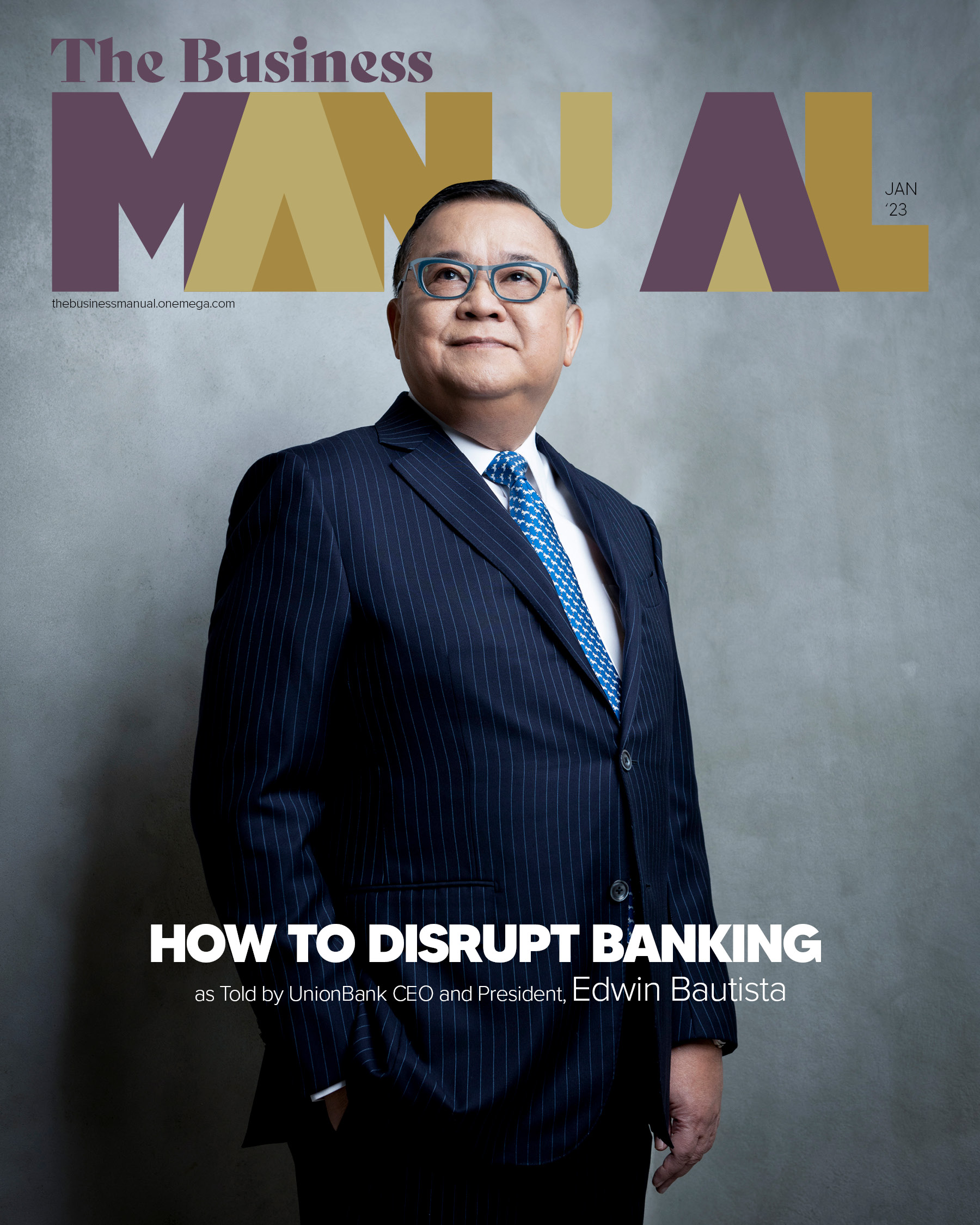
Making the Big Career Switch
A career shift is one thing, but a change in industry is a whole new ballpark altogether. An engineering graduate from De La Salle University, Edwin Bautista shares in an interview with The Business Manual that banking was not in his initial plans. "My first job was to teach actually engineering courses," Bautista reveals. "Thermodynamics. At La Salle."
In fact, the banker goes on to explain that engineering is part of his family's dynasty. "I could give you stories about how much I thought about it, but the truth is my father’s an engineer, my grandparents are engineers, [and] my uncle is an engineer. It’s like they sort of expected me to take up engineering and that’s the truth."
But unlike most who pursue engineering as a career, Bautista took the unconventional approach and used his course as a stepping stone for a career switch. "After a while, I thought about it. Engineering is a very good preparation to lead the digital world," he muses. "The reason why I’m comfortable with the use of technology [is] largely because of my engineering background."
While building up his experience as a banker, Bautista carried with him the very foundation of his engineering degree, which has served him well. "Well, engineering teaches you to be very precise [and] analytical. There is a pattern [and] there is order in the madness," he explains. "Engineering is about using science—building something that is useful for mankind. Otherwise, it just becomes a theoretical construct."
On Marrying the Two: Engineering and Marketing
Soon after, Bautista began his career as a Brand Manager at Procter & Gamble (P&G)—a fast-moving consumer goods (FMCG) industry, where he contributed to the team that propelled Safeguard soap to reach a whopping 50% market share from just 10%. How? “By challenging conventional thinking”, he says.
While contributing to his brand's success, he took with him the key learnings as a marketer and married them with the practical and concrete side of engineering. "In hindsight, it was a perfect combination because what marketing in P&G taught us is you need to be data-driven and analytical, but at the same time, you need to use the creative aspect," he elaborates.
"As engineers, you could be obsessed with building and then you enter a situation… what do they say? 'Build and they will come?' We know in marketing that [it] does not work," he continues. "You may have great ideas, but if you cannot execute, [and you don’t know] how to build, nothing’s gonna happen. It’s the fusion of the two [that's important]."
"It’s when you are able to marry [the creative part] with the engineering, the rigor, [and] the analytical piece of engineering, that’s actually the combination that creates great products that the customers use."
This way of thinking was what Bautista looked for in a team. "I started out favoring people who are analytical, but over the years, I’m starting to like people who are creative," he opines. "Of course, the ideal is you have both. It’s very difficult to find people who are both left-brained and right-brained. When you find one, it’s always a gem."
"But if I had a choice, I think for my team, I'd go for a mix," Bautista says. "I have lots of analytical types, but I also need the creative—the wild ones. Sometimes they’re the ones who create, cook up the crazy ideas."
Eventually, this, and his penchant for the unconventional, would pave the way for the disruption of banking as we know it.
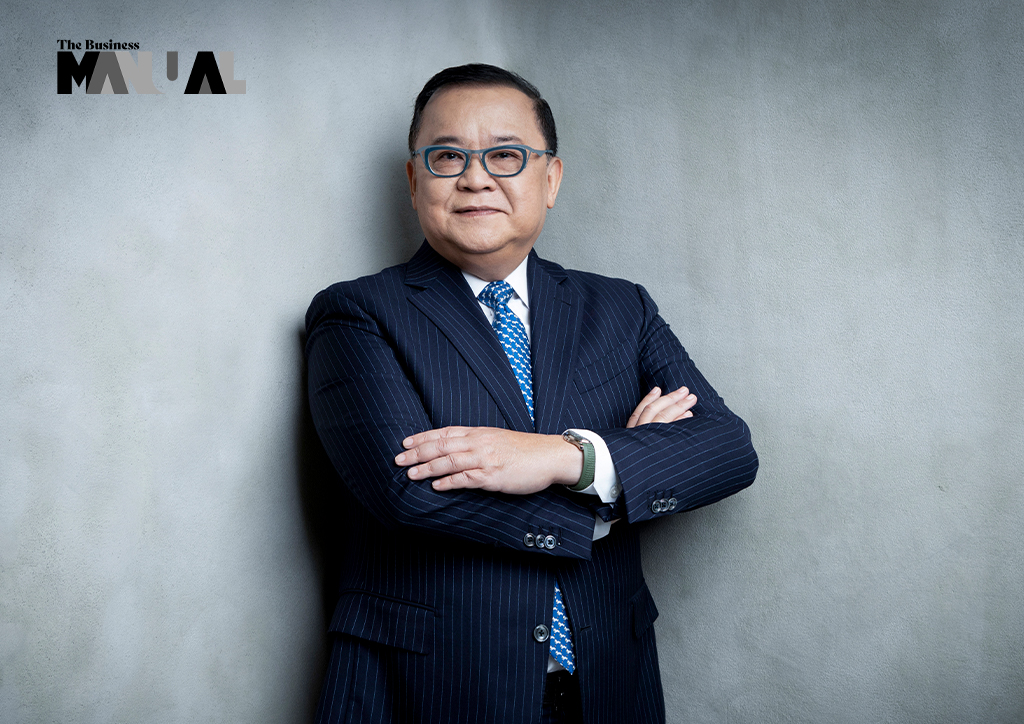
Disrupting the Old Ways of Banking
After his stint in P&G, he then took on the role of the President of the International Exchange Bank until it merged with UnionBank in 2006. His journey soon led him to be the Vice President and Head of Citibank’s Global Transaction Services Group in the Philippines—until in 2016, when he was inducted as the President and CEO of UnionBank.
For UnionBank—and the entire banking industry, for that matter—2016 was a significant year, as it ushered in a widespread digital transformation.
Following UnionBank's acquisition of thrift bank City Savings Bank last 2013, the former was able to promote financial inclusion by expanding its customer base. And to sustain this momentum, UnionBank made its first venture into rural banking and micro-financing by acquiring a majority stake in the Cebu-based First-Agro Industrial Bank (FairBank) in 2016.
But more than that, 2016 will be remembered as the year when the old ways of banking were shaken up—disrupted—through radical strategic decisions that were founded on unconventional means. "UnionBank made a radical strategic decision to break away from the traditional mode of [a] branch network expansion to instead bet on expanding its retail reach digitally," Bautista explains. This move made UnionBank the first of its kind to open a fully digital bank branch in the country called The ARK.
Backed by its two other major shareholders—Social Security System (SSS) and Insular Life—UnionBank went full throttle on its digital transformation journey [by] achieving numerous industry-first innovations in the Philippines. This has served them well, as they soon gained the reputation of being a digital trailblazer even before the mass adoption of online banking.
With that came many more firsts for UnionBank. After all, the digital transformation that Bautista had in mind made UnionBank the first Philippine bank to introduce mobile banking through wireless application protocol-enabled cellphones—even before other banks got into online banking.
Furthermore, it was the first Philippine bank to launch a banking website, to use a chatbot called Talk to Rafa, and the first to introduce mobile check deposit through its award-winning app UnionBank Online.
"Way back in 2016, when I took over, and was interviewed, I said we look at all the positioning possible," he explains. "There’s one positioning that’s still open. That’s digital transformation. No one wanted to talk about digital at some point. So, that was a key positioning and it turned out that that was positioning for the future. [Back then], everyone was talking [about] size. Everyone was talking about stability."
But Bautista? He thought way, way ahead of his time—envisioning a metamorphosis for UnionBank.
The Thinking Behind it All
In a world that is ever-changing and ever-growing—thanks to the advancement of technology, Bautista strongly believes in keeping up with the times. While this may be a way of thinking that most people have learned to adapt, it was a foreign concept in the world of banking. And this is exactly how Bautista shook up the industry.
"Banking, to me, has changed a lot. Maybe 30 years ago, banking was a boring job. We did the same thing over and over again. We go for the 10% improvement in productivity. We all compete on the basis of price because everything was commoditized," he says.
"And all of a sudden, in the last five years, there’s this influx of technology that you can harness to improve the customer experience. So it’s like. 'Oh, my God. This is the golden age of marketing in banking.'"
Bautista then goes on to add, "If you refer to marketing as looking at customer behavior [and] looking at how you can retool the products—maybe even coming up with new products for the customers, it’s really fantastic."
This was exactly what he applied in the day-to-day operations of banking. "Now, here in UnionBank, it’s very clear to us. It is about innovation and this is about creating the customer experience. So, based on what we learned in P&G, what does that mean? It’s marketing, right?"
"But you need to work backward," he cautions. "You need to have the right people with the marketing orientation, but you also need systems that allow you to create these products. So like in P&G, [it] would be nothing if it didn’t have great engineers running the factories."
Pioneering the Two-Week Sprint
Given the fast-paced nature of an evolving digital landscape, Bautista knew that he needed an efficient team to help execute his grand vision for UnionBank. And true to his unconventional nature, he did not just need bankers for this—he needed experts from different fields.
"Here in banking, we first moved into agile and now DevSecOps [development, security, and operations]," the veteran banker explains. "We have marketing people who identify the products that need to be launched, but we [also] need programmers, developers, [and] the IT people who can create and turn them into products."
But what of the competition that seeks to imitate Bautista's business model? He, for one, is not threatened at all. "That’s the two-week sprint cycle that we have in place. So all our products are getting into that mode where the product teams [are] agile and [the] DevSecOps methodology—coupled with the backend system—can come up with new products and services every two weeks."
"And then you have a situation where [the] competition will follow," he laughs. "How do you tweak your products such that, say in our case, every two weeks, we come up with a [new] feature? [But conversely], if I have a competitor today, [and] they come up with something, we look at it in the market… [and] in two weeks, we can replicate [it]."
The secret, he reveals, is partly in the team he built for UnionBank. "When you talk of the agile team… actually, it’s nothing new. We had this in P&G before—the concept of the brand team. You put all the people together: the risk person, the product manager, [and] you have the developers, the coders. They’re part of the team. In this particular case, it’s almost like they close themselves in a room—from morning until evening—until they come up with the product design that they want to develop."
"In the agile world, we call it wireframing," Bautista explains, referencing back to his marketing days. "In the old world, it’s like product architecture or product design. Now, it’s a wire frame, so it’s actually a cross between a storyboard that describes how you’re going to sell the product and a mockup for the design, [and the] prototype. And [through it all], you have the developers sitting in."
But while the business model he learned in P&G has served him well, he believes that it too has changed over time. "The difference is in the old days, the product manager will write it up. It goes through a whole approval process and then it will go to the developer Then develop it. Then someone will check. Before you know it, six months are over," he reminisces.
"Now, the testing and coding is a cycle. Your coders will code and then it goes back to the product team, who says, 'Is this the one that we’re gonna work with?' to which you say, 'No, no, no. You got it wrong. It’s like this.' So you iterate again."
Learning from the FinTech Companies
Pioneering a new era in banking has to come from somewhere, and in the case of Bautista, he attributes his learnings—not just from engineering and marketing, but also from the Financial Technology (FinTech) experts themselves.
Thus taking a leaf out of the book of the Fintech companies—industry trailblazers in their own right—Bautista applies this in his strategy for UnionBank's digital disruption. "Look at FinTech. There’s no extensive writing [to reference from]. You get together, you discuss it, you get the program… and it can’t be perfect the first time."
"It’s never going to be perfect the first time," he emphasizes. "So the first philosophy in [being] agile is a minimum, viable product, or minimum viable proposition. When you have the basic ingredients, which could be 80%—the first 80% is what will move the product. The balance 20% is the aesthetics—the bells and whistles."
"When you have the 80% in, you go. Why? Because you’re not quite sure if that’s what the customers want," he says simply. "[But] the importance of the two-week horizon is [that] it allows you to pivot very quickly. Your system must also be able to launch it selectively to customers. If your system at the backend cannot do selective launching, you’ll launch a half-baked product across all your customers. You’re gonna die."
The secret? To test the market. "We test [the] market with a small segment, but we pivot once we know what it is that needs to be done to tweak the product. I think that’s the secret of this whole thing," he reveals.
The thinking behind this, according to Bautista, came from the FinTechs themselves. "The buzzword in UnionBank is, 'Can we out-FinTech the FinTechs?'" he laughs. "Because if I think about it, people are saying [that] big banks cannot do that because a battleship or a carrier cannot turn on a dime, right?"
"But we say, 'Why not?' Yes, banks never experienced the sprint teams, but hey, I was a product manager, a brand manager. I know brand teams. And we have several P&G product managers on our team. They know this. They’ve been there, [they've] done that."
Innovation, while necessary, can be scary, and Bautista knows that for a fact. "Sometimes it’s just the fear. Of course, we had to bring our board, the board of directors, on board because they could be the ones who will say, 'Hey, what are you guys trying to do here?' [But] technology is available all over the place, [and it's all about knowing] how to stitch it together into something that your customers can use, which will make money the way you intended it to be."
Disruption Through the Ways of FinTech
When Bautista talked about disrupting the banking industry as a whole, it even included the very foundation of its operations—trusting your money with them. "You know, in banking… the millennials, the new group, to them, it’s about trust," Bautista explains. "It’s not about the size of the balance sheet, [unlike] before. The young ones are even willing to trust some FinTechs with their money—more [so] than the bigger banks."