Capital Intelligence: Boost your Startup Funding Knowledge


Every entrepreneur’s guide to startup funding.
A staggering 90% of startups fail. This oft-quoted statistic originated with The Harvard Business Review and puts the reasons for their failure in stark focus: team conflict, faulty business models, and a lack of funding. Startups—which are by definition innovative, tech-based companies in search of a viable business model—are particularly vulnerable to funding problems. They come with a high cost and need to scale quickly. In the startup world, funding can make the difference between being hailed as the next tech unicorn, or being relegated to the garbage heap together with WeWork and its failed IPO.
Today’s startup founders need to master capital intelligence—knowing where and how to secure the funding for their company’s growth. To this end, The Business Manual spoke to the managing director of the early-stage investment firm Kaya Founders, Raya Buensuceso, to gain some insight into what venture capitalists (VCs) look at before choosing to back a startup, and explore all the paths to finding the funding option that best fits a startup’s needs.
Fuel for the Fire
Raya Buensuceso begins a discussion on capital intelligence by saying, “Think of VC funding as providing fuel to an engine that should somehow already work.”
Before talking about funding, investors and equity, it is important to touch base on what Raya is saying. The startup—not the funding—is what drives the success of the company. The core team of the startup is in the drivers’ seat. The business strategy is the car’s design; the business model is the engine. Funding is gasoline. It’s fuel for the fire.
All too often, startup founders are too focused on finding a route to the next round of funding or extending their runway. Instead, they should be focused on their customers and the solutions their company provides.
Raya continues, “I would advise them to raise funds once there is an early indication of product market fit and a repeatable, scalable playbook.”
She adds, “There’s never too early a time to reach out [to venture capitalists], and we’re happy to meet with founders even when they are only in the idea stage, to share perspective and provide early feedback. We [Kaya Founders] like to say that we invest in lines, not dots, and almost all the deals we do are a product of multiple meetings, rather than a one-off pitch.”
Types of Funding
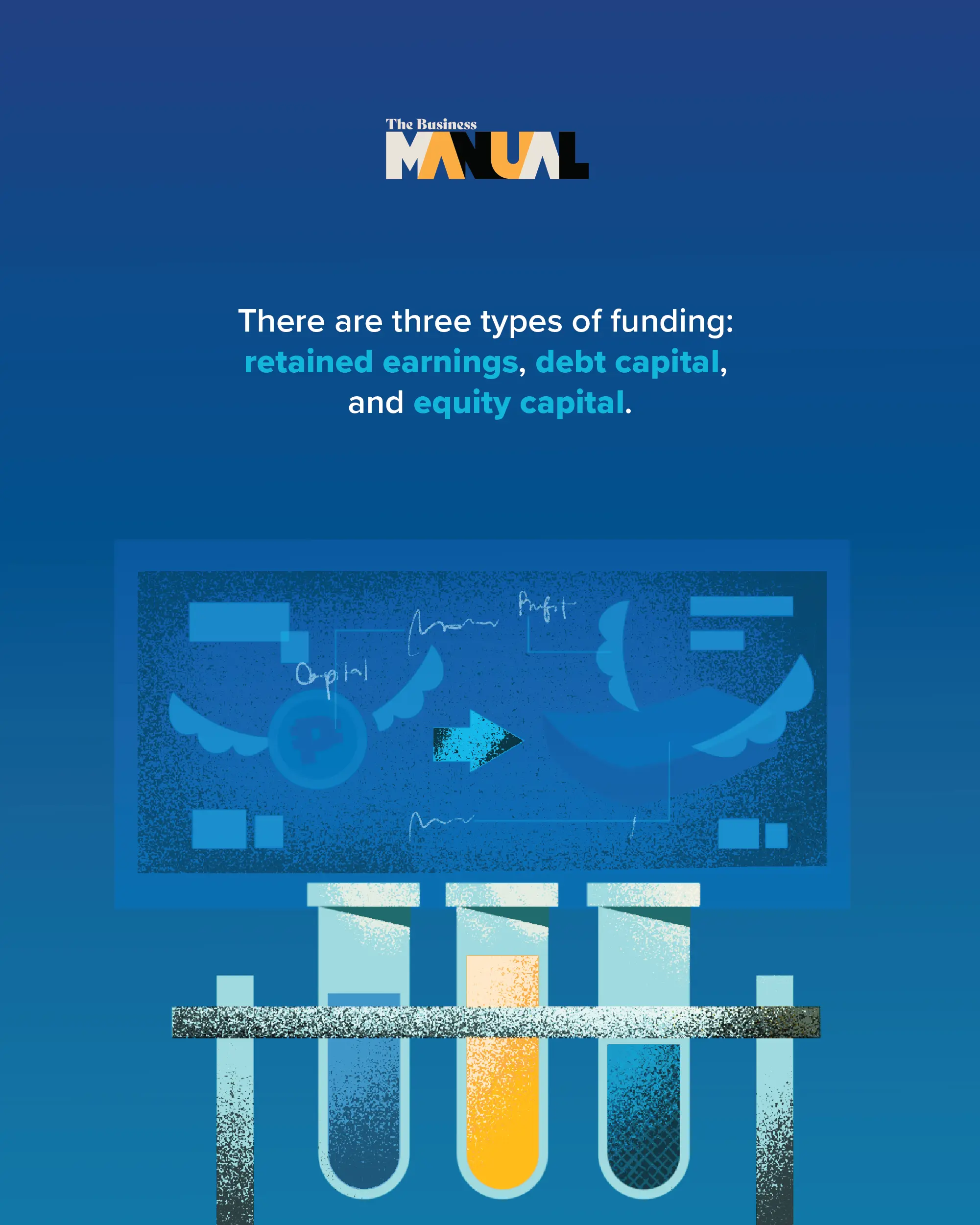
With that in mind, let’s review the types of funding available to companies in general. Technically, there are three types of funding: retained earnings, debt capital, and equity capital.
Retained Earnings
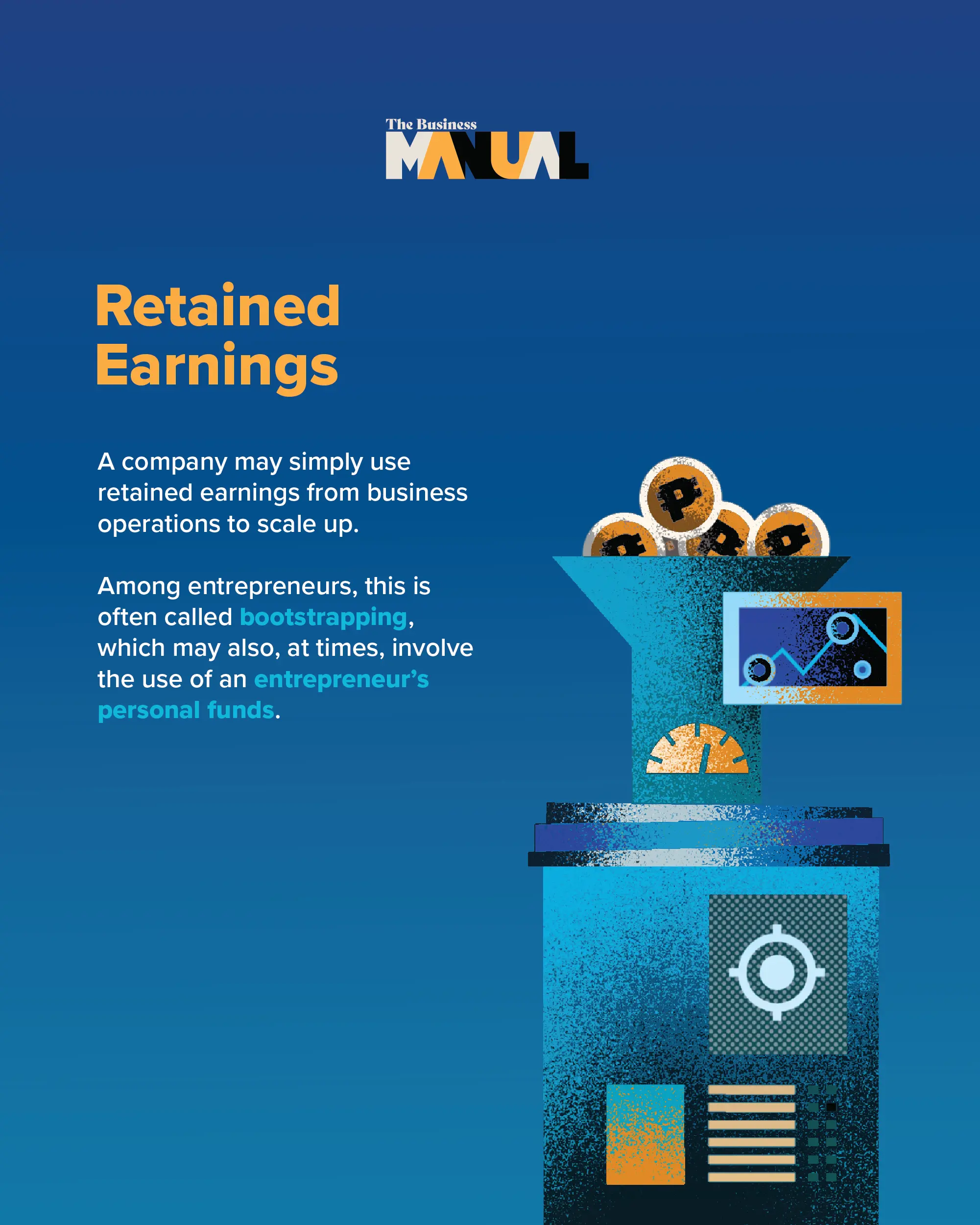
Startups don’t always need to seek funding from external investors. A company may simply use retained earnings from business operations to scale up. Among entrepreneurs, this is often called bootstrapping, which may also, at times, involve the use of an entrepreneur’s personal funds.
There are benefits to bootstrapping—most notably, the business owner or founder gets to maintain ownership and control of the business. And they won’t have to share profits with any partners.
Depending on the startup, bootstrapping can be a viable path to scale. In fact, there are many cases of startups that have achieved scale by bootstrapping.
Raya Buensuceso explains, “Not every company is a fit for venture capital. Something we say to many founders we meet is to really reflect on what their vision is for their company—if they are ready to embark on the intense, hyper-growth journey of a VC-backed start-up or if they would prefer to build a profitable, sustainable business on their own terms.”
Debt Capital
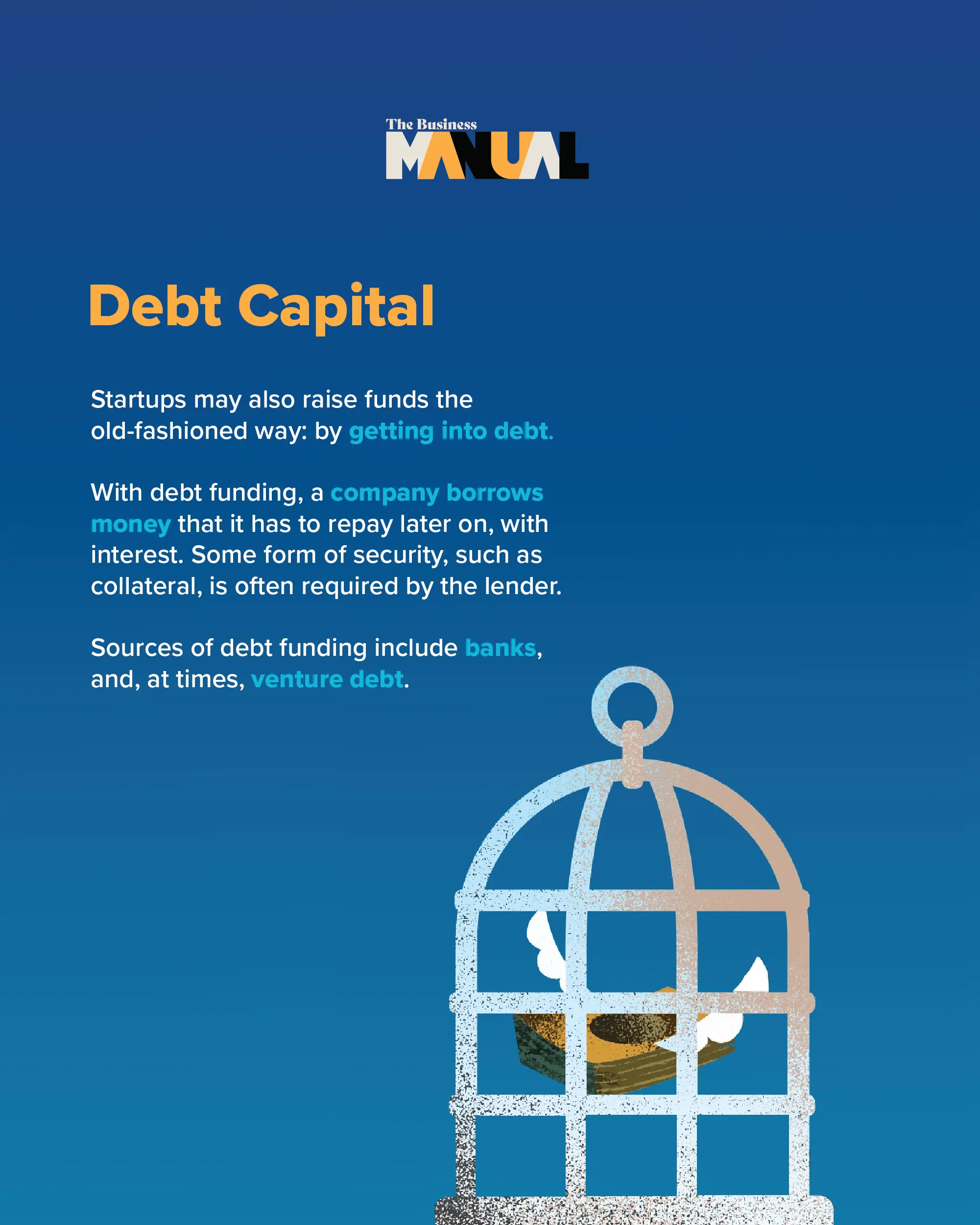
Startups may also raise funds the old-fashioned way: by getting into debt. With debt capital, or debt funding, a company borrows money that it has to repay later on, with interest. Some form of security, such as collateral, is often required by the lender. Sources of debt funding include banks, and, at times, venture debt.
Equity Capital
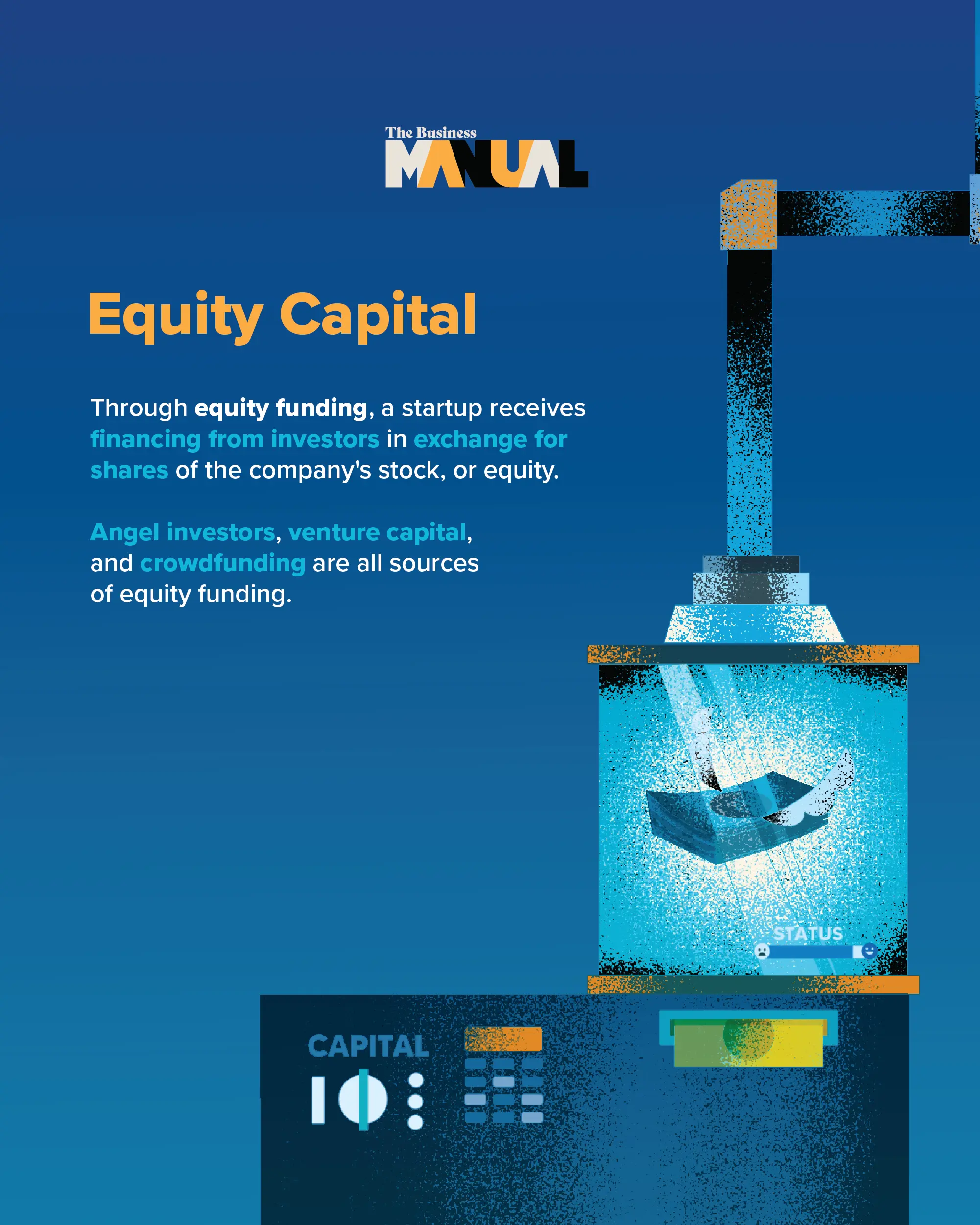
With equity capital, a company offers a share of ownership, publicly or privately, in exchange for investment. Crucially, equity capital doesn’t require debt repayment or interest payments. Instead, the company shares future profits with investors.
Angel investors, venture capital, and crowdfunding are all sources of equity funding.
Funding for Startups
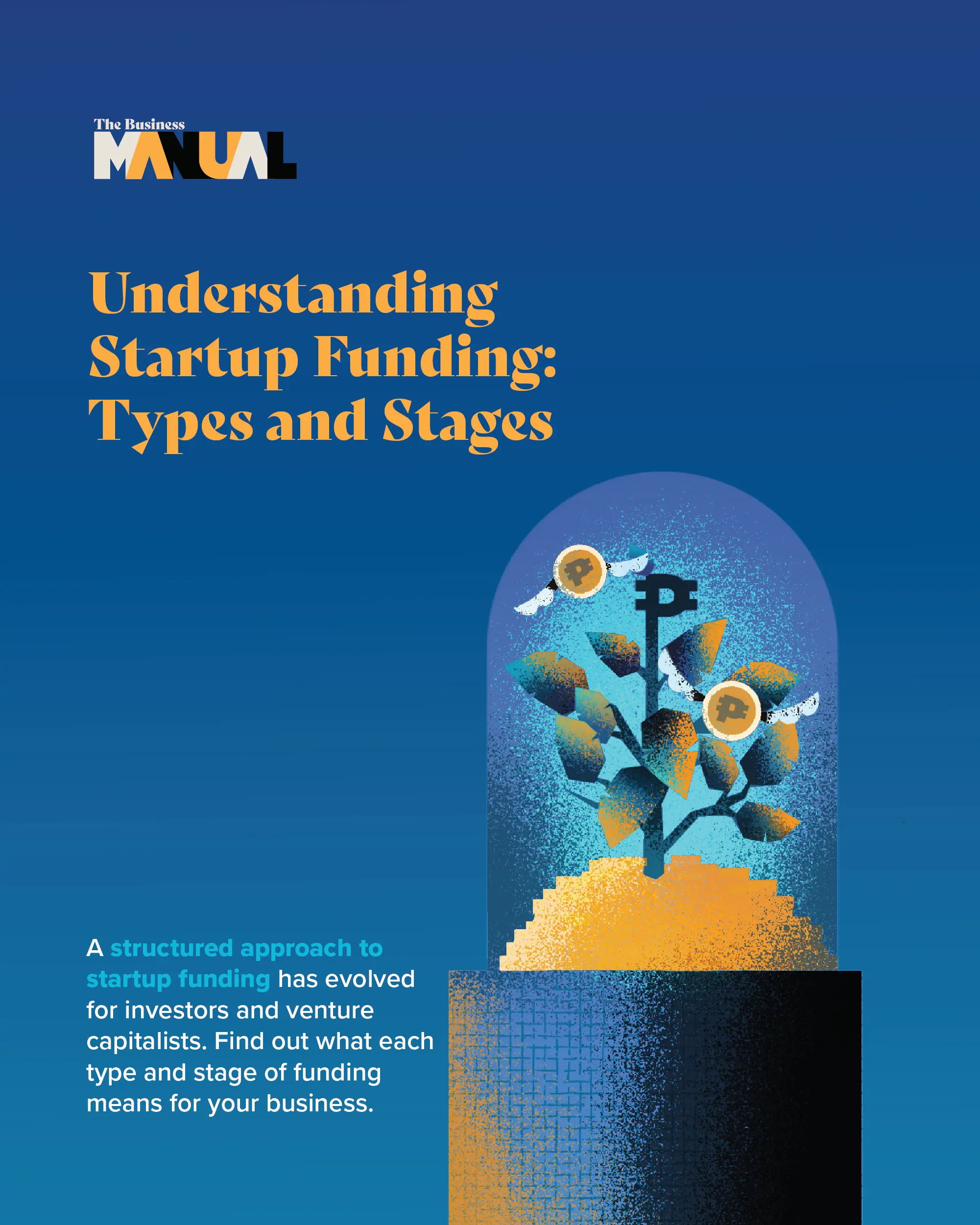
For startups, a structured approach to funding has evolved for investors and venture capitalists—the “intense, hypergrowth journey” Raya was talking about earlier.
The reason for this is two-fold. Startups have unique needs in scaling. On the venture capitalist side, the success of startups like Uber, Airbnb, SpaceX—and locally, Great Deals E-commerce and Mynt—have driven VCs to flock to investing in startups. A tiered approach to investing helps identify when VCs can provide support and how much.
The tiers are as follows:
Pre-Seed Funding
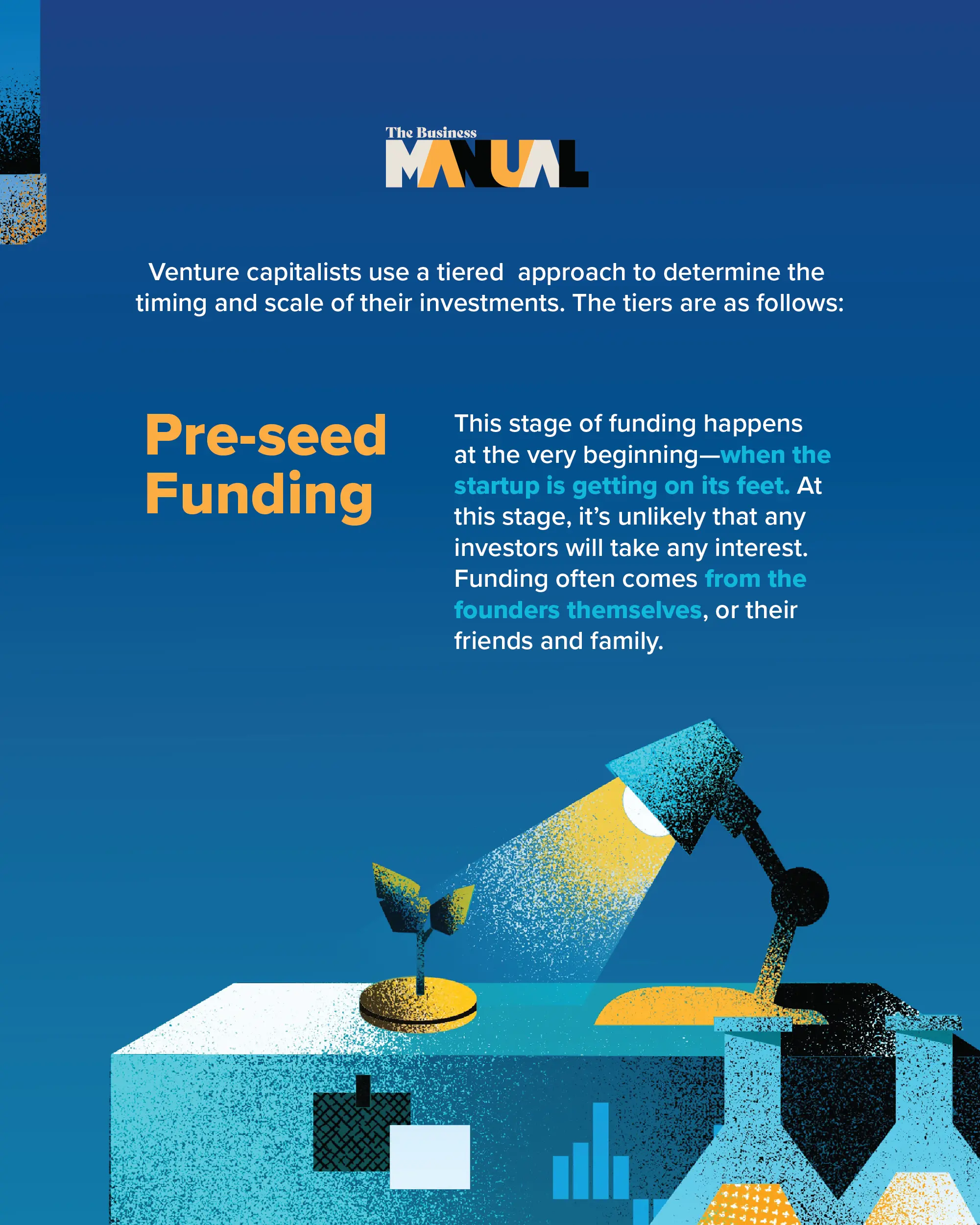
This stage of funding happens at the very beginning of a startup’s journey—when the startup is getting on its feet. At this stage, it’s unlikely that any investors will take any interest. Funding often comes from the founders themselves, or their friends and family.
Seed Funding
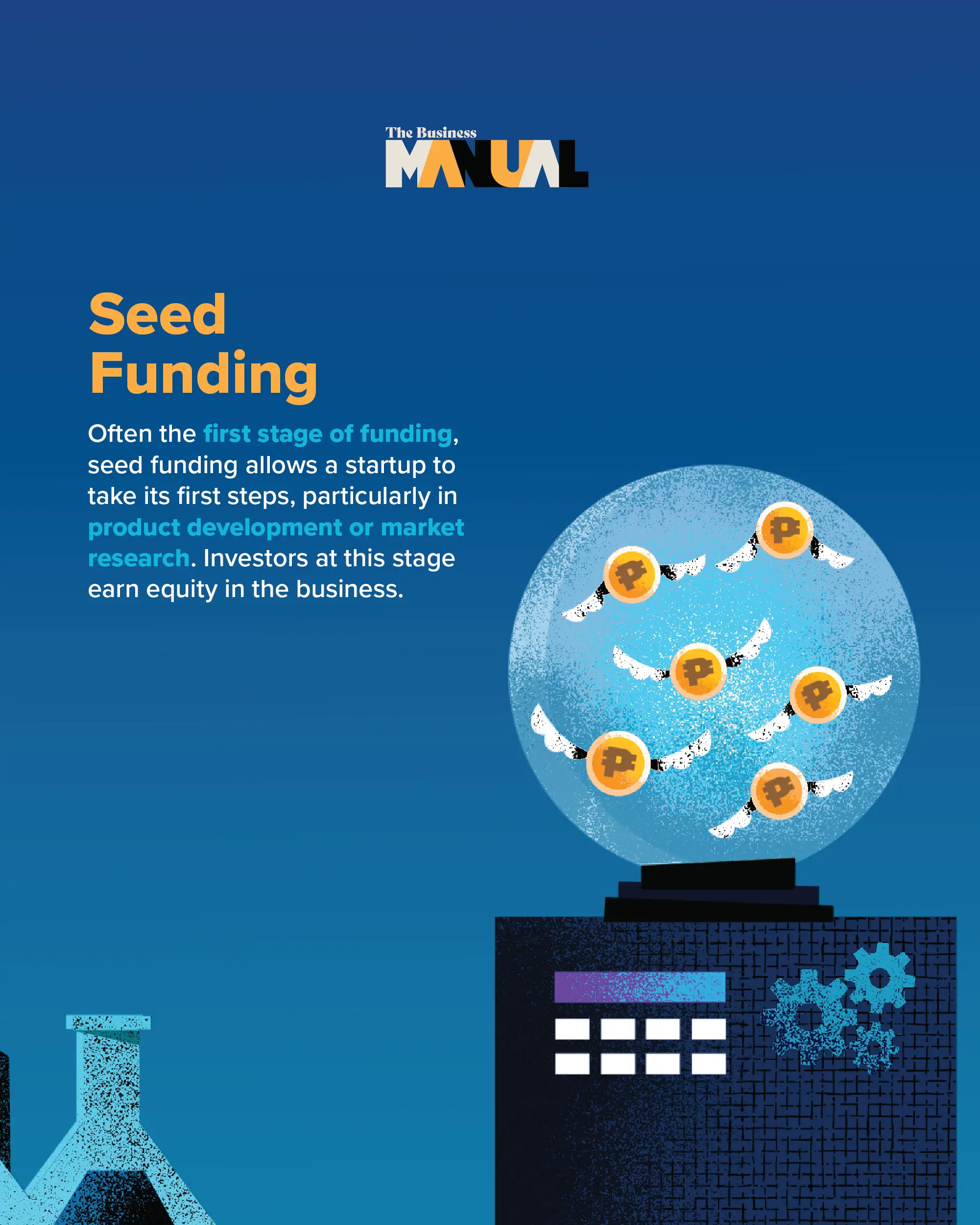
Often the first stage of funding, seed funding allows a startup to take its first steps, particularly in product development or market research. Investors at this stage earn equity in the business.
It is at this early stage when venture capitalists like Kaya Founders are already on the lookout for startups to back. Raya shares, “We at Kaya have chosen to focus on the pre-seed to seed stage, because we feel this is where capital is lacking and needed most. Many of the international funds we meet typically can only deploy as early as Pre-Series A.”
Series Funding
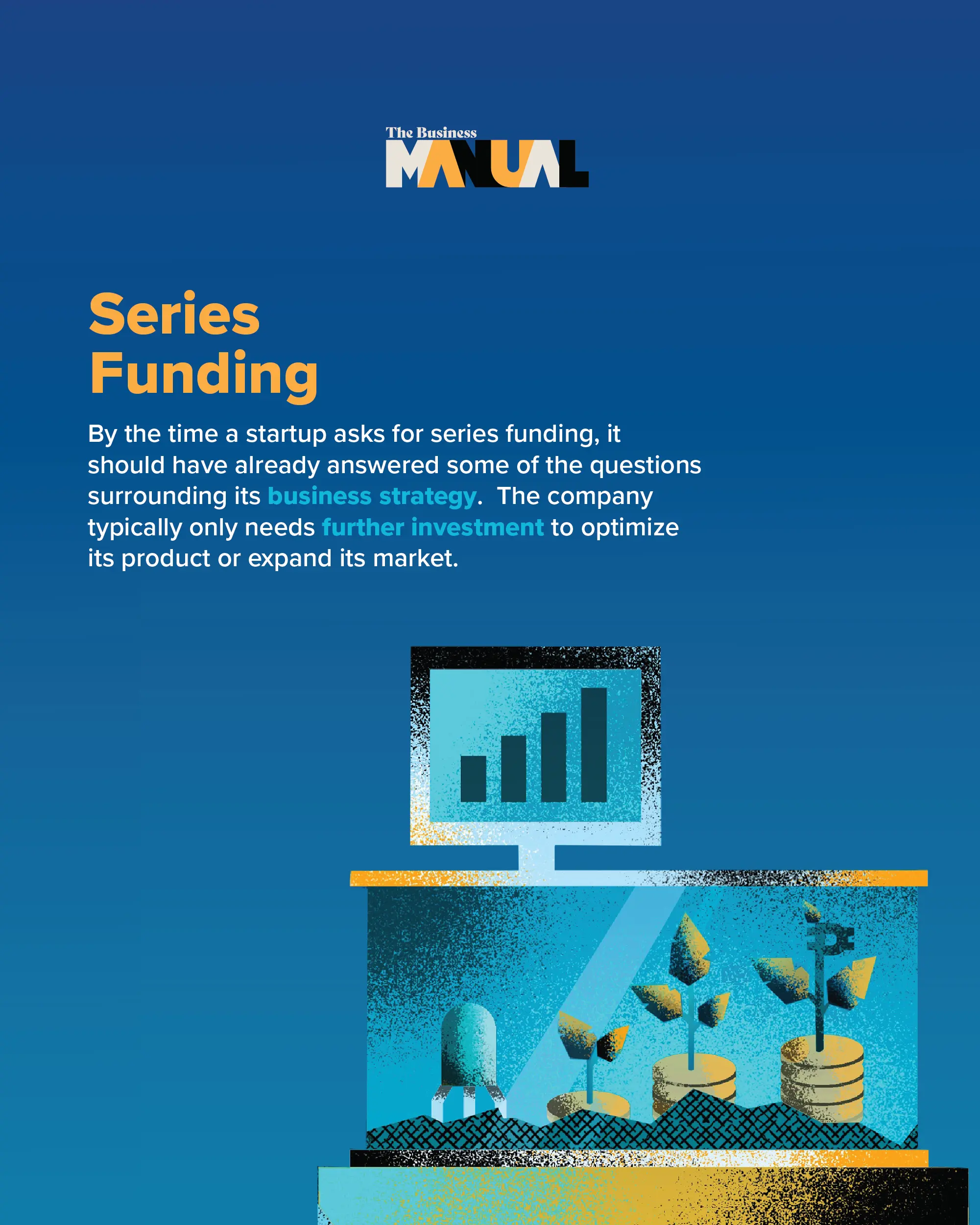
By the time a startup asks for series funding, it should have already answered some of the questions surrounding its business strategy. The company typically only needs further investment to optimize its product or expand its market, for example.
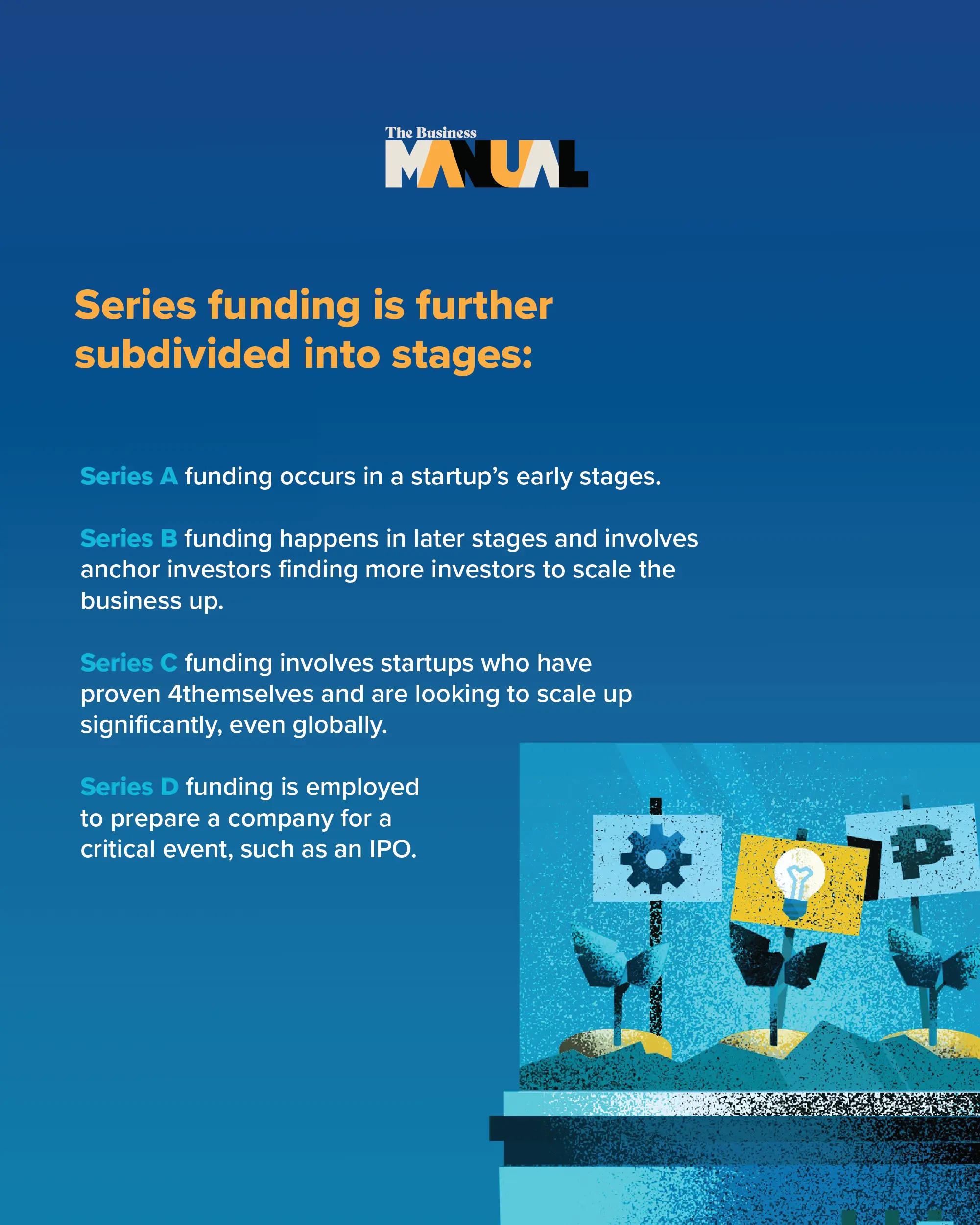
Series funding is further subdivided into stages:
- Series A funding occurs in a startup’s early stages.
- Series B funding happens in later stages and involves anchor investors finding more investors to scale the business up.
- Meanwhile, Series C funding involves startups who have proven themselves and are looking to scale up significantly, even globally.
- At times, Series D funding is employed to prepare a company for a critical event, such as an IPO.
Benefits of Funding Beyond the Money
It can be easy to fall into the trap of focusing on the monetary aspect of funding. Business, after all, is about profits and growth. Or, other times, founders can be wary of giving up equity for fear of losing control. These are valid concerns that need to be managed by startup founders. However, Raya reminds us that VCs serve other roles as enablers and advisors.
“What comes to mind for most people when they think of VCs is our role as capital allocators,” she says. “Deploying capital is certainly a central part of our job, but since joining Kaya, I’ve learned how this is but one part… Helping our companies scale and eventually exit are equally significant and arguably more difficult parts of the job.”
“We firmly believe that our founders are the masters of their own destiny,” she continues. “We see our role as partners to the founders, and we’ll do our best to help on four dimensions: strategic and operational guidance, fundraising, hiring, and business development. While we can steer founders toward a certain direction, they are the ultimate decision makers and executors.”
Funding the Future
What does the future hold for startups in the Philippines? Raya Buensuceso provides us with a glimpse of businesses that Kaya Founders is bullish about. She names four types of startups that Kaya is on the lookout for:
1. AI-powered B2B platforms transforming the Philippines’ largest industries
2. Tech-enabled B2C models for the country’s emerging middle class
3. Foundational infrastructure companies that fuel SME growth and empower consumers
4. Sustainable companies involved in industries such as agritech, or renewable energy
While VCs provide startups with much-needed funds to grow their business, startup funding isn’t just about money. It’s about partnership and growth. For Raya, it’s also about building the future.
“One of our core principles at Kaya is that we back founders ‘building the future we want to see,’” she shares. “Beyond financial returns, we reflect deeply on whether the start-ups we back are building products and services we feel our country needs.”
About Kaya Founders
Kaya Founders is an early-stage venture capital firm that partners with exceptional founders from Day 0. They have invested in 43 companies and counting, across eCommerce, financial services, healthcare, sustainability, and more. Forged through a partnership between experienced entrepreneurs-turned-investors Paulo Campos, Ray Alimurung, Lisa Gokongwei-Cheng, and Constantin Robertz, Kaya is on a mission to back the next generation of companies driving digital transformation in commerce and critical services in the Philippines and the broader Southeast Asia region.
More From Features