E-Commerce Champions: How Reginald Go and Rafael Jouwena Helped Hotels Go Digital With Cocotel



Learn the startup genius behind how Cocotel connected over 300 hotels to online bookings to become the country’s second-largest hotel chain.
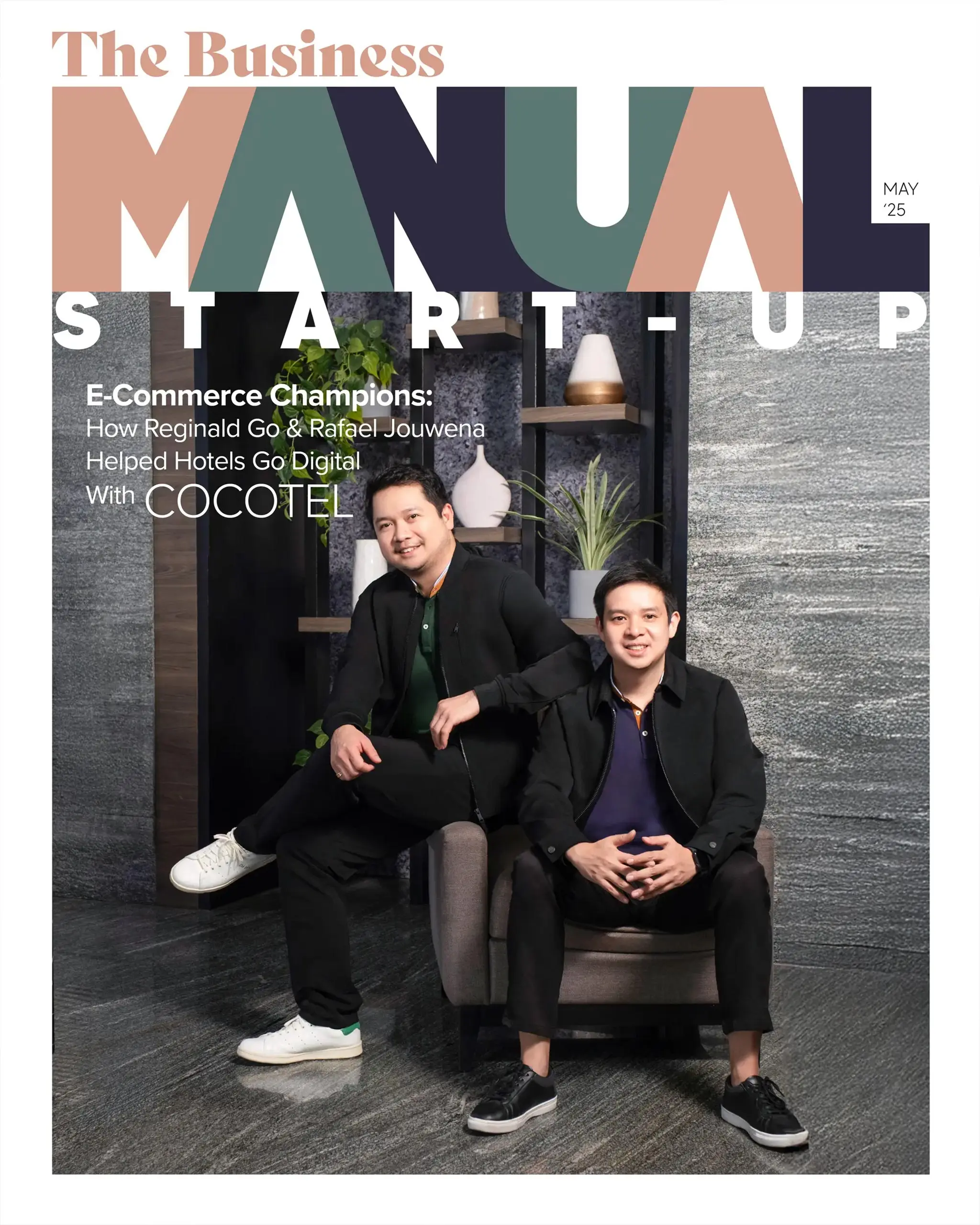
By the numbers, the hotel and resort industry in the Philippines is poised for sustained growth. Tourism in the country is projected to grow from USD 6.26 billion in 2024 to USD 10.49 billion by 2034. And this has prompted PHP 250 billion worth of investment in the industry for 40,000 new hotel rooms. At the center of this perfect storm is Cocotel, a startup founded in 2019, which enables hotels and resorts to plug in to the benefits of e-commerce. With over 300 hotel partners in its network, more than 160,000 bookings to date, and over PHP 2 billion in sales generated, the company is now the country’s second-largest hotel chain with an expanding presence in the Philippines, Indonesia and Australia.
It wasn’t always so. Founded by Reginaldo Go and Rafael Jouwena just before the COVID-19 pandemic, Cocotel struggled to survive during the crisis. Like many startups, it searched for a successful business model, pivoting along its entrepreneurial journey. And, unlike other tech startups, Cocotel mostly bootstrapped its way to profitability, placing difficult sacrifices on the founders’ path to success. Cocotel’s inspirational story serves as a blueprint for other entrepreneurs–one built on grit, adaptability, and purpose.
The Business Manual spoke to Cocotel’s founder Reginald Go and co-founder and CEO Rafael Jouwena in Hotel A and A, one of the company’s partner hotels, who shared the transformative power of Cocotel’s e-commerce solutions. Here are six of the most powerful business lessons they’ve learned on their journey.
1. Find the Pain Point—And Use Your Strengths to Solve It
Cocotel didn’t begin with a grand idea to disrupt the travel industry. It started with a conversation between two overseas professionals working and studying in Australia. Instead of tackling digital transformation, the starting point of Cocotel began with a simple observation: how hard it was to book resorts online in the Philippines.
Reginald Go begins by saying, “We witnessed that there are independent hotels and resorts that use a security logbook when they’re doing reservations. They don’t have a property management system, they don’t have the technology, they’re not available online.”

These two unlikely partners—Rafael Jouwena, a finance and operations professional, and Reginald Go, a seasoned hospitality expert—decided to tackle this gap in the Philippine tourism sector, namely the digital invisibility of independent hotels and resorts. From that shared vision, Cocotel was born.
“I realized, coming from a 5-star hotel background,” Reginald continues, “these independent hotels and resorts don’t have the support and resources that hotel chains like Marriott [or] Shangri-la have.
“So what if we unite these independent hotels and resorts and help them embrace e-commerce?”
The solution was clear: an all-in-one e-commerce and management platform that brought these hotels into the digital age. Cocotel would work with hotel owners to handle all their e-commerce needs. And with Reginald’s hotel background and Rafael’s operational and financial expertise, their strengths led to quick wins for these independent hotels and resorts.
CEO Rafael Jouwena estimates that “as early as the first month of the partnership, the property or the client can enjoy up to 30% increase. At least 30% of online total sales.” And most importantly, Cocotel made sure that the rooms provided by these hotels were “available in every travel agency, all around the world.”
2. Embrace the Pivot
Like many startups, Cocotel’s first idea wasn’t the best one, nor was it the one that led to the success it enjoys today. Early on, the duo focused on improving the aesthetics of partner hotels, believing that physical upgrades would lead to better business. But the pandemic forced them to rethink everything.
Rafael recalls, “When we started the business, we thought that in order for the hotel to be competitive, we need to change the appearance of the hotel. But during the pandemic, we realized, actually the hotels are already nice. But what they need is to empower them online.”
This pivot led to a new business model centered on distribution, revenue management, and digital marketing. By refocusing on their core strengths, Cocotel’s impact multiplied—and so did their partners’ revenues.
Rafael cites Hotel A and A, where our interview took place, as an example. Beginning with only 16 rooms and zero online sales, the hotel was able to consistently book these rooms by partnering with Cocotel. And today, they plan to expand to more floors to generate additional revenue.
By pivoting away from refurbishing hotels and resorts and focusing on delivering online bookings, Cocotel had found its purpose. Multiplying Hotel A and A’s success by Cocotel’s 300+ partner hotels and resorts, Cocotel has emerged as a force that enables and empowers its partners across the industry.

3. When You Hit Rock Bottom, There’s Nowhere to Go But Up
For the founders of Cocotel, it was not a straight road to becoming the second largest hotel chain in the Philippines. As they chose to bootstrap the company, there was no large infusion of cash that they could rely on until they found a viable business model, no runway until the company took flight.
Reginald and Rafael recall that their first office wasn’t in an office at all–it was a rented stall in an ukay-ukay in Fairview. The founders recall eating in cheap carinderias to save money, taking angkas rides to meet clients, and walking door-to-door to Boracay hotels.
“We needed to step away from our comfortable life,” Rafael Jouwena says of those early days setting up the company. “We had a good job. We had a high paying salary. And then when we started the business, we had zero income. Because everything should go to our company. Everything should go to our employees.”
The hard work paid off, and the company was able to set up an office in the Ortigas business district. Then just months after launching, the pandemic hit, and travel halted completely–and with it, hotel bookings and the company’s hard-won revenue.
During this crisis, Cocotel was forced to reduce its workforce from 25 to three. The founders took on roles from customer service to replying to Facebook messages. Reginald returned to Australia for income while Rafael stayed in the trenches.
These moments became the foundation of their story. Rafael says, “This is the time when we were already at rock bottom. There’s no other way but to go up. So we just needed to survive this.”
For Reginald Go, the pandemic re-focused Cocotel’s mission. He saw it as an opportunity to continue their purpose–a strategy that has clearly worked for Cocotel. By standing by their partner hotels and resorts, Cocotel would later reap the benefits of a consumer shift towards digital transactions brought about by the pandemic.
“Opportunity always arises during a crisis,” he says. “Independent hotels and owners are more vulnerable during that time. They need more support. That’s where we come in, to support them on their own initiatives.”

4. Focus on Sustainable Growth
Unlike many startups that burn through millions chasing “unicorn” status, Cocotel raised less than USD 300,000 in external funding over several years.
Rather than seeking angel investors or going through rounds of funding, the founders chose to run Cocotel like a traditional business. Their focus was on profitability and sustainable growth.
“We are different,” Rafael says, “We want to show [what we can do] first in terms of our traction. We want to show first with our numbers. We are quite traditional. We do not take a lot of money… We were only able to raise probably less than 300,000 dollars. Just to sustain our business.”
Rafael emphasizes that this remains a large amount but is significantly smaller than funding for other startups.
Why did they choose a limited amount for external funding? “Because we need to take care of our existing investors,” Rafael explains. “Are they happy with our performance? We want to make sure that we deliver, that’s number one. We grow sustainably.”
Cocotel’s business model is simple and grounded: they only make money when its partners make money. That clarity has built trust with both investors and hotel owners alike. And today, Cocotel is a rarity in the tech space—a profitable, bootstrapped startup scaling with purpose, not hype.
Rafael continues, “It’s not, ‘Okay, I need to raise money in order for me to be profitable. It’s the other way around. You need to be profitable first before you raise more money. Because, right now, it’s a tech winter. It’s hard to make money. You need to be a camel rather than a unicorn.”

5. Partnerships Are Everything
For Cocotel, success isn’t just measured in bookings or revenue. It’s measured in retention and relationships. Its success has been built on partnerships–with clients, with mentors, and within its own team.
Finding the right partner
Finding the right partner was critical when the founders were building Cocotel in its early days. With expertise in hospitality, finance and operations, Reginald and Rafael needed a reliable tech partner. Unfortunately, when they sought to outsource the tech for Cocotel to Filipino companies, they were scammed not just once but three times.
Nevertheless, good fortune eventually smiled upon the founders when they found Jitendra Dadhaniya who became their co-founder and CTO.
Rafael recalls offering Jitendra a partnership. “You will not get paid,” he says. “But you will be part of our company. So it means there is a sense of ownership. That’s what we see the difference is between before and now.”

Partnership with clients
When it comes to clients, Reginald emphasizes that communication is essential to their partnership. Rafael agrees, saying, “Our KPIs are simple. If you make money, we make money… So it means, if you give us targets, you also need to communicate with us, work together with us to make this property bigger. If there’s no communication, we cannot deliver.”
Partnership with mentors
Reginald concedes that the management team cannot be experts at everything. And because of that, it is important for entrepreneurs to find mentors. “As much as you can,” he says, “you need to find a consultant where you’re not good at. You really need to find time and mentors–or at least a consultant to guide you.”
The founders at Cocotel have had the good fortune of finding one such mentor in Steve Sy, the founder of Great Deals. During the pandemic, it was Steve Sy who helped them to dig deep and find the grit they needed to survive the crisis. Reginald recalls Steve telling them, “You know if I will give you the money, it’s like [handing it to you on] a silver platter. You can exit and then you can enjoy life.
“But what is the point of being a founder if you will not feel the lowest point of your life? How will you look back and appreciate what you’ve done after this?” Taking Steve words to heart, the founders got to work and delivered.

The Bigger Picture: Building the Future of Tourism
Cocotel isn’t just riding the wave of digital bookings—they’re helping define the future of Philippine and Southeast Asian hospitality.
With the projected tourism boom, the rise of digital nomads, and the approval of long-stay nomad visas in the Philippines, Rafael and Reginald see massive potential in Philippine destinations.
Comparing the Philippines to other Asian countries with programs that target digital nomads, Rafael says, “The Philippines has better beaches, like Boracay and Palawan. These can be alternative solutions for digital nomads to actually stay in the Philippines to enjoy the scenery. We’re hoping it can actually boost tourism as well.”
Today, with a footprint in three countries and plans for more, Cocotel isn’t just a tech company—it’s a movement to empower independent hotels and democratize access to global travelers.
Final Advice to Founders
To entrepreneurs, Rafael’s message is to never give up.
“It might be hard at the start,” he continues, “but you have to see in the next five years, where do you think that this company will go? If you believe in that goal, you need to do it, but you cannot do it half-heartedly… If you love your company, if you love your vision, you need to do it 100% or even 120%. And grit is the perfect example of that. Do not give up.”

Ever focused on the hotel side of the business, Reginald adds: “ I believe that the success of the business is always with partnerships. As Rafa said, you can’t do it alone. You should have your right team, you should have your right partners to help you achieve your goals in the business.”
Text VINCENT SALES
Photography ED SIMON of KLIQ INC.
Videography JR RAMIREZ of KLIQ INC.
Art Direction ANDREA SANGCO
Sittings Editors RJ LEDESMA, JILL TAN RADOVAN
Shoot Coordination TONI MENDOZAShot on Location HOTEL A AND A, QUEZON CITY
Frequently Asked Questions
Cocotel operates an all-in-one e-commerce aggregator and asset-light property management system for independent hotels. By integrating properties into global distribution systems (GDS) and digital booking channels, the platform scales online sales volume on a performance-based commission infrastructure where merchant revenue directly anchors platform fees.
The platform introduces algorithmic pricing optimizations and global distribution pipelines that bypass manual reservation logbooks. Migrating legacy operations to a cloud-based distribution framework accelerates global room availability, typically delivering up to a 30% surge in online sales volume within the initial month of implementation.
The camel framework prioritizes immediate unit economic profitability, capital efficiency, and sustainable revenue traction over speculative, venture-backed burn rates. Cocotel applied this model by raising less than $300,000 in external funding, preserving enterprise equity while scaling operations across regional territories like Indonesia and Australia.
Following multiple vendor development failures with external software firms, the founders shifted from transactional outsourcing to an equity-based partner model. By onboarding a technical co-founder and Chief Technology Officer via equity distribution, the enterprise aligned software architecture incentives directly with long-term company performance.
The domestic hospitality landscape is buoyed by a projected market growth trajectory reaching $10.49 billion by 2034, supported by $250 billion in institutional capital investments. This growth is further accelerated by structural government policy adaptations, such as long-stay nomad visas, which attract high-yield international digital nomads to regional hospitality corridors.