WATCH: How Jessica de Mesa-Lim Built Kindred and Took Charge of Women’s Health


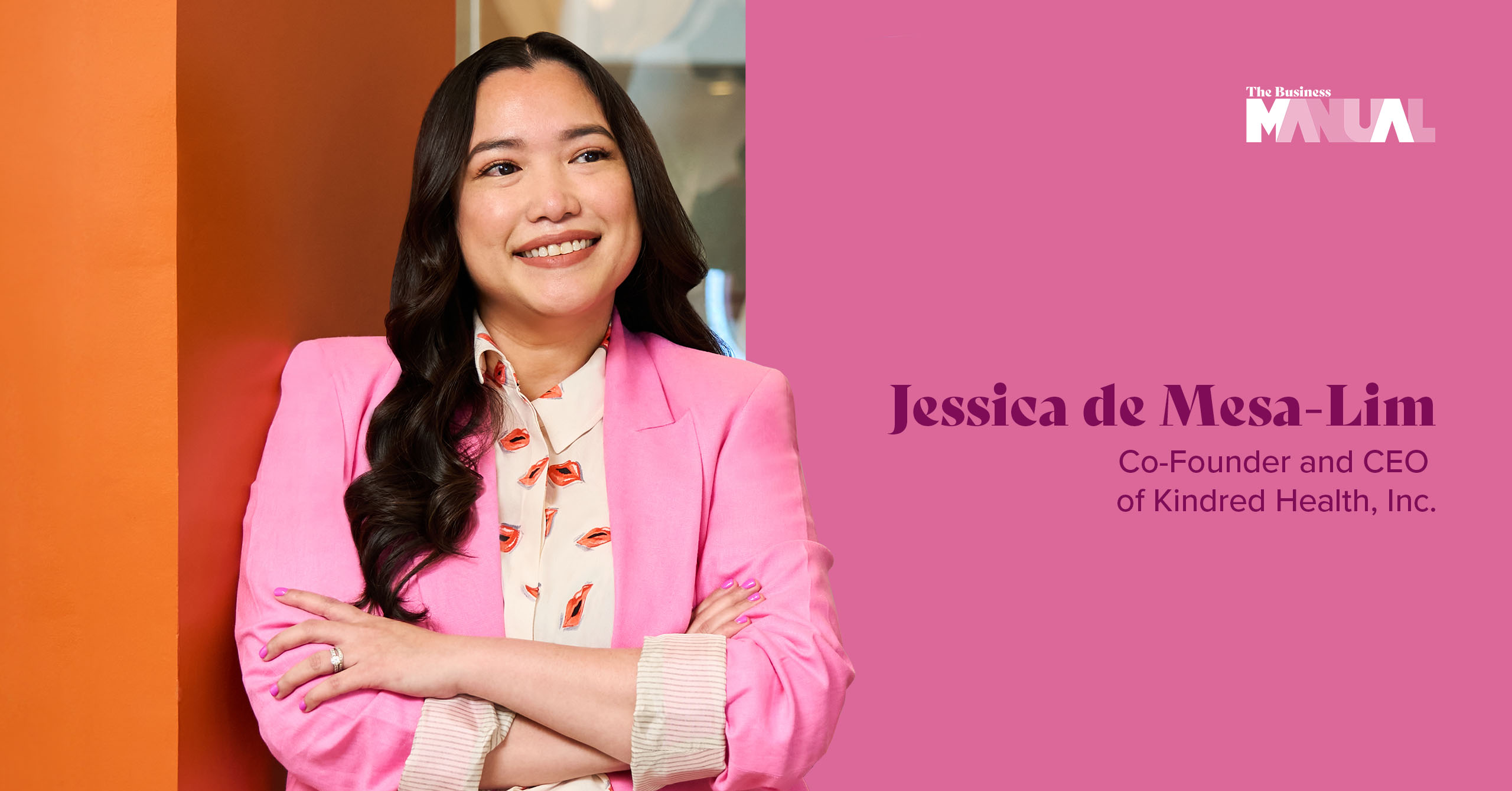
Kindred CEO Jessica de Mesa-Lim shares the story behind launching the Philippines’ first femtech startup.
Read the Full Story only on The Business Manual: Empowering Women Through Healthcare: How Kindred CEO Jessica de Mesa-Lim Built the PH’s First Femtech Company
Like many startups, Kindred seeks to solve a pain point. For Kindred, this pain point is an often-overlooked problem that has always been obvious to women: women’s healthcare. By championing women’s health, Jessica de Mesa-Lim pioneered the country’s first “femtech” company and empowered thousands of women to attain a healthier life.
In an exclusive interview with The Business Manual, Jessica shares the story behind Kindred—one of the Philippines’ most promising tech startups—and how it all began. She shares how in 2019, after working abroad for tech startups for many years, she was shocked by the state of women’s healthcare in the country.
“I’m able to compare what is out there in more advanced countries versus what we have here,” she says. “We want to elevate the standard of women’s healthcare, and it’s difficult until now because when we say women’s healthcare, people think it’s just about pregnancy, when we know very well in Kindred that it’s not.”
A Safe Space for Women
Through Kindred’s app and its clinics, the company aims to create a safe space where women can pursue better health holistically, whether it be for mental health, reproductive health or wellness.
Jessica shares why this “safe space” is important, saying, “In all these surveys and research, it’s interesting because what stands out in terms of their pain points is not actually… the medical condition or diagnosis. What comes out on top of feedback from our patients is that they want a safe space.”
Today, Kindred is poised to make a difference in the lives of potentially millions of Filipino women. It has won esteemed startup awards and been recognized in Forbes Asia’s 100 to Watch List.
Jessica sums up the success of her femtech startup, saying, “I really believe that the best startup ideas are the ones that [are] trying to solve problems in the community, and these problems are very close to my heart. For example, our patients say ‘I was judged and shamed by my doctor. I was asking how to protect myself from sexually transmitted infections.’ But then, the answer that they get is actually not that helpful and that prevents [them] from seeking the right care and seeking the right treatment because then you feel embarrassed and shamed.”
Watch the full interview to learn more.
More From Features