Jollibee’s Global Footprint: How Many Stores Are There Worldwide?


The Filipino fast-food giant is serving joy across 1,779 stores—and counting.
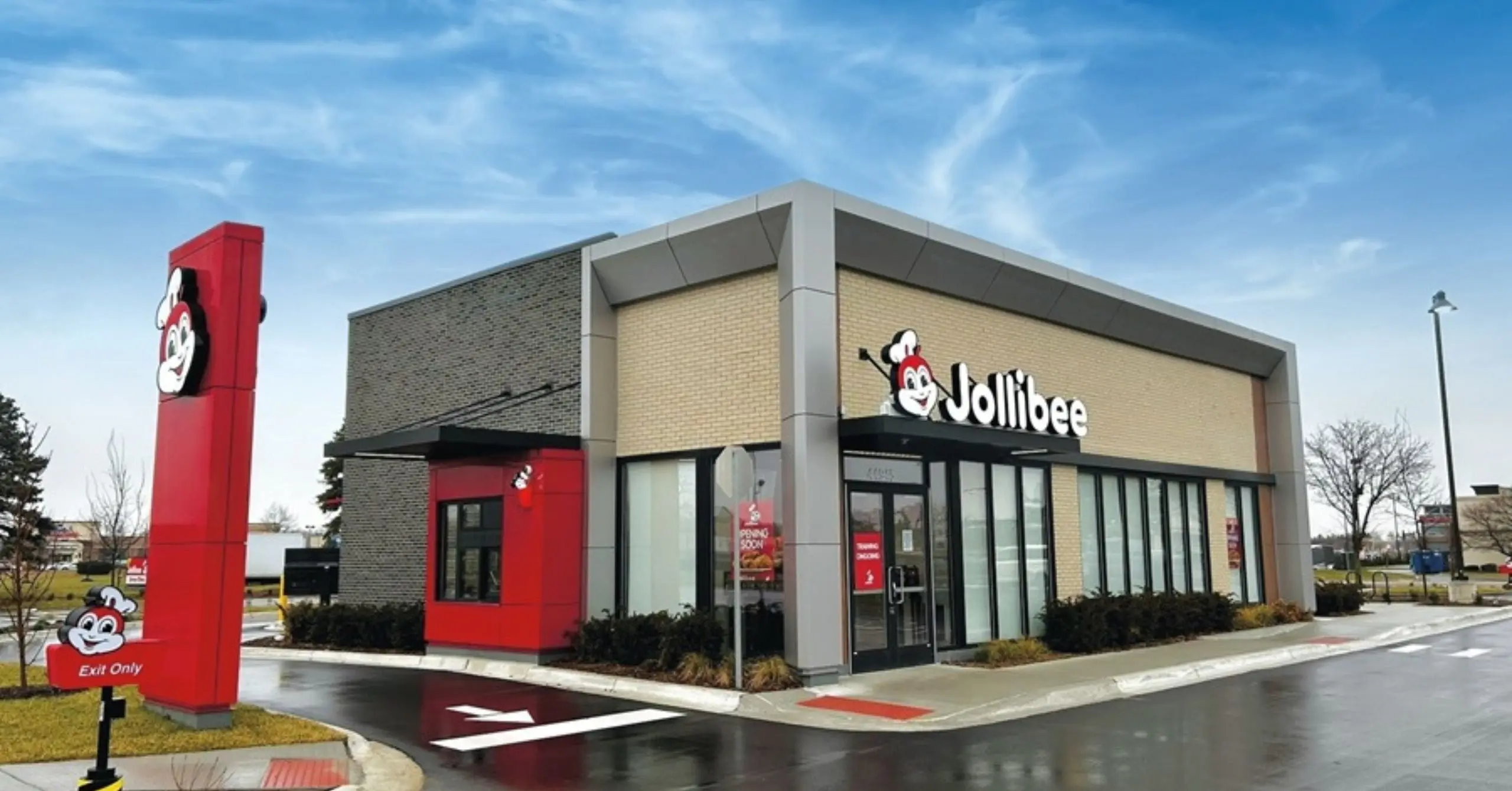
If there is one Filipino brand that has made significant strides toward establishing a strong global presence, it would have to be Jollibee. What began as a modest ice cream parlor in 1975 has grown into one of the world’s most dynamic fast-food chains. To date, Jollibee now has 1,779* stores across the globe, and the number is expected to grow with the company’s continuous expansion efforts.
Majority of the fast food giant’s stores are located in the Philippines, with 1,293 in total. Jollibee also has a strong market presence across the rest of Southeast Asia–with 214 stores in Vietnam, 24 in Singapore, 22 in Malaysia, and 21 in Brunei.
Hong Kong, a famous hub for Overseas Filipino Workers (OFWs), has 20 Jollibee outlets while nearby Macau has 4.
According to data from the Department of Migrant Workers, over a million land-based OFWs were deployed in the Middle East in 2024. There are 60 Jollibee outlets across the region: 24 in the UAE, 14 in Qatar, 11 in Saudi Arabia, 8 in Kuwait, 2 in Bahrain, and 1 in Oman.
The United States, Canada, and Guam have become home to Filipino migrants over the years, and to quite a number of Jollibee stores, too. Currently, there are 76 Jollibee stores across the U.S., 28 in Canada, and 2 in Guam.
Jollibee has likewise expanded to Europe. There are 12 Jollibee outlets in the United Kingdom, while Italy has 2. There is also a Jollibee in Spain.
Built for Filipinos, Embraced by the World
Jollibee’s early success was rooted in its ability to give Filipinos what global competitors couldn’t—a taste of home. As the brand ventured abroad, it discovered a powerful advantage: the Filipino diaspora.
From Los Angeles to Riyadh, and Hong Kong to Milan, overseas Filipinos lined up not just for a meal, but for comfort, memory, and connection. For many, Jollibee became a cultural lifeline.
And then, something remarkable happened: non-Filipinos started lining up too.
Drawn in by curious flavors and catchy online content, new markets began embracing Jollibee’s offerings—from its sweet-savory spaghetti to the cult favorite Chickenjoy. Jollibee wasn’t just introducing a new cuisine—it was introducing a new emotional experience of fast food. The smiles, the songs, the Bee himself—it all added up to something bigger than just a meal.
Local Adaptation, Global Heart
Jollibee did not simply copy Western fast food chains; it reinvented fast food from a Filipino perspective, staying true to its roots while adapting to local markets. It’s not uncommon to find localized menu items in Jollibee stores across the globe, or a Jollibee nestled between renowned Western brands, holding its own.
Across all locations, one thing remains consistent: the company’s mission to “serve great-tasting food and bring the joy of eating to everyone.
Strategic Moves, Global Vision
While the brand’s expansion seems effortless, it’s anything but accidental. Jollibee’s parent company, Jollibee Foods Corporation (JFC), has taken a long-game approach to global growth—grounded in data, acquisition, and bold investments.
In the last decade alone, JFC has acquired Smashburger in the U.S., tapping into the premium burger segment. It has also taken ownership of The Coffee Bean & Tea Leaf, opening doors to the global café market. JFC has likewise acquired Tim Ho Wan and Yonghe King, boosting its presence in Asia’s highly competitive food markets.
In the Philippines, JFC’s earliest acquisitions include Greenwich Pizza, Chowking, and Red Ribbon Bakeshop. The company also acquired Mang Inasal, as well as Super Foods Group, which owns and operates Highlands Coffee.
Otherwise known as the Jollibee Group, JFC is also responsible for bringing Panda Express to the Philippines through a 50/50 joint venture. It also operates the local franchise of Burger King.
All this while expanding its flagship brand Jollibee in key cities like London, New York, Dubai, and Vancouver—with new stores drawing crowds that rival any Western fast-food launch.
Moreover, the Jollibee Group employs 31,000 people worldwide, and recently won its fourth Gallup Exceptional Workplace Award, a prestigious global recognition given to organizations that set the benchmark for employee engagement and performance. It is the only Philippine-based company to receive such an honor.
The Jollibee Group is poised to add up to 800 stores across all its brands this year, which means that more employees will be serving joy worldwide.
*As of May 16, 2025. Data provided by JFC
Image courtesy of the JFC website
Frequently Asked Questions
As of May 16, 2025, Jollibee operates 1,779 stores globally. The Philippines accounts for the majority with 1,293 locations, followed by Vietnam with 214. The brand also has stores across the Middle East, North America, Europe, and other parts of Southeast Asia.
Vietnam has the largest Jollibee presence outside the Philippines with 214 stores. The United States follows with 76 locations, and Canada has 28. In the Middle East, the UAE leads with 24 outlets, followed by Qatar with 14 and Saudi Arabia with 11.
Jollibee Foods Corporation pursues a multi-brand acquisition strategy alongside organic Jollibee store expansion. JFC’s global portfolio includes Smashburger, The Coffee Bean and Tea Leaf, Tim Ho Wan, and Yonghe King, complementing its Philippine brands such as Greenwich Pizza, Chowking, Mang Inasal, and Red Ribbon Bakeshop.
Jollibee’s international growth has been driven by two factors: the Filipino diaspora, which established the brand as a cultural touchpoint in key OFW destinations, and a localization strategy that adapts menu offerings to regional tastes while maintaining core products like Chickenjoy. This combination has allowed the brand to attract non-Filipino customers in markets including the United States and the United Kingdom.
The Jollibee Group employs approximately 31,000 people globally. The company has received four Gallup Exceptional Workplace Awards, making it the only Philippine-based organization to receive the recognition, which benchmarks employee engagement and organizational performance.

More From Case Studies