The Gigil Effect: Disrupting the Norm, Winning the Game


Five marketing lessons from the mavericks of advertising, the founders of today’s hottest ad agency, Gigil
Ads hold a special place in the Philippines. Beyond tactical Lazada or TikTok sales campaigns, ads mark holiday seasons with heart-warming, emotional messages, as executed to perfection by Jollibee and McDonald’s. They become a part of online discussions. Funny ads are shared with friends even as Filipinos hum catchy jingles from decades past. It can even be argued that ads play a role in defining our culture. And in the advertising-crazy Philippines, few ad agencies have had an impact like the oddly named duck that is the company called Gigil. Their campaigns have landed on social media with the force of an atomic bomb–mostly for good reasons and sometimes for bad. But what’s undeniable is that Filipinos can’t seem to get enough of their mix of creative, humorous, entertaining–at times downright confusing–ads.
In less than a decade, Gigil has produced some of the most talked-about ads in the country. Every Filipino has their favorite whether or not they know the ads were created by Gigil. There is the bizarrely brilliant RC Cola “Basta” spot, which put the agency on the creative map. There’s the stressed out Ces Drilon chilling to Coco tea. Or the Orocan ad which featured the company’s products being thrown from the top of a skyscraper. And the list goes on to include campaigns for Netflix, Grab, and TNT which have won the agency international accolades such as the coveted Effie Awards. At the heart of their success is a shared belief: great ideas move people and sell products.
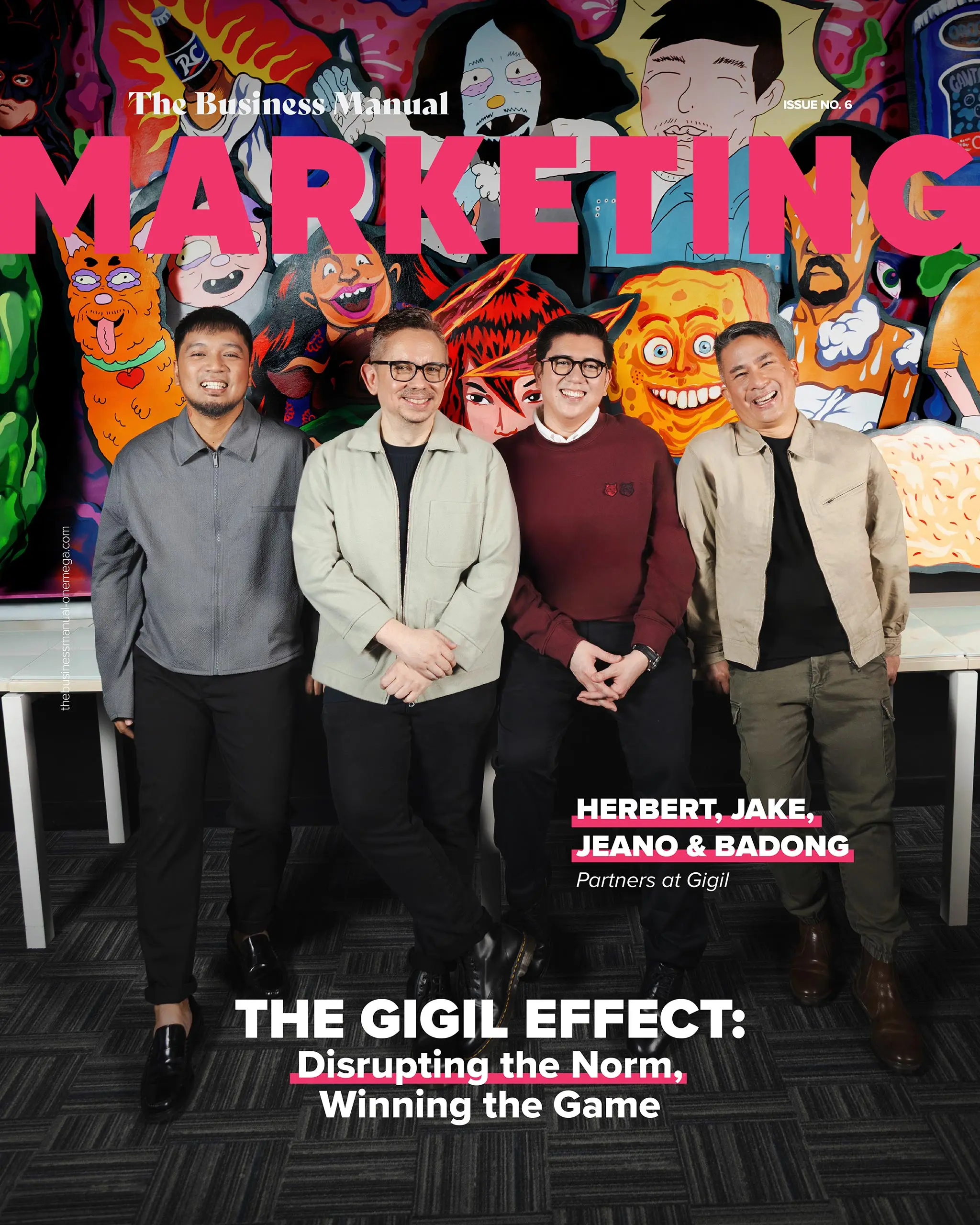
Founded by industry veterans Badong Abesamis, Herbert Hernandez, Jeano Cruz, and later joined by Jake Yrastorza, Gigil didn’t just carve out a niche–it revived a movement often forgotten in today’s tech and AI-obsessed world, one where creativity rules marketing. For entrepreneurs, small businesses, and large multinational brands alike, it is a reminder that marketing and communications has always been about human connection.
The Business Manual spoke to the Gigil founders on an auspicious date, coincidentally after the word ‘gigil’ became a part of the Oxford English dictionary. With both Gigl the agency and gigil the word going mainstream, we delved deeper into the company’s formula for success and what entrepreneurs can learn from them about marketing and advertising.
Here are five marketing lessons from Gigil’s journey–straight from the founders themselves.

1. A great idea is one that gets shared
Before anything else, what makes a Gigil ad?
In today’s digital world, where content scrolls by in milliseconds, a good idea isn’t enough–it needs to be talked about, reposted, and remembered. That’s why one of Gigil’s core requirements for any campaign is simple: Is this shareable?
Talking about this modern reality, Badong Abesamis, founding partner of Gigil, says, “We live in a social world, and so we ask ourselves, ‘Will people talk about this positively on social?’ So before we present the client, it has to meet that particular standard.”
For Gigil, virality isn’t just a bonus–it’s part of the strategy. It’s rooted in the company’s philosophy, in its very name. After all, instead of being named Abesamis and company, the agency is called Gigil, which according to the Oxford English dictionary’s definition means a “feeling so intense that it gives us the irresistible urge to tightly clench our hands, grit our teeth, and pinch or squeeze whomever or whatever it is we find so adorable.”
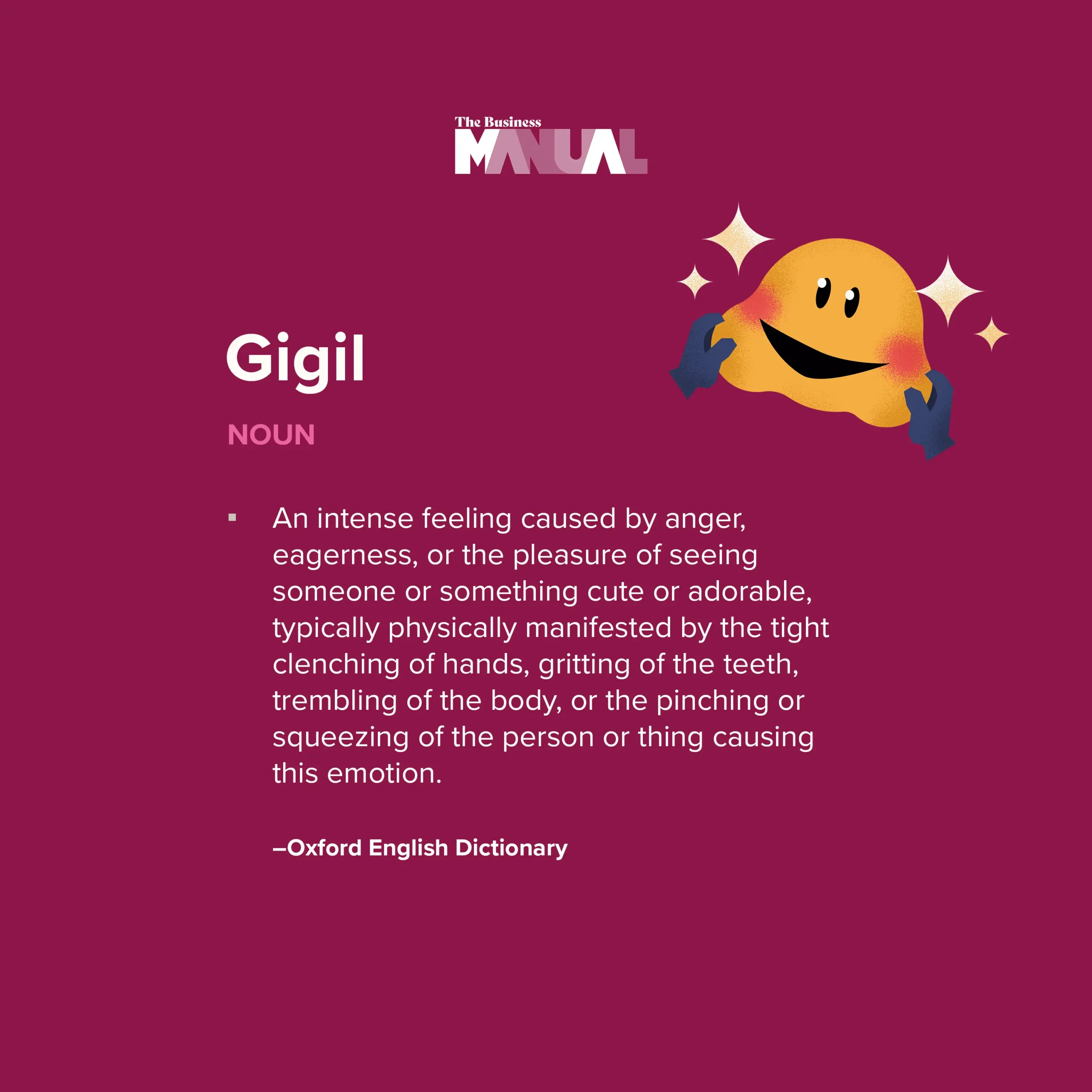
For Gigil, this “cute aggression” must translate to the shareability and the joy of the ads it creates.
It’s part of the promise the agency makes, founding partner Herbert Hernandez says. “We’ll try to,” he explains, “kumbaga, gawin yung gigil na inayo namin na walang lalabas sa office na ito na hindi tayo masaya. [We’ll try to, in a manner of speaking, execute the gigil that we promised to not release anything from this office that we’re not happy with.]”
Whether it’s a weirdly relatable family drama in an ad or a laugh-out-loud parody, Gigil makes sure the content earns attention. They demand it.
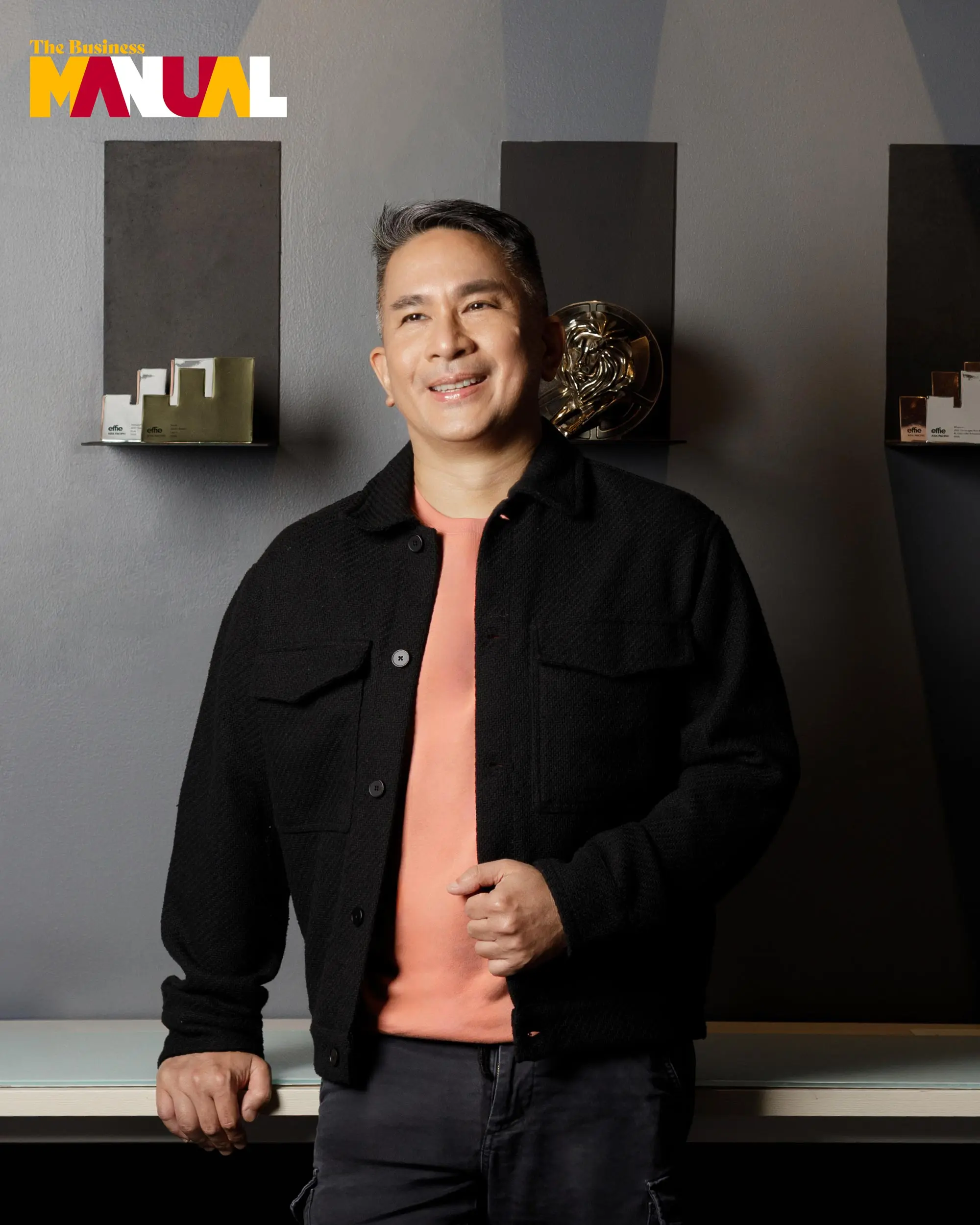
2. Entertainment is king
Shareability is, of course, an oversimplification. Ask Gigil what makes an ad work, and they’ll tell you it’s not just about virality. It’s about being entertaining. And even though Filipinos are generally more accepting of ads than other cultures, there is no escaping the fact that no one wants to watch ads.
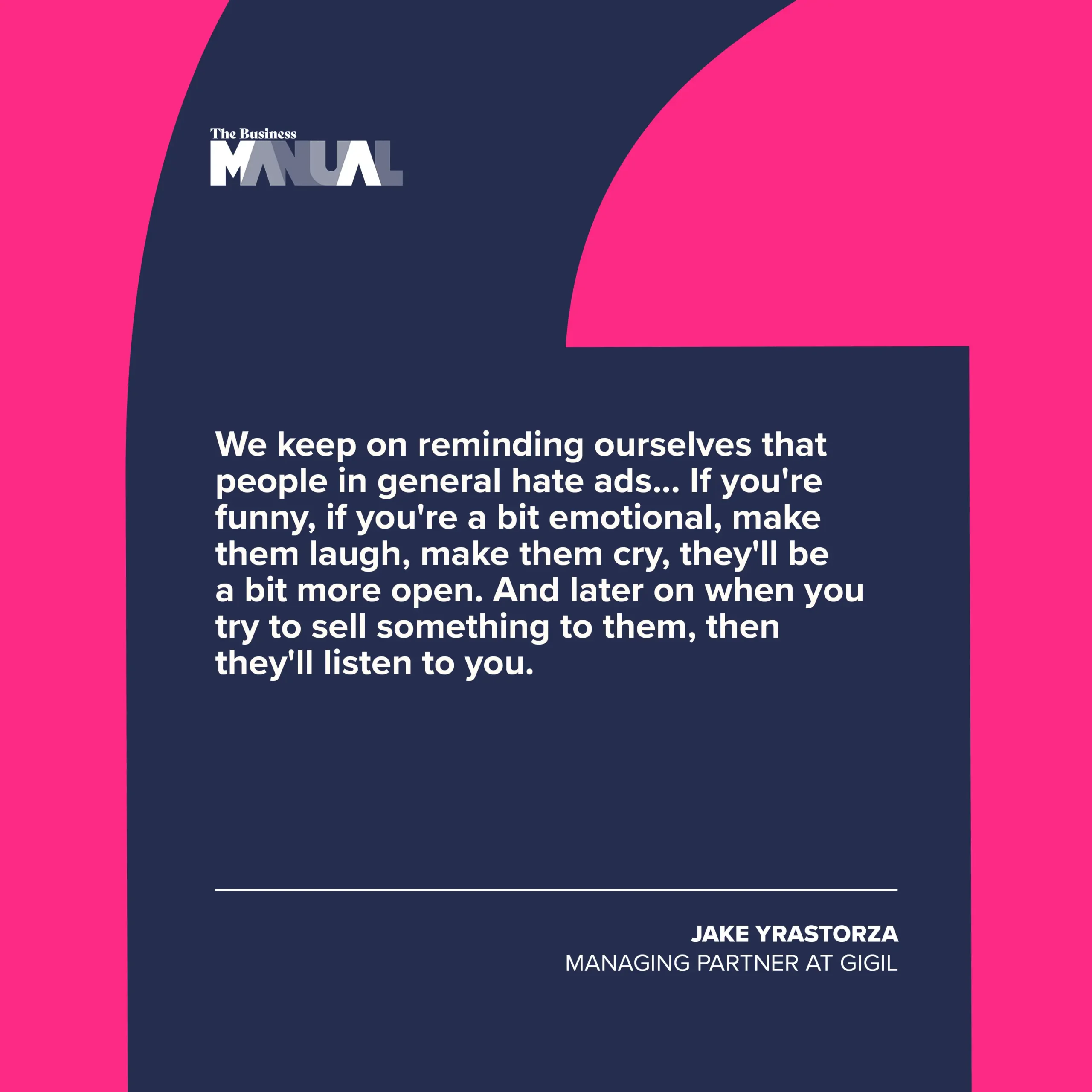
“We keep on reminding ourselves that people in general hate ads,” Jake Yrastorza, Managing Partner of Gigil says. “If you’re funny, if you’re a bit emotional, make them laugh, make them cry, they’ll be a bit more open. And later on when you try to sell something to them, then they’ll listen to you.”
From memes to mini-movies, Gigil’s work is designed to delight and surprise, knowing that emotional resonance leads to sales.
Jeano Cruz puts it this way: “It’s more expensive for clients to do wallpaper ads because you have to pay so much to put it out and get people to watch it. Invest in good ideas so you don’t have to force people to watch.”
This philosophy drives the creatives at Gigil to treat every brief–from simple flyers to full-blown campaigns–as a chance to create something memorable.
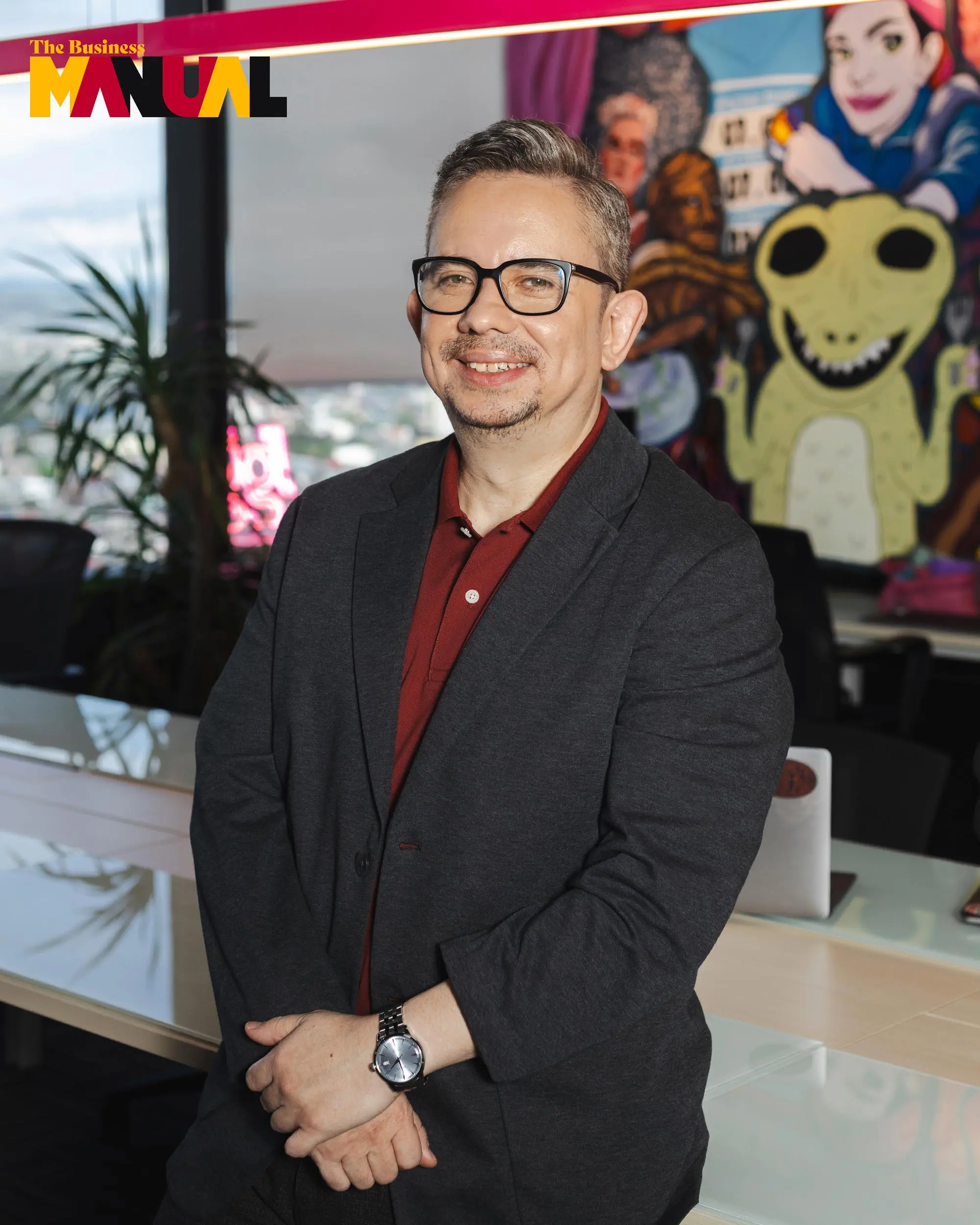
3. Don’t play by the rules
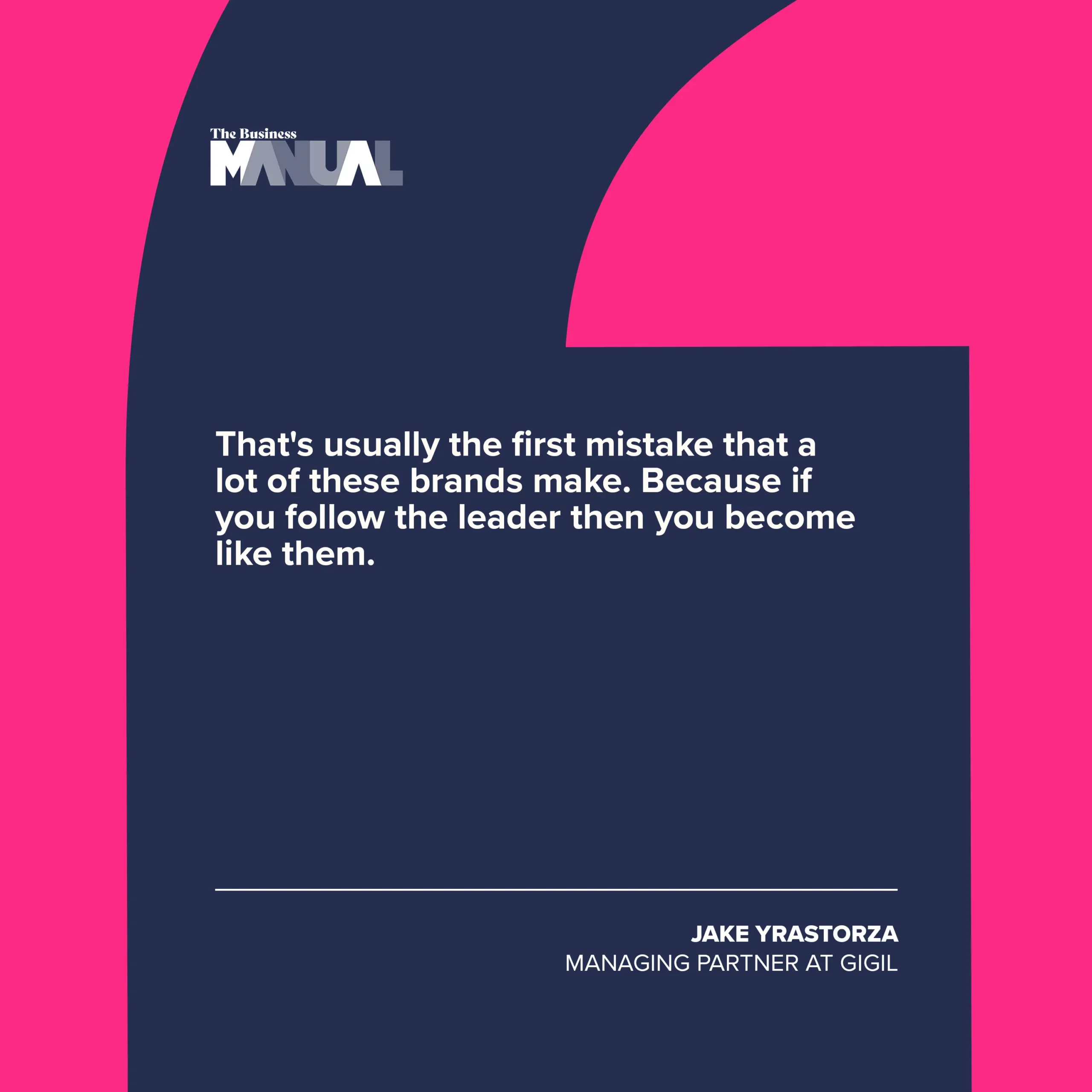
One of the earliest decisions Gigil made as an agency was to ignore the traditional playbook. According to Jake Yrastorza, smaller brands make a crucial mistake when they mimic industry leaders. “That’s usually the first mistake that a lot of these brands make,” he says. “Because if you follow the leader then you become like them and people will attribute whatever campaigns you’ve done to the leader. So there’s even more pressure for the smaller players to be more unconventional and more creative.”
Gigil aimed to stand apart, especially when working with challenger brands that didn’t have the massive budgets of multinational giants. For Badong Abesamis, that meant focusing on what money couldn’t always buy–bold ideas.
“Their only advantage is, hopefully, ideas,” Abesamis says. “Ideas that people fall in love with on social media, so much so that, without us even boosting it a lot, it gets around. So word about the products gets around also, and purchase follows.”
Breaking the rules, however, came with challenges. By constantly pushing the envelope in creativity, Gigil found itself mired in controversy when its 2021 “Pandemic Effect” ad for Belo faced an online backlash. Gigil and Belo were forced to apologize for the ad. Then in 2024, the family of former senator Gil Puyat filed a complaint against Gigil for its “Gil Tulog” ad, citing disrespect for their father’s legacy.
Herbert Hernandez, founding partner of Gigl, admits that the company learned much from these challenges, and adapted new ways of working. Gigil has formed a sensitivity council which works with creatives internally. They also employ external partners to provide an outside point of view and to help the company “break the groupthink.”
For Badong Abesamis, these efforts are all part of how Gigil faces the daily challenges of selling creative work to its clients.
“We learned a lot from our past. But we haven’t stopped yet,” Abesamis says. “[Clients are] still asking for the big ideas. They want us to be brave for them.”
For Hernandez, it’s about Gigil’s resilience. Despite challenges, despite setbacks, Gigil always bounces back to deliver groundbreaking work. He says, “Tingin ko yung isang aspect ng Gigil is resilience. Grit. Na maraming story kasi ng failure. Maraming rejection. So magbabounce back ka ba? O bibigay mo na lang ba yung pangit? Hindi, babalik kami, mas maganda. [In my view, one aspect of Gigil is resilience. Grit. There are many stories of failure. A lot of rejection. So will you bounce back? Or will you just give ugly work? No, we’ll come back, with better work.”

4. Small budgets? Make big moves
Today, Gigil is recognized as one of the country’s top agencies, named by Campaign Brief Asia as the number one Philippine agency in 2023 and 2024. It also won the Agora award for Top Agency of the Year in 2024, among a plethora of creative awards like the Cannes Lions (2021, 2022, 2024) and five consecutive Effie Awards from 2020 to 2024. Despite the accolades, Gigil remains an eight year old company, and still behaves like the new kid on the block with much to prove. And because of Gigil’s spirit, the company has always positioned itself as an ally of underdog brands–brands with ambition but limited resources.
Their breakout RC Cola campaign is a case in point: low budget, zero celebrity endorsements, and yet it generated a 67% sales spike and international buzz.
Jeano Cruz, Creative Director and Partner at Gigil, says, “Sometimes, it’s better to have a small budget. Because, you’re being creative on how to do it with what you have. It’s a big help.”
The agency’s mindset flips the usual equation. Instead of relying on paid media, they focus on earned attention–making content so good that it spreads organically.
Badong Abesamis eschews the big budget 360° cross media campaigns of yesteryear. “It’s not really a 360 campaign now,” he says. “Just handle the 5%, but make sure that 5% is explosive.”
For brands with tight wallets, that’s great news. As Gigil has proven time and again, a big idea can punch far above its budget.

5. Creativity and business-building are not opposites
One of the most refreshing truths from Gigil is this: you don’t have to choose between being creative and being commercial. You can–and should–do both.
“Do we develop an idea that will build a business, or do we develop an idea that’s just creative?” Jake Yrastorza asks. “It was a debate. Let’s pick one. Now we’re slowly realizing that you don’t have to pick one. In fact, you shouldn’t pick one. Both can and should coexist.”
Yes Gigil’s campaigns are often wild. But they aren’t wild for wildness’ sake. They’re rooted in strategy, anchored by insight, and built to deliver results.
Herbert Hernandez focuses the creative discussion on Gigl’s commitment to their clients’ bottomline, saying, “That’s what we do. We ask every after campaign. Did you sell? We monitor how the sales are. Because we’re concerned. We can’t be creative for creativity’s sake.”
Jake Yrastorza echoes the sentiment, saying, “Yeah, this will sell the stocks and make your merchandise fly off the shelves, the ideas that we try to produce for you.”
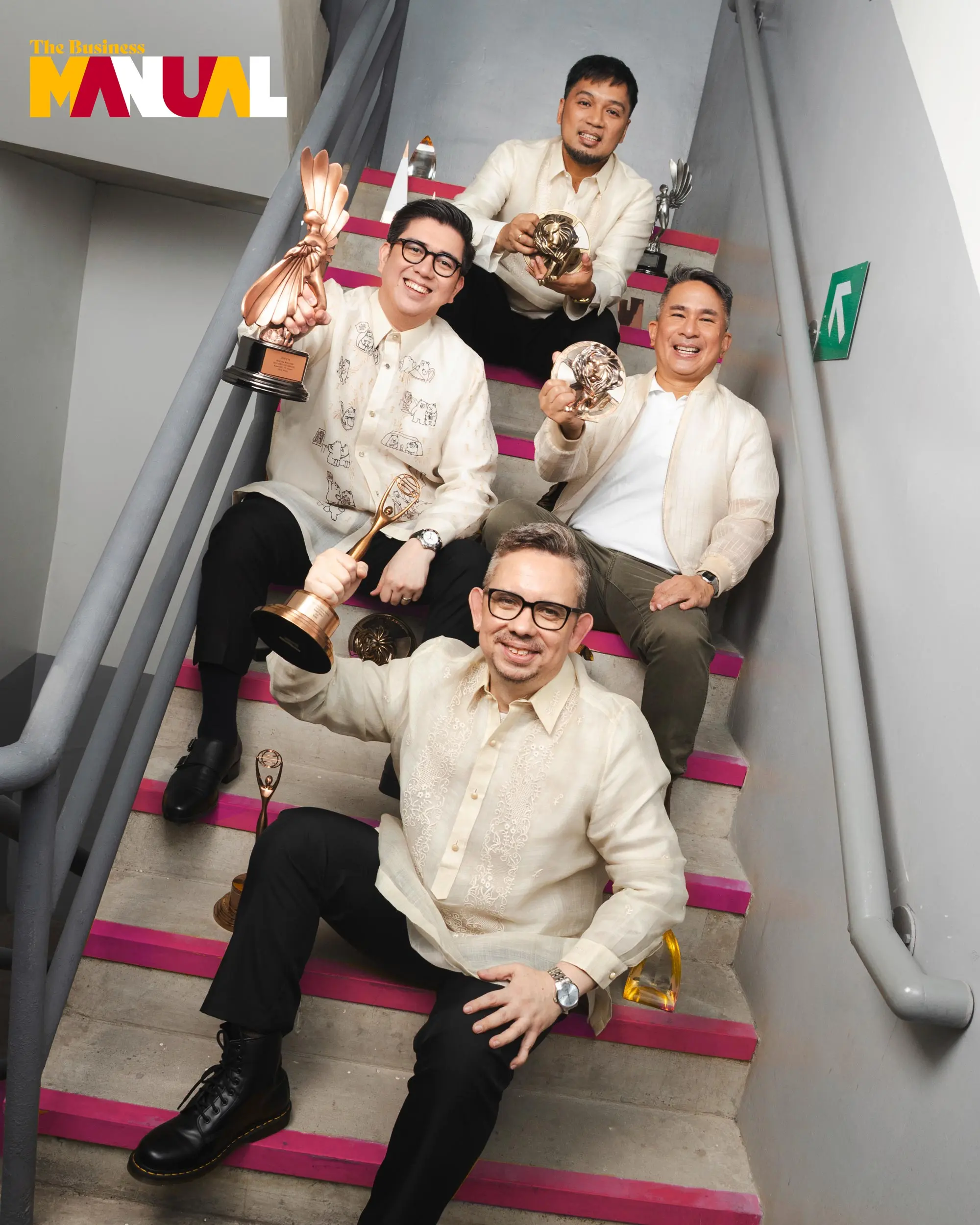
Creativity for the next generation
As mentors for young creatives, the Gigil founders are full of valuable experience. To entrepreneurs and marketers, likewise, much can be learned from their message.
Jeano Cruz says: “When you’re starting, you follow a mentor. Don’t follow money first. Find that mentor that will really take care of you, sharpen you, and it will benefit you in your whole career.”
Herbert Hernandez says: “Don’t look at other people’s plates unless it’s to check if they’ve had enough. Focus on bettering yourself.”
Badong Abesamis says: “Give more than what’s expected. That’s the real essence of gigil.”
Jake Yrastorza says: “There’s a lot of BS in the industry. Learn to see what’s true–in people, in your ideas, in the work you create.”
In the end, Gigil’s greatest lesson may be this: Advertising doesn’t have to look the same. It can be brave, heartfelt, funny, weird, and unforgettable–and it can sell at the same time.
Because when you put your heart into every idea, you’re not just making ads.
You’re making magic.
Text VINCENT SALES
Photography KIERAN PUNAY of KLIQ INC.
Videography JR RAMIREZ of KLIQ INC.
Art Direction ANDREA SANGCO
Sittings Editors RJ LEDESMA, JILL TAN RADOVAN
Shoot Coordination TONI MENDOZA
Shot on Location GIGIL, SM AURA PREMIER TOWER, TAGUIG