Creating Opportunities: 6 Filipina Leaders Shaping the Future of Business


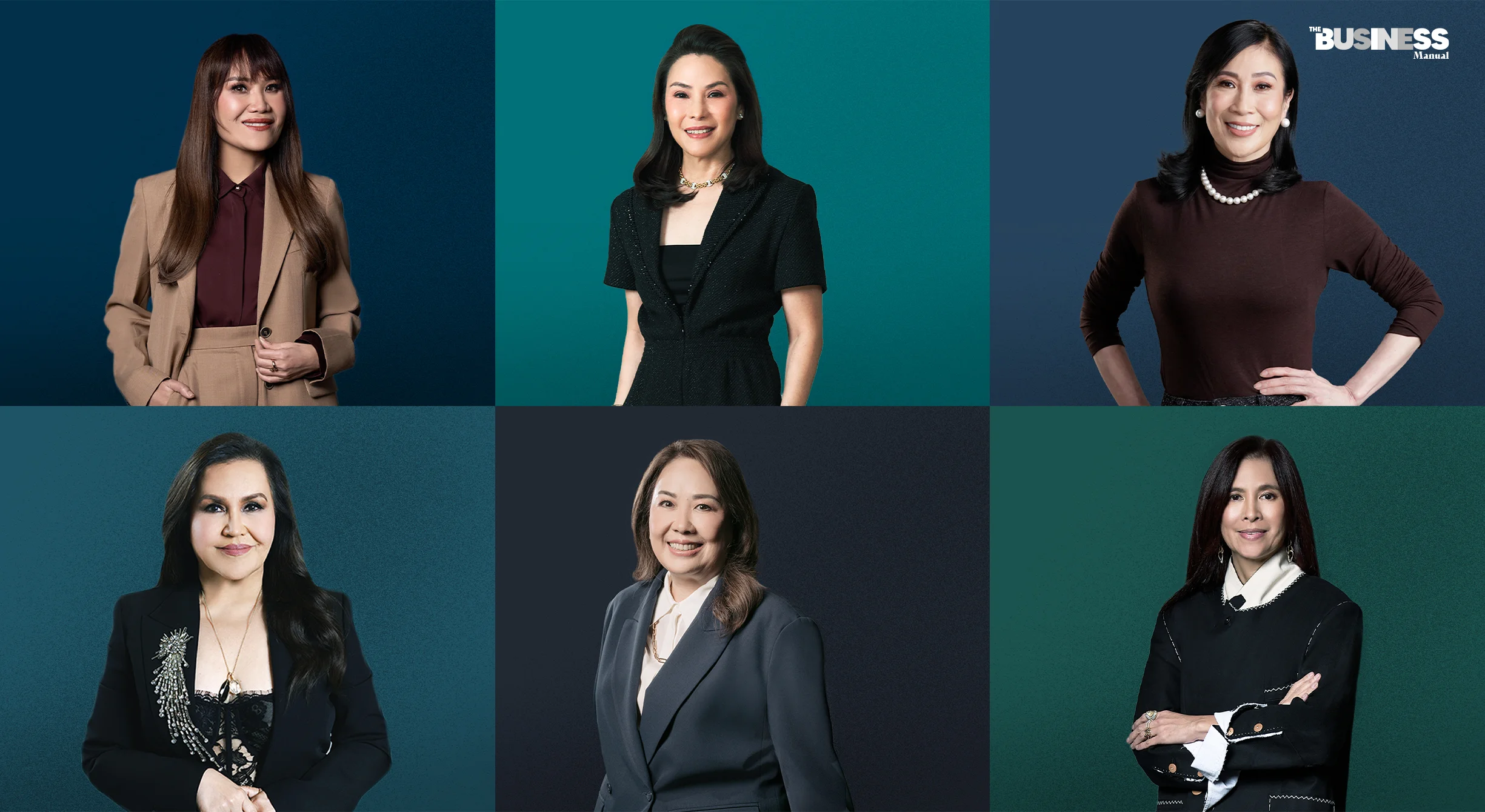
Female leadership has become more ubiquitous compared to decades past. The corporate collective recognizes the strengths and capabilities that women bring to the table.
Recent studies by the Leadership Circle and the International Monetary Fund show that women consistently outscore their male counterparts in authenticity and systems awareness. Female leaders, the research suggests, strive harder once in leadership positions compared to males, resulting in higher-level performance. A higher representation of women in senior leadership leads to better financial performance.
The Business Manual interviewed six women leaders on their leadership philosophy, approach to handling challenges, and vision for the future of women leadership.
Creating Opportunities for Others to Rise
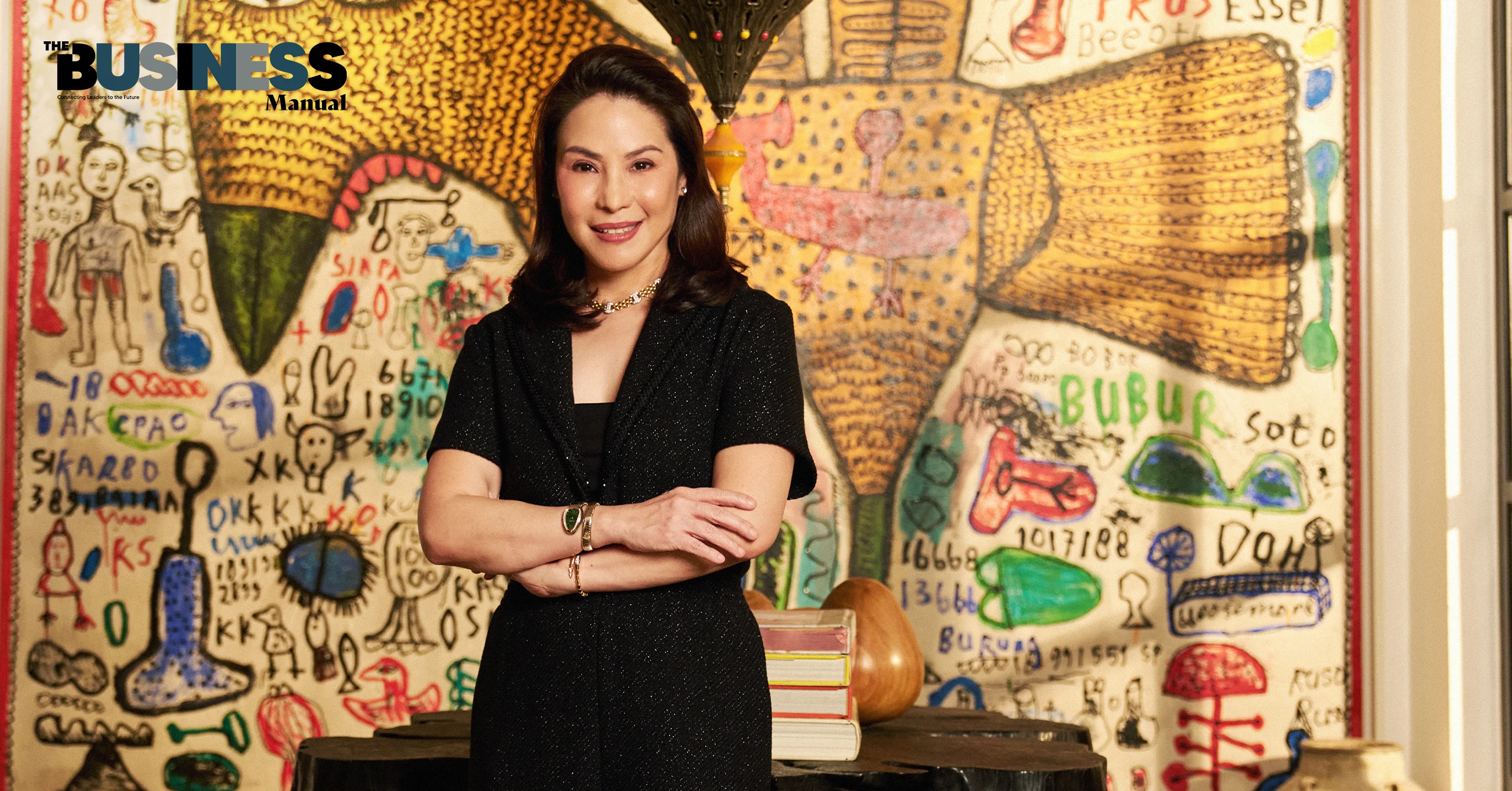
Ana Lorenzana de Ocampo, president of Wildflour Bakery + Café Corp, ensures that everyone is given the opportunity to demonstrate their capabilities and prove their worth in her company, regardless of gender.
Women have a significant presence in executive leadership at the company.
“When representation is balanced and inclusive, the variety of viewpoints leads to stronger decision-making and better overall outcomes,” she said.
This perspective became useful during the COVID-19 pandemic, which impacted all industries, including the restaurant sector. With a diverse leadership team and staff, de Ocampo was able to take in viewpoints from all areas of the business and adapted quickly, guaranteeing the survival of Wildflour and its various brands.
“The uncertainty reminded me that no one has all the answers, and that humility is key,” she said. “Listening to different perspectives, even those that challenge your own, became more important than ever when making critical decisions.”
On the innovation front, de Ocampo makes it a point to have everyone - herself included - commit to continuous growth in their respective fields. The IT team, for instance, explores how to use artificial intelligence to the company’s advantage. The marketing team, on the other hand, stays up to date with social media and consumer behavior, while the operations team keeps abreast of emerging market trends.
“Keeping our knowledge current enables us to stay adaptable, data-driven, and technologically empowered.”
For future Filipina leaders, de Ocampo offered the following advice: “Invest in your skills, build meaningful relationships, and never underestimate the power of empathy in leadership.”
“Stay humble and seek guidance through prayer, trusting that when your intentions are genuine, God will lead you on the right path,” she added.
She reframed the concept of leadership as thus: “[It] is not about occupying a position, but about creating opportunities for others to rise with you.”
Recognizing Women Leaders as the Norm

Katrina Ponce Enrile, administrator and CEO of the Cagayan Economic Zone Authority, is a seasoned executive and entrepreneur who defines success as people finding that they can build a future for themselves and their family in their home province.
Ponce Enrile does her part in making Cagayan resilient and future-ready by bringing in investments, training people and developing communities, and establishing systems as a foundation for lasting growth.
“Impact isn’t the number of projects you announce,” she said. “Impact is when a young person can look at home and say, ‘I’ll stay. I can build my life here.’”
In a role where expectations are high and patience is low, she refuses to buckle under the pressure and maintains the discipline of refusing shortcuts.
Leadership is stewardship, according to Ponce Enrile.
“I anchored myself on one question: ‘Will this make the institution stronger and more trusted after my term?’”
The goal, she said, is recognizing women in the C-suite as the norm rather than a rare headline. She leads the government-owned and controlled corporation with two deputy women administrators, both of whom were chosen due to their capabilities.
“True equity happens when women are trusted with real authority, evaluated fairly, and supported in the same way organizations support any leader they believe in.”
Staying true to the strengths of feminine leadership, Ponce Enrile advised young female leaders-in-training to start now and not wait for permission to step up: “Lead from your values. Let competence be your backbone, but let compassion be your power.”
She also advises other women leaders to invite and support other females to the table.
“Bring in another woman with you,” she said, “because leadership is not only about rising. It is about raising others to be in the room.”
Expanding Without Compromising on Values

As founder and CEO of the Aivee Group, Dr. Aivee Aguilar-Teo credits choosing and training professionals as a big factor in expanding from one clinic to multiple sites.
Dr. Teo notes the importance of bringing in professionals aligned with her vision and values: “It's important for us to constantly train our doctors and our team not only in their skills but also to instill values of professionalism, integrity, productivity, and empathy.”
She believes in adaptive leadership with integrity, or “being able to pivot through difficult times but maintaining your core values that you believe in and making sure that your people also have the same values.”
How does a leader instill values? Through her presence and personal support. Dr. Teo said she visits each of her clinics because “being hands-on is important.”
“I'm not just a founder or leader, but a practicing dermatologist who knows the pulse of patients and staff. Seeing the little things builds respect through actions, passion, and commitment.”
Frequently Asked Questions
Empathy allows leaders to understand diverse viewpoints, leading to more inclusive and effective decision-making. As Ana Lorenzana de Ocampo noted, this was critical during the pandemic, where listening to different perspectives across the business guaranteed survival. Research also suggests that high systems awareness and authenticity, often tied to empathetic leadership, correlate with stronger financial performance and organizational resilience.
Embedding equity into systems means moving beyond "goodwill" to create formal structures that guarantee fair treatment and authority for women. Alice Liu of Golden ABC emphasizes that leadership should be evaluated through accountability and capability rather than gender. When equity is a systemic part of the organization’s DNA, women in the C-suite become the ordinary norm rather than a rare headline.
Expansion requires a stewardship mindset, focusing on intentional, gradual growth rather than aggressive, short-term opportunities. Dr. Aivee Aguilar-Teo demonstrates this by being "hands-on" and personally visiting sites to ensure that professional standards and integrity are maintained. This approach builds respect through action and ensures that the "pulse" of the organization remains aligned with its original vision as it scales.
Understanding the audience provides the necessary data and intuition to push boundaries without alienating customers. Annette Gozon-Valdes highlights that while platforms and algorithms change, a deep immersion in audience needs allows a leader to know exactly when and how far to innovate. This empathy-driven insight turns potential creative gambles into calculated strategic moves that can redefine entire industries like television production.
Leaders can navigate internal conflicts by establishing and returning to a "shared North Star" or common purpose. Trickie Lopa explains that while team members may not always agree, aligning everyone with the ultimate "why" of the project helps move the group past individual friction. This collaborative approach recognizes that different points of view actually help shape more robust and successful outcomes.