The Brave New Future of Work and 6 Lessons for Startups from Remotify’s Maria Sucgang & Erwin Kok


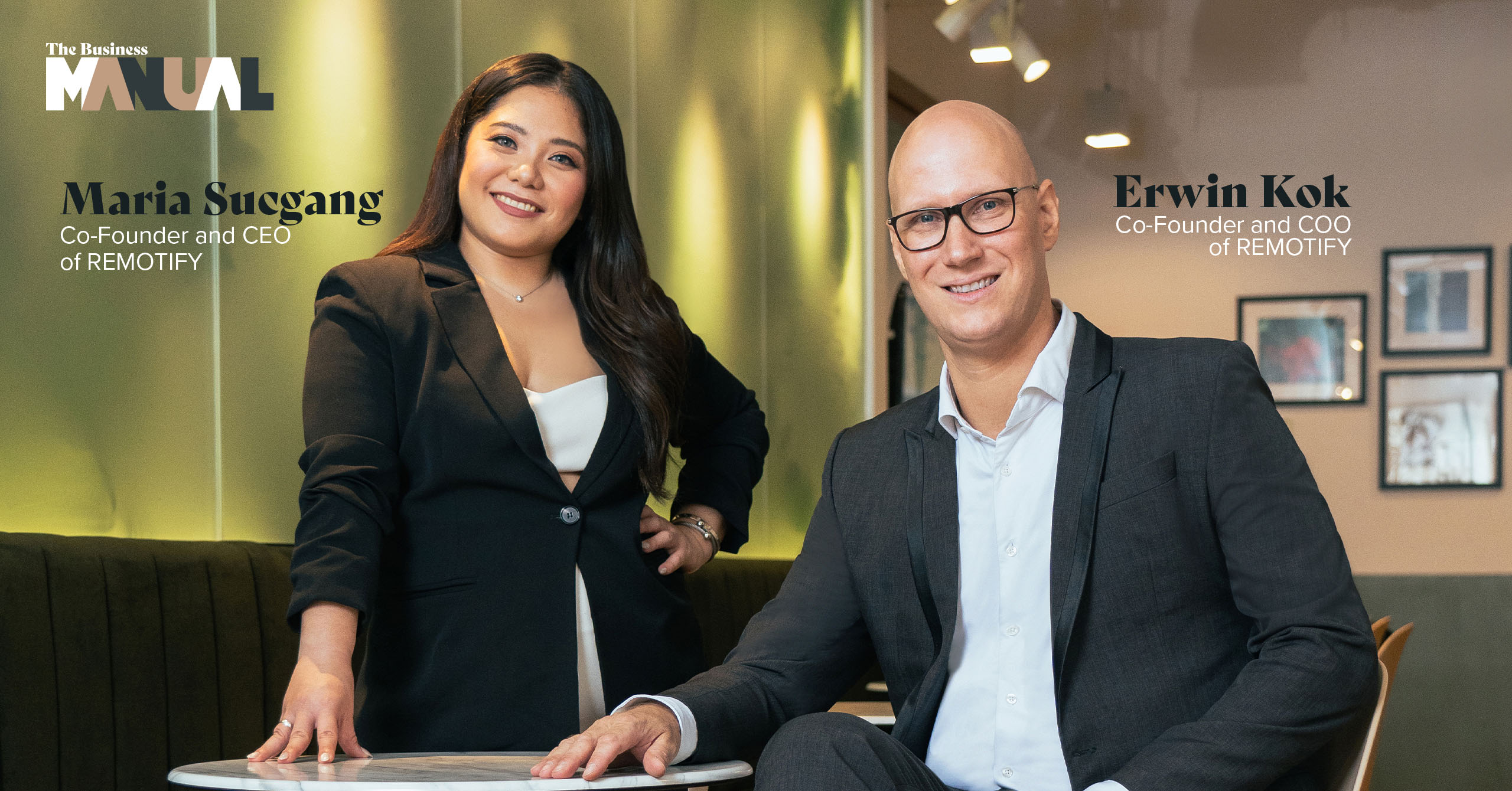
Remote work is transforming business. In this evolving landscape, startup Remotify is changing the future of work and the workplace.
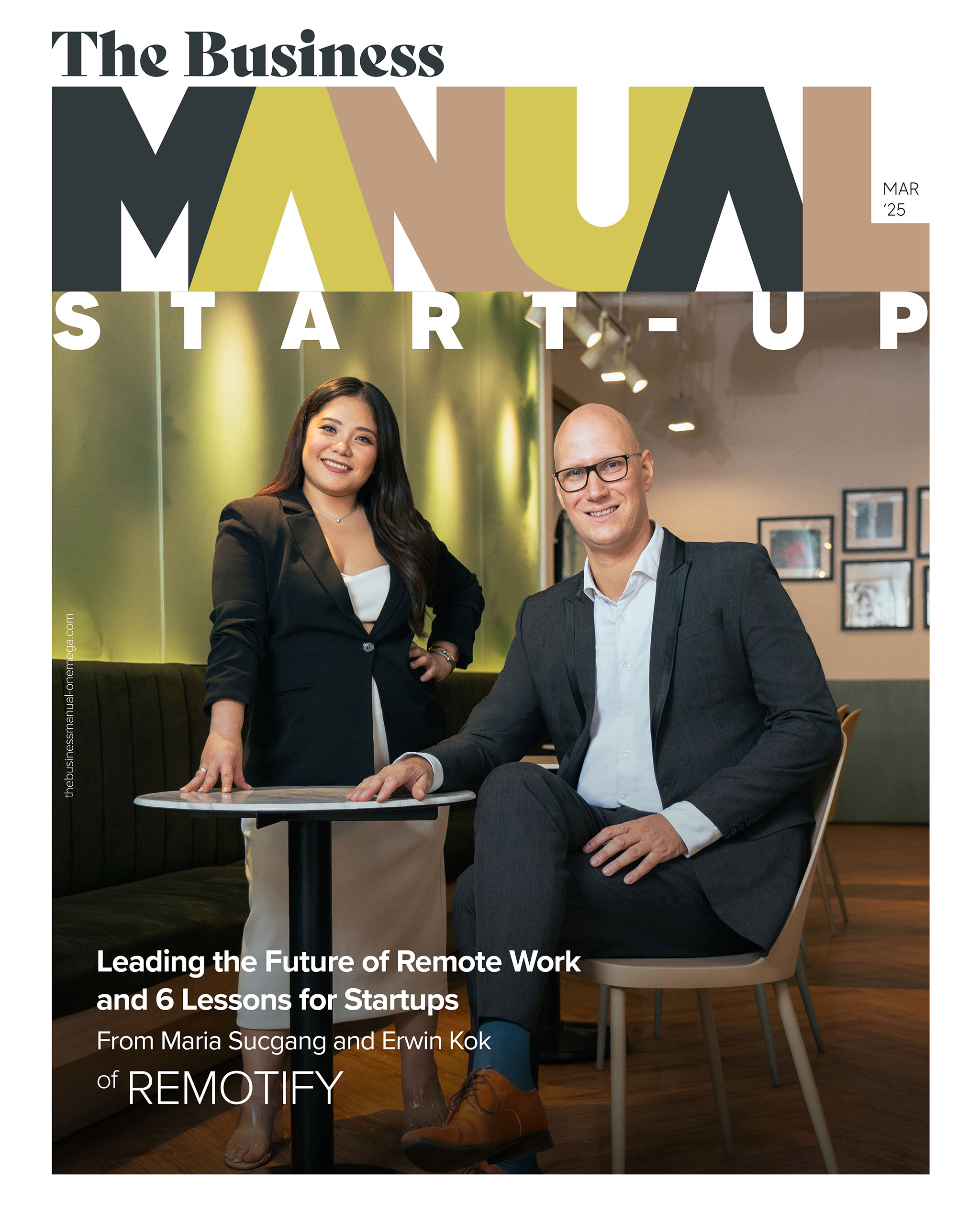
Remote work is on the rise. Accelerated by the COVID-19 pandemic, embraced by Filipino workers and sought after by foreign and local companies alike, remote work has become the future of work and the workplace. Spotting an opportunity in the changing landscape of employment, Maria Sucgang and Erwin Kok founded Remotify in 2021 to bridge the gap between remote workers and businesses. By doing so, they are leading the charge into a brave new world.
The Business Manual editor-in-chief RJ Ledesma spoke to Maria Sucgang and Erwin Kok, co-founders of Remotify, about their journey from the corporate world to building a leading Employer of Record (EOR) service in the Philippines. In this exclusive interview, they discussed valuable learnings for entrepreneurs such as how the founders bootstrapped their startup to become a trusted partner for global businesses hiring Filipino remote workers.
Here are six key lessons every aspiring entrepreneur should take to heart.
1. Identify a Real Problem You Are Uniquely Equipped to Solve
One of the most crucial steps in launching a business is ensuring that you are solving a real problem—and that you have the skillset to execute the solution. Maria Sucgang and Erwin Kok, CEO and COO of Remotify respectively, didn’t just wake up one day and decide to build Remotify; they saw a critical gap in remote employment.
For Maria Sucgang, the a-ha moment came when she was Global Head of Service Experience for a UK-based telco-tech startup. For years she had struggled with finding time to be with her family, but that all changed when she was forced to work remotely. Suddenly, she was managing teams all over the world efficiently and effectively–all from home.
Remotify began with the mission to make this remote work experience real for more people. It sought to bridge the gap between foreign companies seeking to build teams in cost-efficient markets and a large pool of skilled remote workers in the Philippines.
Maria explains, “If you have a business abroad, of course you would want to lower your costs, and typically most of your costs would be coming from your employees. You typically go for markets where you have the best talents at a fraction of the cost, but you wouldn’t want to set up your entity. You don’t want to have to know the local taxation, have to deal with local HR.”

Encapsulating the benefit of working with Remotify, she continues, “We simplify that for you while making sure that you have happy employees that produce better results.”
The opportunity that Remotify was built around was real–and there was scale. In the Philippines, the business process outsourcing (BPO) industry contributes around 7-8% of national GDP, according to the IT and Business Process Association of the Philippines (IBPAP). And by some estimates, outsourcing can save companies up to 27.2% on HR tasks alone.
At the same time, remote work had been on the rise since the pandemic. The Philippines is the seventh fastest growing remote work hub in the world, and there are over 1.5 million freelance workers who work on a digital platform.
But for many Filipinos working remotely for foreign companies, they had no job security, and lacked critical benefits. Without legal employment records, remote workers face difficulties in gaining access to healthcare benefits, or securing loans with banks.
Remotify was created to bridge this gap. For businesses, it answered compliance challenges in hiring overseas talent. For remote workers, it added, as Maria says, “dignity and stability to these remote work opportunities.”
Beyond the benefits for companies who are outsourcing, Remotify is all about supporting remote workers. “What if we can actually create a workplace that’s not an actual place, but anywhere employees feel valued, connected, and cared for?” Maria adds. “And that’s the seed of the idea of Remotify.”
With Maria’s and Erwin’s experience in tech companies that outsourced to talent all over the world, the co-founders found themselves uniquely suited to creating the startup Remotify.
Maria advises, “The best moment to jump into entrepreneurship is when you find a problem that you know you have the skill stack to solve.”
2. Bootstrap First, Seek Funding Later
Unlike many startups that chase venture capital from day one, Maria and Erwin fully bootstrapped Remotify for nearly four years before bringing in external investors. Doing so forced the startup to be lean, efficient, and laser-focused on efficient operations that led to sustainable growth.
It was, according to Erwin Kok, the product of “blood, sweat, and tears,” and at one point was funded by a personal sale of a house from one of the partners to kickstart the business.
Erwin continues, saying, “You need to stay lean because you need to sustain yourself with your own funds, and that’s really a big benefit of bootstrapping your own business.”
Their experience taught them that while funding can accelerate growth, bootstrapping also has its benefits. Erwin advises to bootstrap as long as possible and seek funding only when necessary.
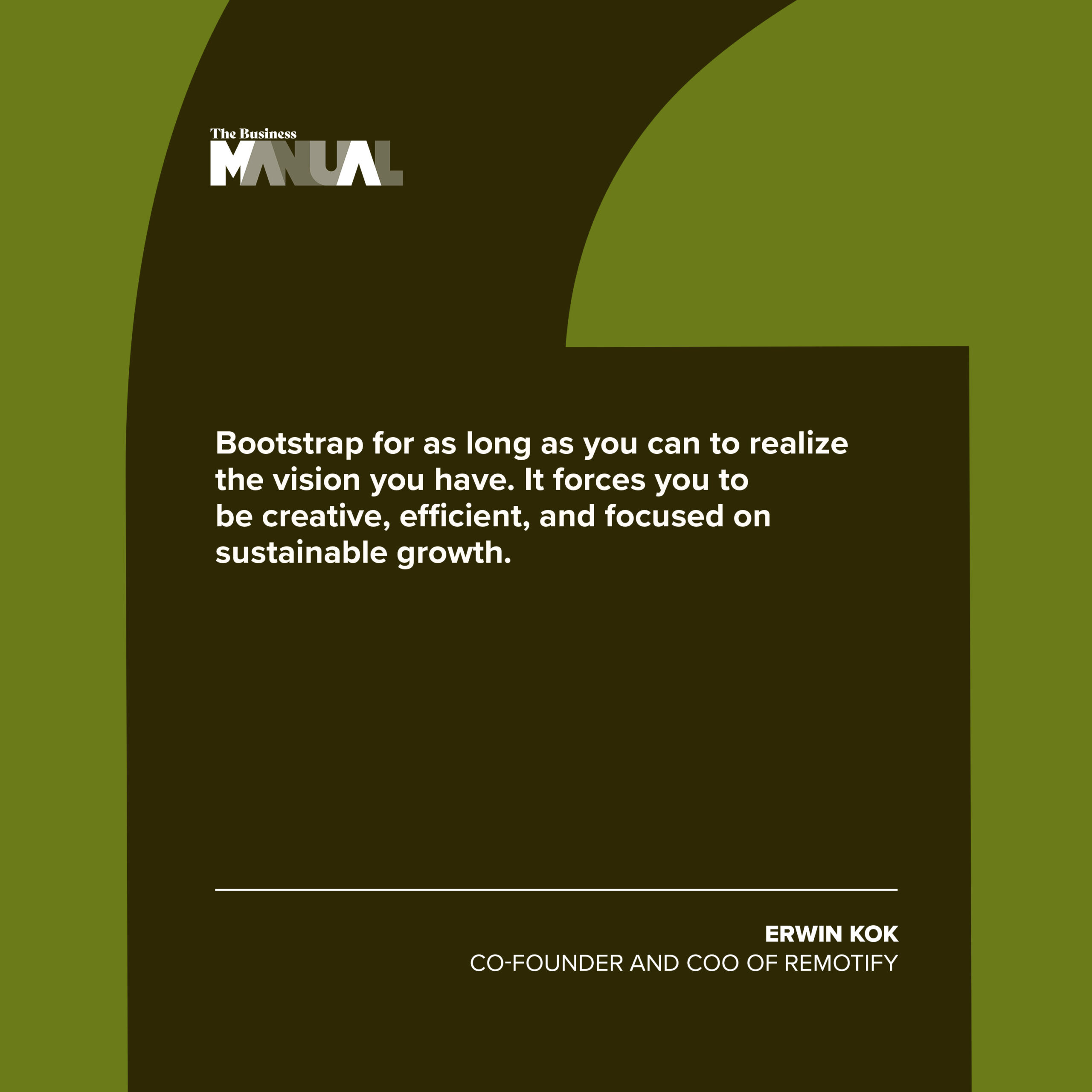
“You don’t have a runway of X number of months that you can just rely on,” Erwin explains. “So, that’s really where you need to use that creativity… Bootstrap for as long as you can to realize the vision you have. It forces you to be creative, efficient, and focused on sustainable growth.”
Maria adds that the limitations of bootstrapping provided focus for the company to zero in on how to make the most of that initial investment, expanding in “baby steps” to build a foundation for growth.
“What is your plan? What do you want to get to?” she asks. “Be clear on where you want to go and how you will get there, step by step.”
Maria emphasizes that building a strong foundation was more important than rapid growth. “Thanks to this foundation, our growth has been organic,” she says, “fueled by positive word-of-mouth—referrals, good reviews, and strong retention numbers speak volumes.”
As a result, Remotify recently achieved a net promoter score of +78 and maintained an annual revenue retention rate of 119%.
She adds, “It shows that sticking to our guns and planning carefully for the future, even when resources were tight, was the right way to go.”
3. Take Calculated Risks—Not Blind Leaps
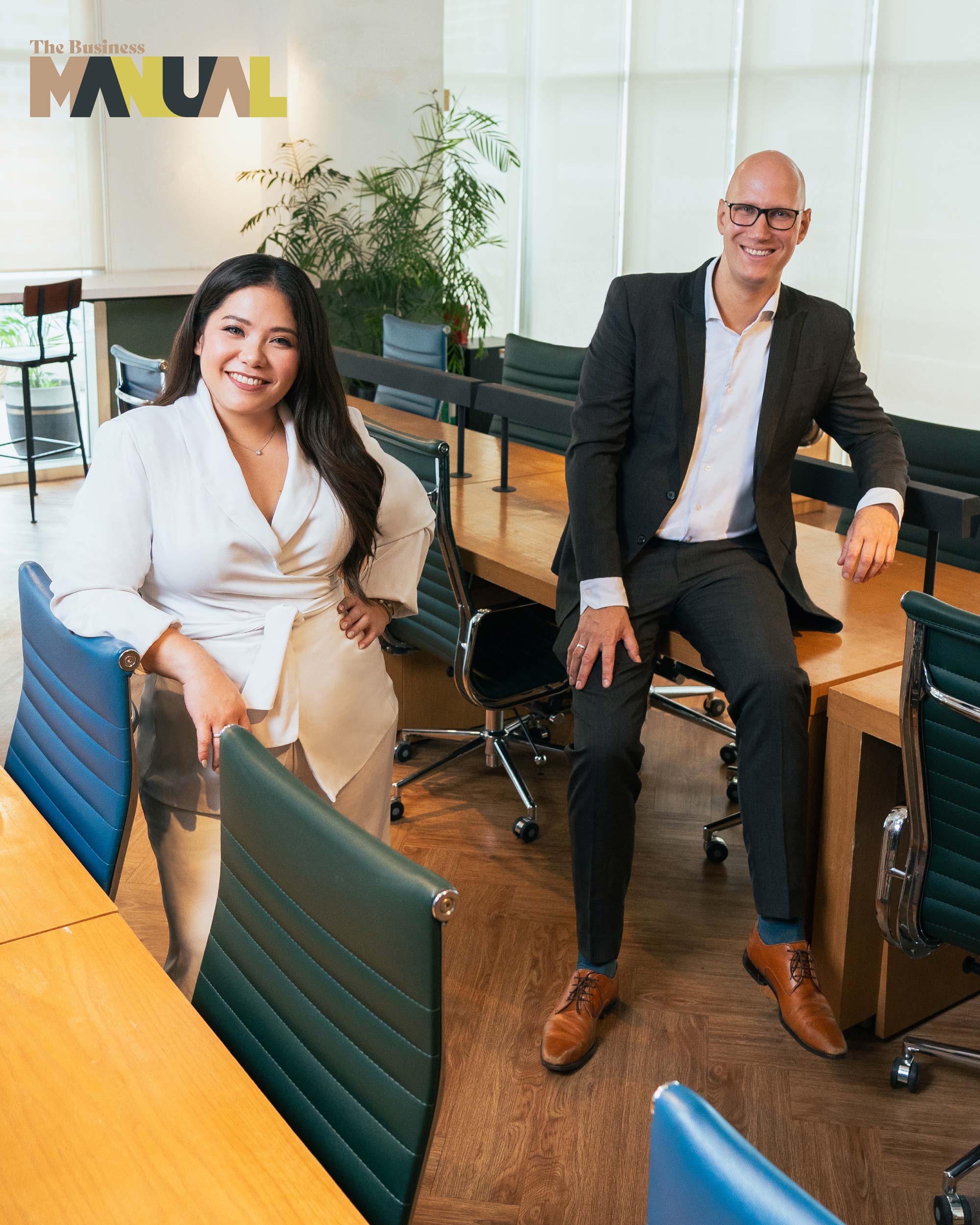
When it comes to taking that entrepreneurial leap, Maria and Erwin advise a mix of caution and full commitment. For many entrepreneurs, quitting a stable job to pursue a startup can be a huge decision, and many are driven by passion, only to face unforeseen challenges later.
Maria and Erwin didn’t take the plunge recklessly—they planned every step. Maria even continued working her corporate job for a full year after launching Remotify, ensuring financial stability before going all in.
“You can’t jump ship if you can’t sustain yourself, right?” Maria says. “When you have a great idea, start working on it. Don’t hold back. Do it on the side, and then you can build it, grow it, and then when you’re ready, go full on for your own business.”
Entrepreneurs should assess their financial runway, market timing, and execution capability before making the leap. Risks are necessary, but calculated risks are what lead to sustainable success.
Maria advises, “You just can’t jump into entrepreneurship blindly. You have to take calculated risks, especially when you have responsibilities.”

4. Build a Strong, Complementary Team
One of the biggest factors behind Remotify’s success is the complementary leadership of Maria and Erwin. They never had to formally assign roles—they naturally fell into positions that played to their strengths.
Maria, with her background in service experience and strategy, took the CEO role, while Erwin, with his expertise in operations and employer of record services, became COO. They also hired team members with the skills they lacked, ensuring a well-rounded leadership team.
“You go into business with people you know you can win with,” Maria says. “A strong team complements each other’s strengths and fills in gaps.”

5. Focus on Long-Term Growth Strategies
In a world where startups burn cash on paid ads and aggressive expansion, Remotify took a long-term approach by investing in SEO, client experience, and organic growth.
Their strategy? Design every experience—from customer touchpoints to employee interactions—with thoughtfulness and precision. This approach has paid off, making Remotify a highly ranked EOR service without heavy spending on advertising.
One example of how they executed this was through their SEO strategy. “We wanted to make sure that our SEO strategy, our long game, is really on point,” Maria explains. “And until today, we’ve been growing a lot from referrals and SEO.”

It is this attention to detail–in touchpoint experience, in execution and delivery, in the fundamentals of the business–that contributed to the success of Remotify.
Pursuing these strategies has led to making the founders’ visions of Remotify an attainable reality: to be the remote employer of choice in the Philippines. “Now we have employees spanning the Philippines, from Benguet to Sultan Kudrat,” Maria says with pride, “77% of whom are women. All are knowledge workers.”
Remotify also practices what they preach: 96% of Remotify’s workers rate them as a Great Place to Work. Maria says, “We’ve received high marks in areas like community, intimacy, corporate image, and justice, which only proves to show that in the future of work where it is remote, culture is still everything.”
6. Have Fun and Believe in Your Mission
What’s in store for the future of Remotify and remote work?
“The world is changing at break-neck speed, and entrepreneurs must embody resilience, adaptability, and foresight,” Maria Sucgang says.
Citing the World Economic Forum’s Future of Jobs Report 2025, she names three key trends that entrepreneurs must master: technological fluency, adaptability, and continuous learning.
“Being an entrepreneur means you’re always on,” Maria continues. “It’s important to engage in work that you truly love and enjoy. Find a problem you are passionate about solving, where you have the perfect stack of skills to solve it and remember to have fun along the way.”

Erwin echoes the sentiment. For him, what keeps him going is being passionate about making a difference in the lives of Filipino remote workers and enjoying the journey along the way. He says, “Every morning when I wake up, I look forward to starting work, simply because I enjoy it. This is the only thing you need to keep on going.”
“Love what you do,” he adds. “If you wake up excited to work on your business every day, success will follow.”
The journey of Remotify’s Maria Sucgang and Erwin Kok proves that successful businesses are the result of strategic planning, relentless execution, and unwavering belief in a mission. For aspiring entrepreneurs, the message is clear: Identify a real problem, build the right team, take calculated risks, and stay committed to your vision. Maria encourages entrepreneurs with a parting message to be brave and unapologetic.

She says, “Be unapologetic about your ambition. The world will question you, but don’t be the first one to question yourself.”
Text VINCENT SALES
Photography KIERAN PUNAY of KLIQ INC.
Videography EXCEL PANLAQUE of KLIQ INC.
Art Direction ANDREA SANGCO
Sittings Editor RJ LEDESMA
Shoot Coordination TONI MENDOZA
Shot on Location COMMON GROUND, IBP TOWER, ORTIGAS CENTER