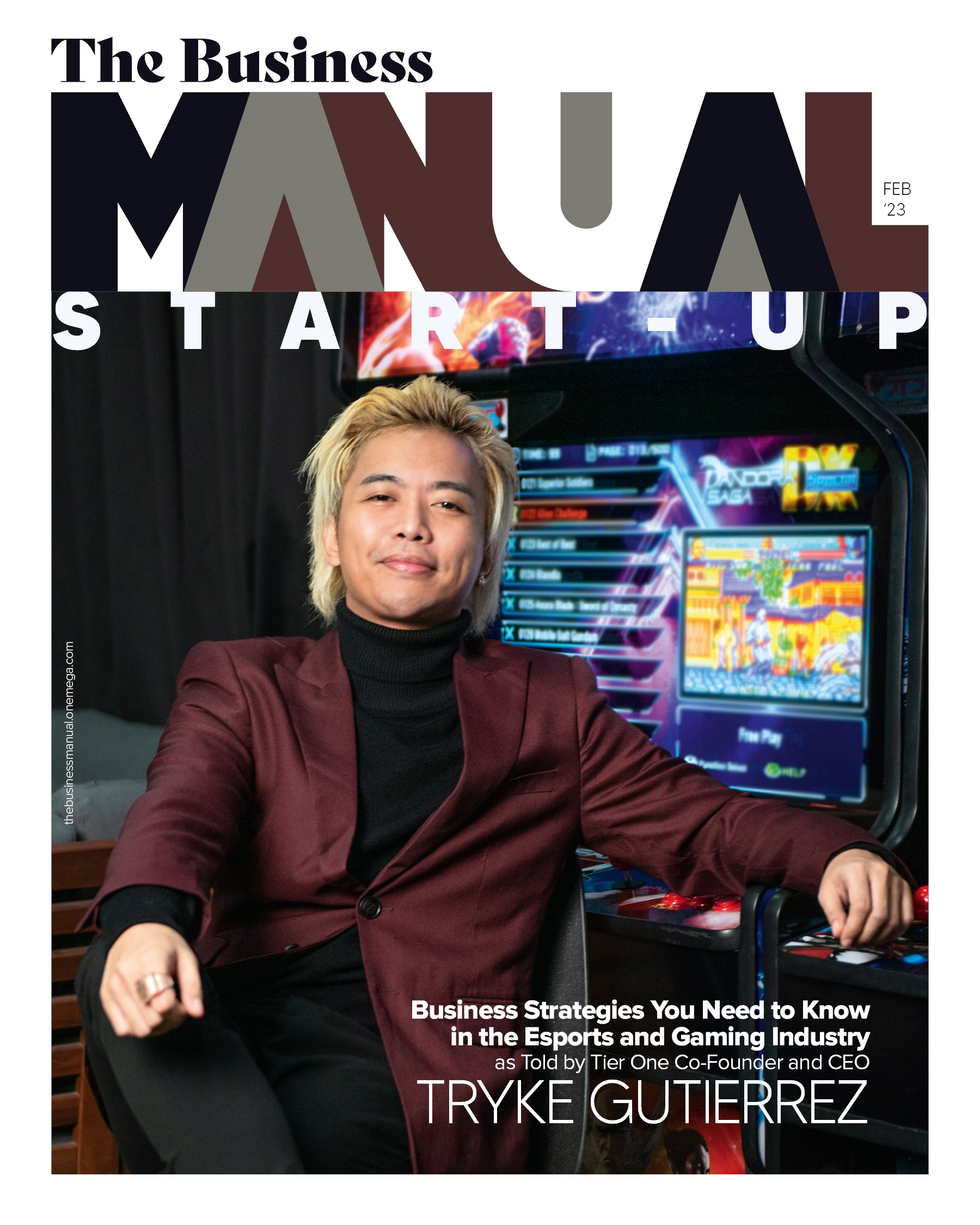
Business Strategies You Need to Know in the Esports and Gaming Industry, as Told by Tier One Co-Founder and CEO Tryke Gutierrez


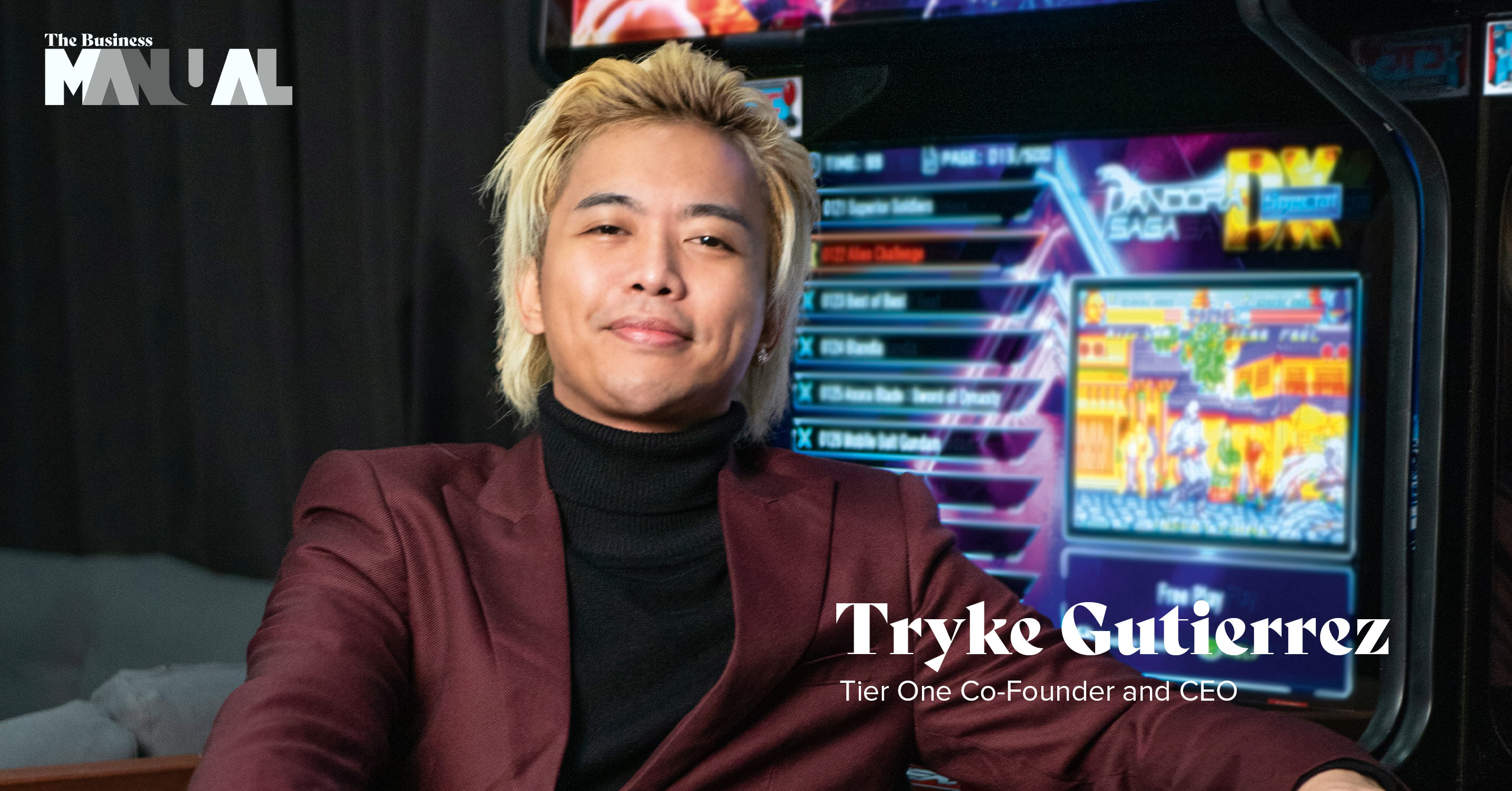
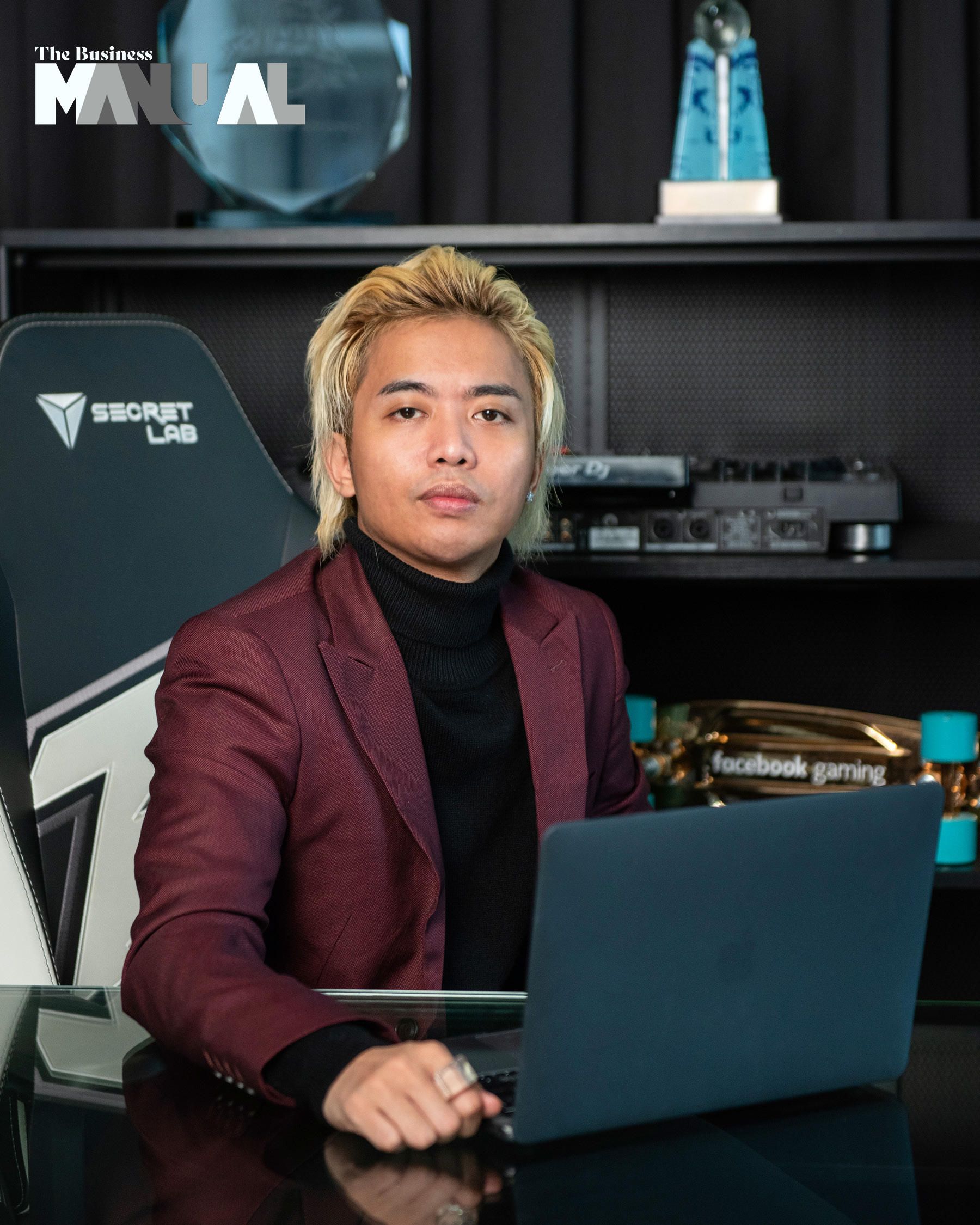
By taking his passion for gaming and turning it into a business, Tier One Co-Founder and CEO Tryke Gutierrez built the country’s first esports and gaming talent agency. Here’s how.
Starting a business can be founded on many reasons—addressing a need, supporting a social cause, or simply making money. But for Co-Founder and CEO Tryke Gutierrez, the very ethos of Tier One Entertainment stemmed from what he loved doing most: gaming.
While passion is the fuel that drives a business, the industry in itself is commonly overlooked. Dedication, discipline, and a strong direction for its team, however, helped pave the way for Tier One’s success. In fact, to this day, the company currently operates in 5 countries across Asia and manages a roster of over a thousand talents with hundreds of millions of combined followers across multiple streaming and social media platforms.
What’s more, Tier One has made a name for itself—having been called a unicorn startup by its investors, Bitkraft, Atlas Ventures, Gobi Partners, Warner Music Group, Play Ventures, and Mirana, among others.
“Since our inception in 2017, Tier One has single-handedly ushered in the streamer boom in the Philippines, and made similarly significant impacts in our satellite territories,” the company website reads. “By signing, developing, managing, and promoting the country’s most promising young content creators, Tier One created a coveted business model that other companies scrambled to replicate in recent years.”
In this exclusive interview with The Business Manual, Tryke shares how all this came to be and what he and his co-founders have in store for Tier One entertainment—as they plan to take esports and gaming to a higher level.
Level One: Where it All Began
Established in 2017, Tier One Entertainment was the brainchild of esports player Tryke Gutierrez, Filipino cosplayer Alodia Gosiengfiao, and entrepreneur Brian Lim. By collectively bringing their passions together, the trio was able to establish a “gaming entertainment company that operates at the intersection of media properties, esports, and creators.”
But like all businesses, the beginnings of Tier One Entertainment were wrought with growing pains—not just being a startup and all, but also because the esports and gaming industry in itself was still new and easily overlooked.
“Since I’ve been a gamer all my life, I’ve always known of the potential of gaming and esports to change the world,” Tryke begins. “But maybe in the early to mid-2010s, when I looked at the local esports industry and saw that we were woefully behind the kind of care and development seen in the west, I knew I had to take a more active role in shaping the direction of esports in the Philippines. That led to the founding of Tier One Entertainment.”
“And it wasn’t, of course, easy, like, I’ve been treading into a space which never existed before, which was eSports,” he laments. “There is no sample case study, service, or reference for me to be able to maneuver.”
He likewise compares the brand’s uncertain path to the pandemic. “Nobody knew how to deal with a pandemic when it was happening exactly the same way. You’re riding on a very unique and different boat. And you know, trying to go through different types of water. It was really complicated.”
“I already saw the potential of esports because it was already present in Korea, like, way back in 1997,” he reveals. “They already had professional players, they had sponsors, and then they had institutions around esports. So being able to see that as a gamer, I was like, ‘That’s really possible. Why not here? Maybe just later for us,'” he adds.
Level Two: Setting Things in Motion
Now that Tryke knew what he wanted to base his business on, the next plan of action was to make it happen. Being a Communication Arts graduate gave him the advertising background that he needed to market the business. But it didn’t stop there. Like most entrepreneurs, the young CEO reveals that he built his experience by working for a company.
“When I started out, the first job that I took in esports, was as a graphic designer in a computer cafe. I was actually part of Mineski—a computer cafe that started in La Salle,” Tryke shares. “From there, I saw that there was a potential in esports, [especially] if you have a business that, in a way, earns indirectly from it.”
This, however, lacked awareness and marketing, in which Tryke excelled. “I’ve always felt that there was a different philosophy to go about it, because, I mean, it’s fun to own a computer cafe, and then earn from it, and then [earn from] esports indirectly, but there’s also another angle,” he continues.
How so? “Where you create IPs [intellectual properties] in esports, and then monetize that because you’ve seen it,” he says simply. “I’ve seen it personally, with newspapers, magazines, [and] TV. I mean, all of these have been funded by advertising revenues. And I felt like that was really possible as long as you have enough systems around the IPs in esports.”
The proof of its potential and possible success, according to Tryke, was in events. “Imagine in an event platform, you put up an event, you will try to find sponsors, which covers 50%. The other 50% will come from ticket sales,” he explains.
“When the advertising dollar became bigger and bigger in the events that I was organizing, that’s when I realized [that] maybe there’s another platform where I can bring all of these sponsors in without needing to spend this much CapEx [capital expenditures] and in front-loading too much money. That’s where having influencers as your IPs instead of events became kind of like a sponsor.”
An influencer and content creator himself, Tryke has benefited from influencer marketing—just like fellow co-founder Alodia Gosiengfiao. “I’ve been receiving [proposals for] photo posts and video posts. [From there], I saw that there was a bit of potential. But of course, it’s different when you have someone like Alodia, right?”
“Her being like, an upper echelon of gaming influencers around the world, is what gave me visibility of how much influencers earned,” he continues. “That’s what led to the idea: ‘What if we put up a talent management [agency] together?’ When I really brought up the idea to her she liked it, because she trusts me for one. And then, second, we’re really aligned with a lot of values, generally in life, and I think in gaming also.”
Level Three: Pioneering a New Business Model
Given that esports in itself was big in many parts of the world—just not in the Philippines—the next plan was to build a business model around the concept.
For Tryke, he based it on a tried and tested model. “Tier One Entertainment was patterned towards the Kpop entertainment companies in Korea because I am a big Kpop fan. Because of that, I’ve always seen how it grew from what it was before to today. And the difference between the institutions of Kpop is that they really get to manufacture IPs. Yes, I guess, frankly, from you know, like institutions and whatnot.”
While the Kpop business model was based on Tryke’s research, knowledge, and experience, Tier One was also based on firsthand experience. “Looking back, the opportunity was really visible for both of us because of our knowledge of the Japanese market,” he explains. “[Alodia] worked for a Japanese talent management for two years, so she actually experienced that system as a talent, and she felt like she can replicate that in the gaming and eSports space.”
“We all believed in the Kpop model of signing and developing talents and then unleashing a finished product that is head and shoulders above the competition,” the CEO adds. “It was a proven formula, and even today five years later, Kpop groups are dominating global music charts. Alodia and Brian are insanely smart people, and they instantly saw the value of importing that business model into esports.”
While some considered the Kpop model to be “so out of the box for the current landscape at the time that people called us crazy for even attempting it,” it was actually a perfect fit for the brand. “It’s a bit disingenuous to say it solved pain points for stakeholders because [they] did not even know those pain points existed until we solved them,” Tryke points out.
“Much of PH esports back in the day was content with mounting small-scale events and running grassroots-level tournaments. I myself was guilty of that at the time,” he adds. “But when I realized that gaming fans were hungry for more and that the industry was not catering to their needs, the most natural thing to do was to look for inspiration from other countries. And that’s how we landed on the Kpop model.”
“The audience was there. There were millions of gamers who were hungry for content that did not yet exist until we showed it to them,” Tryke explains. “It was just a matter of bridging the gap between the eyeballs and the content. And as for how we achieved it, I think it has to do with how we positioned our brand.”
Level Four: Establishing a Competitive Advantage
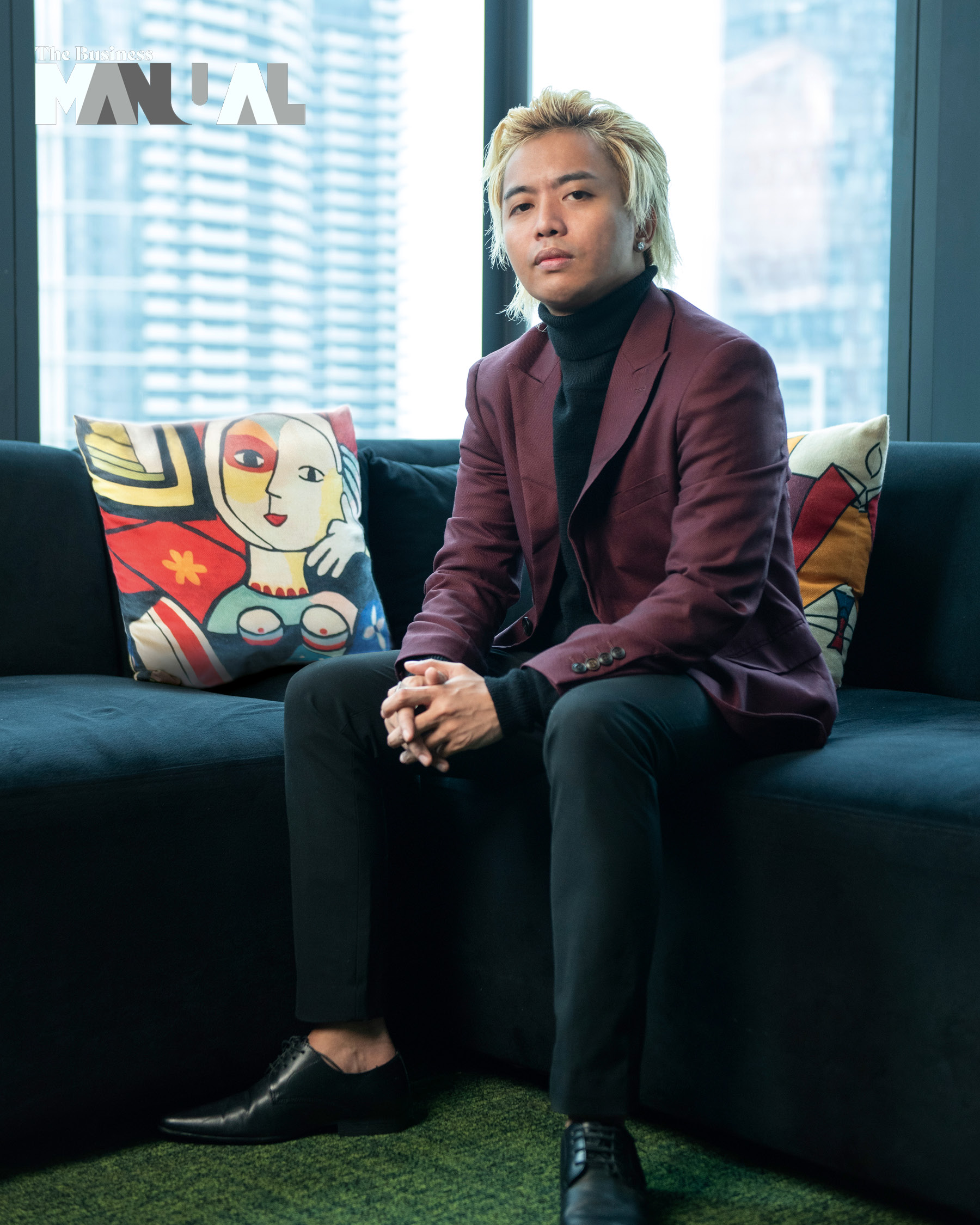
The country is no stranger to talent management agencies, but what set Tier One apart from the rest was its diverse roster of talents—from gamers to streamers, cosplayers, or simply, the IPs that he seeks to cultivate and grow.
“Most traditional ‘gaming’ companies brand themselves as just that: gaming. They are hardcore gaming for hardcore gamers, which is a little elitist and exclusive,” Tryke explains. “We came in with the mentality that anyone can be a gamer, and that our content is entertaining—not just for gamers, but for anyone. A gamer does not have to conform to the stereotype. And I think that is a message that resonated with everyone.”
Another advantage for the brand? Inclusivity. In fact, the criteria for being a talent under the Tier One brand were not as strict, to begin with. “We only consider a few key questions: Are you a gamer? Do you want to explore creating more gaming-focused content? If the answer is yes, then we can help you,” he says simply.
“Team Payaman are vloggers by trade. Our AMPLFY partners Josh Cullen and Sharlene San Pedro are musical performers. Even our earlier signings like Aeriel Garcia-Sugui and Rojean Delos Reyes were models before they became streamers. But as long as you show interest in gaming content, we can help you achieve your goals.”
“When we started, nobody thought the concept of an esports talent agency would work. But when we made it successful, other companies started copying our business model. As long as we’re going at our own speed, everyone else can say or do whatever they want,” he laughs.
Level Five: Getting Investors and Making That Pitch
Starting a business also meant securing capital, which usually came in the form of investors. But in order to impress them, Tryke needed to make a pitch. A winning pitch, if anything. And for the young CEO, it meant watching every episode of the business reality show Shark Tank and using what he learned from his four years in planning events.
“When I was in events, I was pitching a lot to different sponsors,” Tryke explains. “So I was always like, the salesman in that company. With all the experiences I’ve had in terms of selling, it was easier for me to sell something I believed in, versus an event that was just exciting.”
“Of course, I believed in the events that we did as well. But it’s different when you have a very clear vision of what you want to do. So I think it really starts with [the question]: Do you really believe in what you’re pitching? And [as] a gamer, I was in a way of an influencer when I was a commentator, and I always knew that there was really money there.”
“Secondly, Alodia has been earning so much from being an influencer before,” he adds. “So I felt like I [was] pitching something that’s true. It’s not really just a concept. It’s just the concept of scalability.”
Thankfully, Tryke’s experience, skills, and passion have won the hearts of their many investors. In fact, Tier One is being backed by big venture capitalists—not just from the Philippines, but from Hong Kong, Japan, and Singapore. Moreover, Tier One completed its Series A seed round in 2022, with Gobi Partners, Kayac, Octava, and Warner Music Group investing.
The secret to his success? “If I’m being honest, being the first to do what we do in SEA was a big factor,” he reveals. “I imagine it would have been harder for us to present ourselves to investors if we weren’t the trailblazing unicorn startup that we are. But that, plus the depth of skill in our executive pool, and the diversity of our business ventures, all contributed to the success of our pitches.”
Boss Level: Overcoming Challenges Faced
But even with a game plan in mind, in a country where the esports and gaming industry in itself was new and even overlooked, Tryke faced his fair share of challenges. These include:
Dealing with Haters
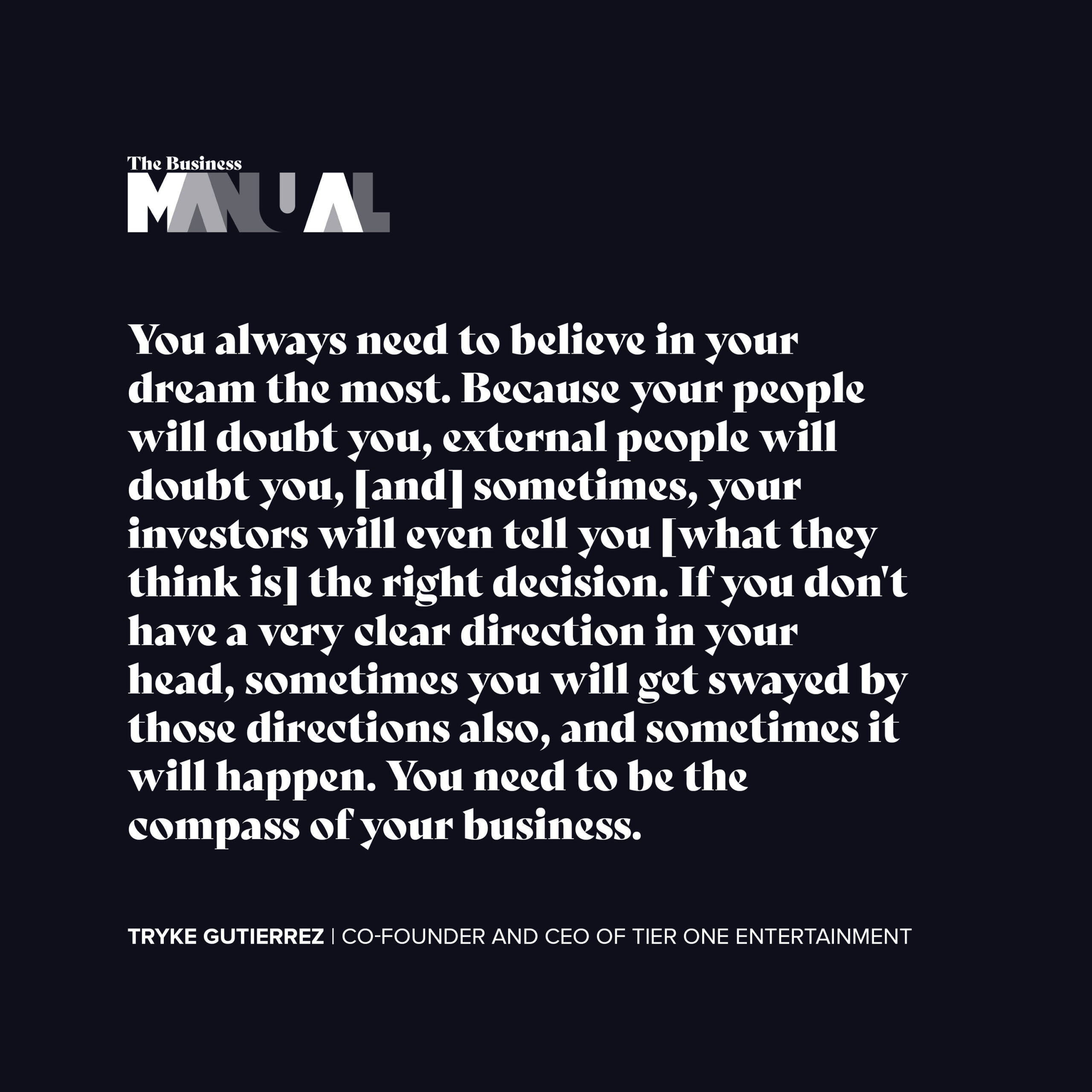
Pioneering a new concept means dealing with haters along the way. But Tryke Gutierrez remains undeterred. “We just like to focus on what we’re doing. We don’t really pay attention to the haters because we’ve seen over the years that if your output is good enough, eventually, haters will end up becoming fans,” he says.
The COVID-19 Pandemic
While the digital nature of gaming has resulted in a boom during the pandemic, Tryke reveals that it wasn’t all smooth sailing. “Things such as backend team members and talents being stuck at home and not having access to proper work or streaming setups took a toll on our business,” he explains. “Not having any events to promote our talents and engage with their fans also affected us.”
“But of course, we had to pivot. Creating an official office Discord server for workflow was the first thing, but we also made other sweeping changes such as quickly setting up e-commerce for [merchandise brand] BLCKBOX on Shopee and Lazada, and finding more ways to execute campaigns purely online.”
Expansion in Asian Countries
Given Tier One’s success in the Philippines, it only made sense for the brand to branch out into other countries. To date, the esports and gaming company has set its base in 5 countries across Asia. And this too came with its fair share of challenges.
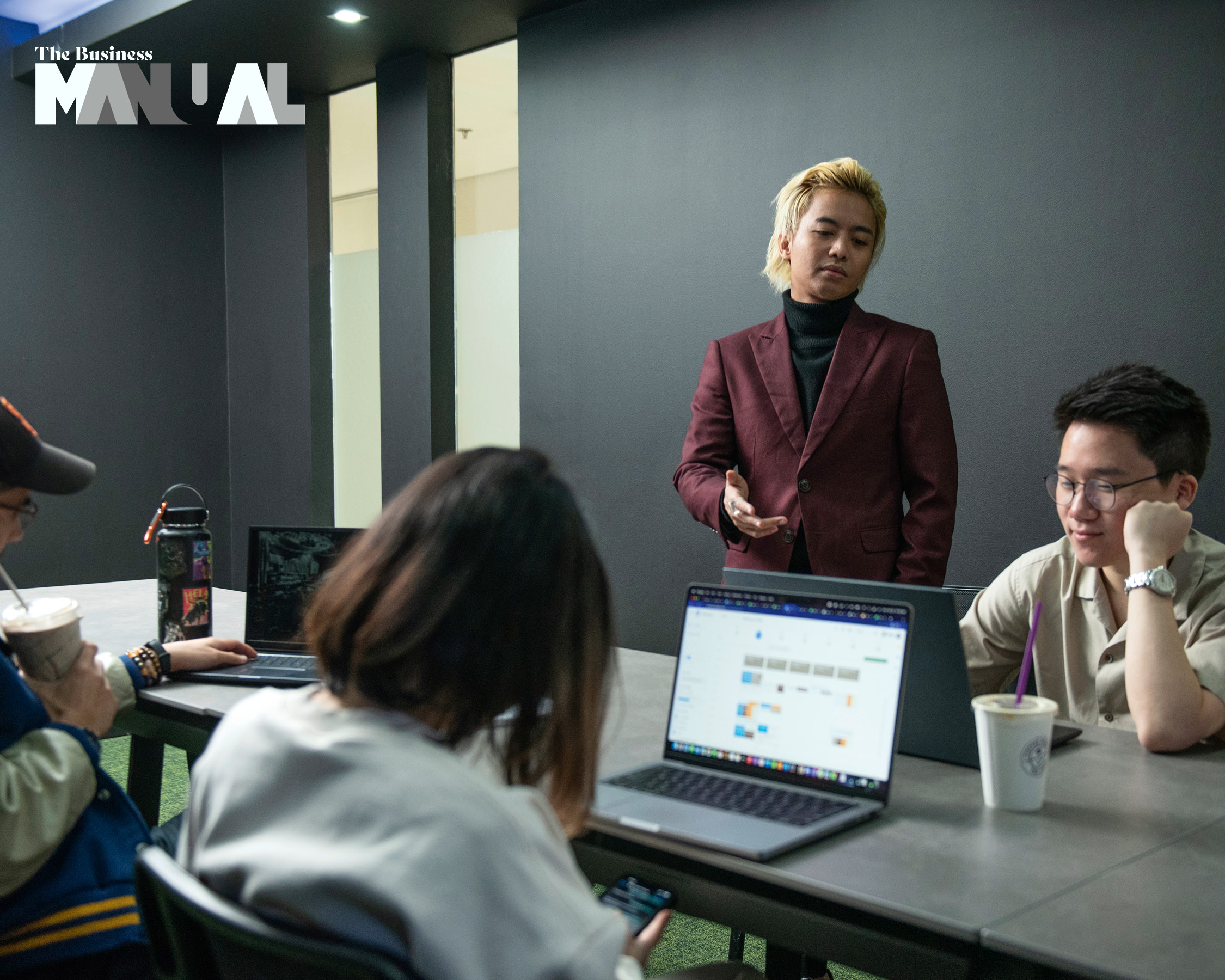
“The obvious challenge is of course the language barrier,” Tryke points out. “Needing hires that can properly communicate with our team is key. But on top of that, a key challenge is knowing the audiences in these different markets. Different countries like different video games, having different economic factors that shape their gaming experience growing up, etc.”
This meant that what worked in the Philippines may not work internationally. Thus, the Tier One team has had to constantly “align with our regional offices on how best to create content for any given market.”
But what kept him going all throughout these challenges? Resilience.
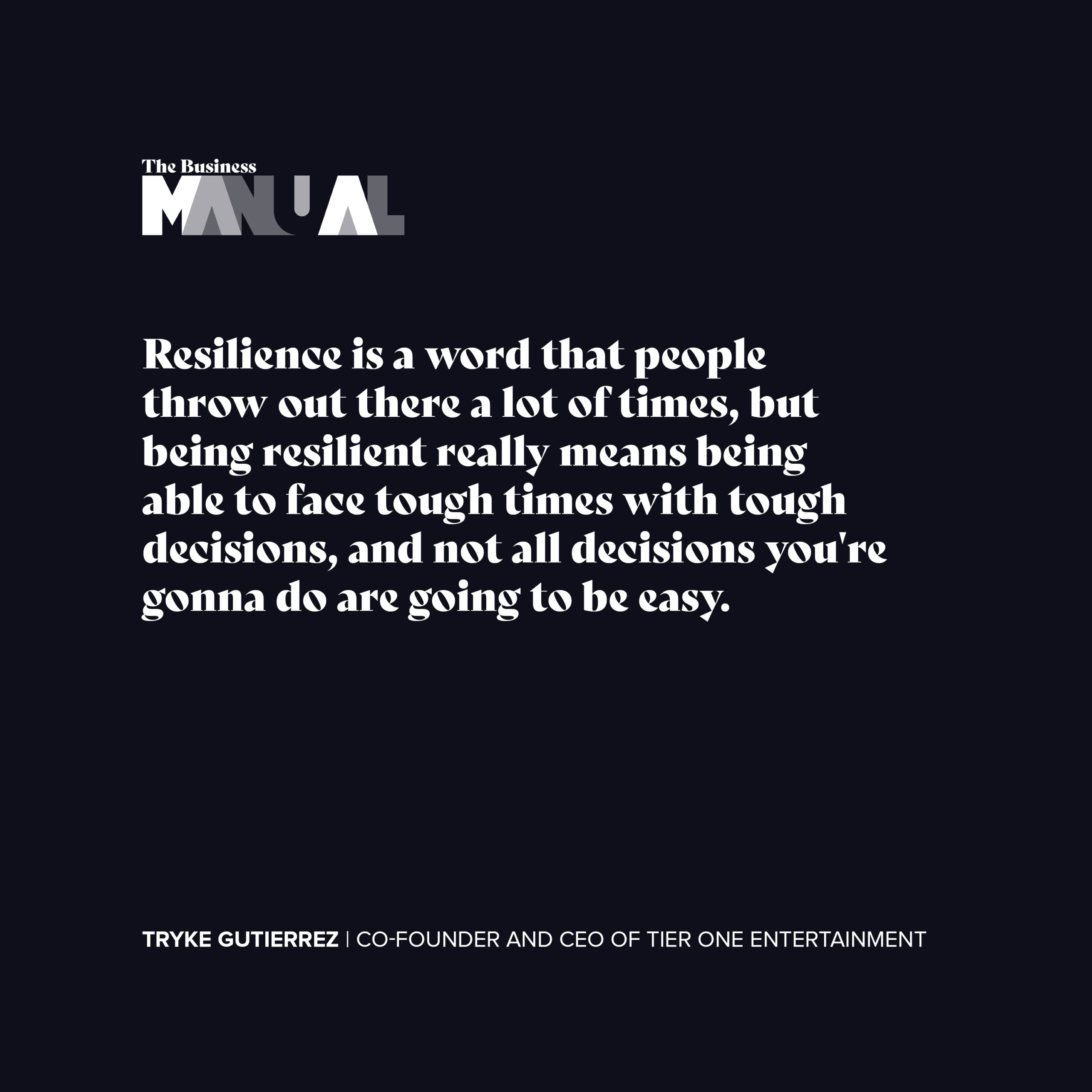
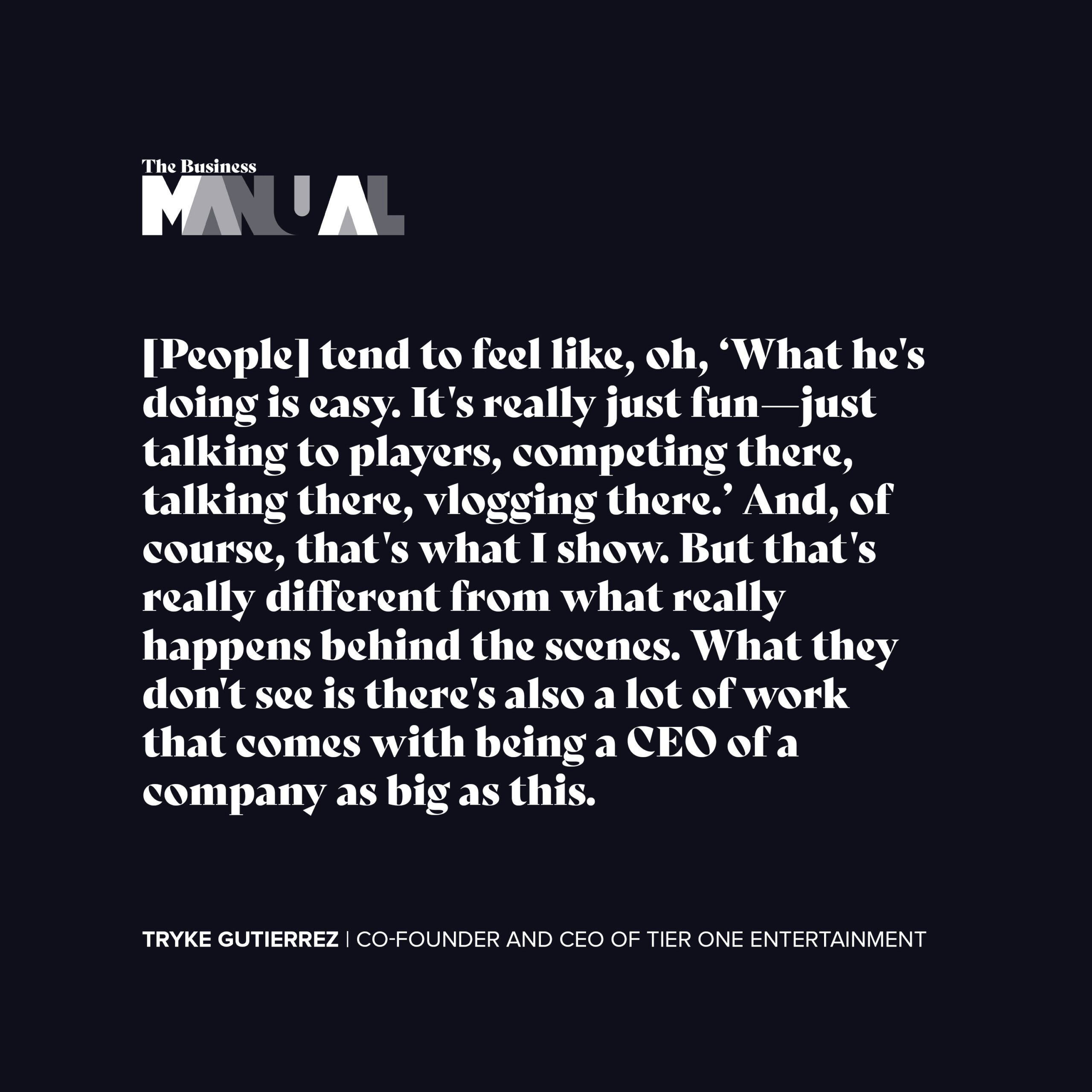
“You [also] really need to be outspoken because if you’re not outspoken about what you believe in, and what are the things that you feel like are right and wrong in your company, then people won’t really know what’s up in your head,” he goes on to add. “What you’re thinking as a CEO will never ever translate to reality if the people around you don’t understand what you want to do. So I think communication is really a big part of it.”
But talking is one thing. Action is just as important. “You really need to be able to act. I think that’s very important because a lot of people just talk but don’t really like to walk the talk,” he declares. And of course, that meant putting in the work—not just in content creation, but also in managing the roster of talents that they will be bringing in, the company’s day-to-day operations, and other things.
The Game Plan for Expansion and Growth
Tier One’s success in talent management has likewise paved the way for many different ventures: creator program AMPLFY, their official merchandise brand BLCKBOX, and a reality series for gaming streamers and content creators called The Gaming House.
How did all this come about? “We wanted to become the biggest soft power in esports and gaming,” Tryke declares. “And when I talk about soft power, it’s really expanding that influence that we have in the different communities of gaming.”
This meant covering all bases. “The first objective is always to be able to expand that distribution and attention,” he says. “Because the more attention that you command, the more influence that you have, then you can literally do more things. So for example, in our expansions, in terms of titles and geographies, we want to make sure that we get as much attention as possible, as we enter into different communities. That’s one.”
“The second point it’s really intuition. We have some other revenue streams already. We are going into media rights, and then we’re going into retail revenues because we’re we just opened up a store. Following the old models of traditional sports, looking into TV, and old media, and then looking at the possible future of like NFTs [non-fungible tokens] and web three… those are all angles you need to always look at.”
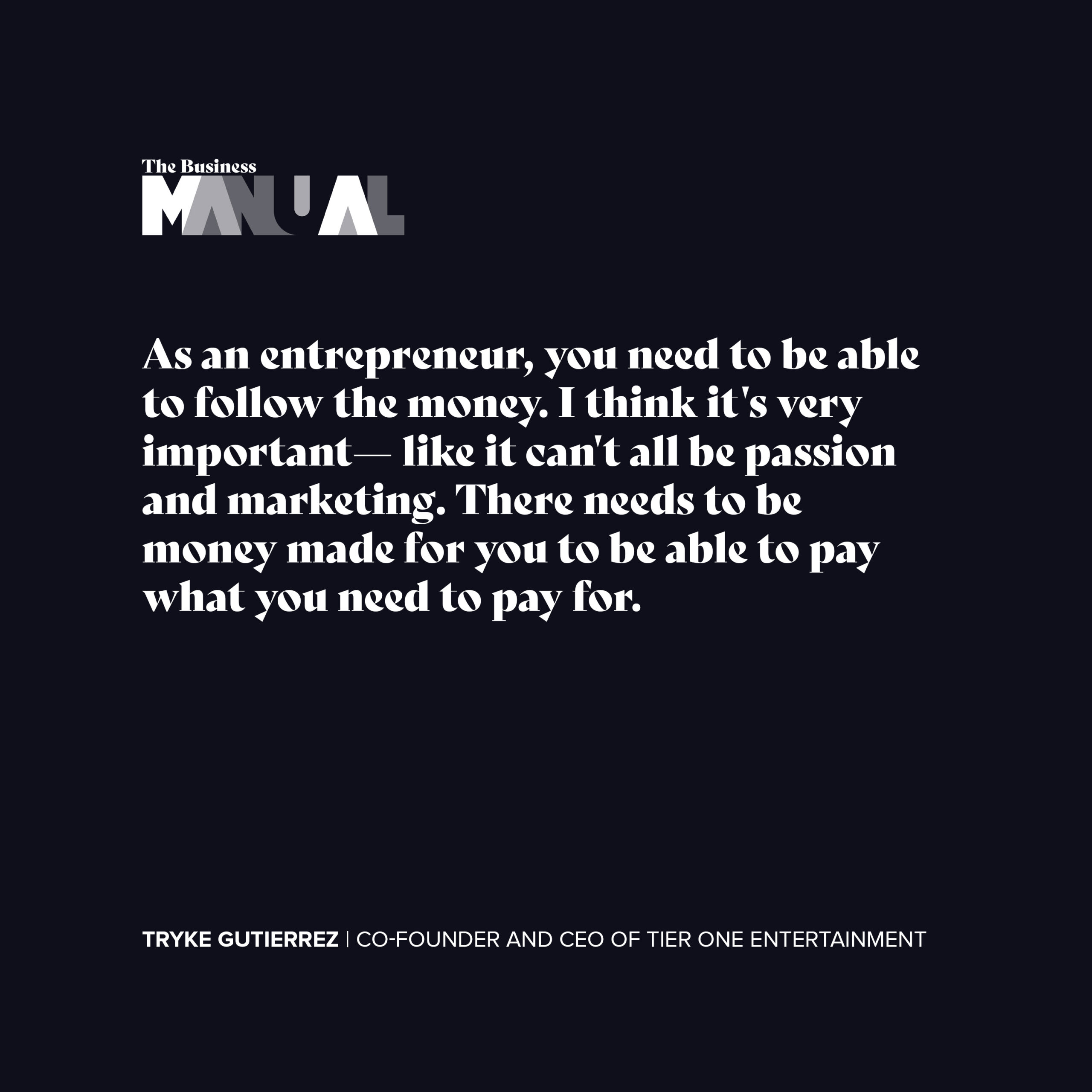
But while following your passion is one thing, the reality of needing to still earn from it is another factor to consider. “It’s easy to say look at the market and identify what the next big thing is, but it’s never that simple,” he explains. “I’ve been fortunate to be able to travel and attend many business summits that help me make better decisions for the future of Tier One Entertainment, but it is still a delicate balance of managing your lofty ideals with the reality of your cash flow.”
Key Insights and Takeaways
While Tier One was established in just 2017, it has grown into a multi-million venture with over a thousand talents under its wing, investors lined up and ready, as well as bases in key gaming countries in Asia. And yes, the road to success was not easy, given that Tryke and his fellow co-founders took a risk in unchartered territory, but the benefits outweighed it all.
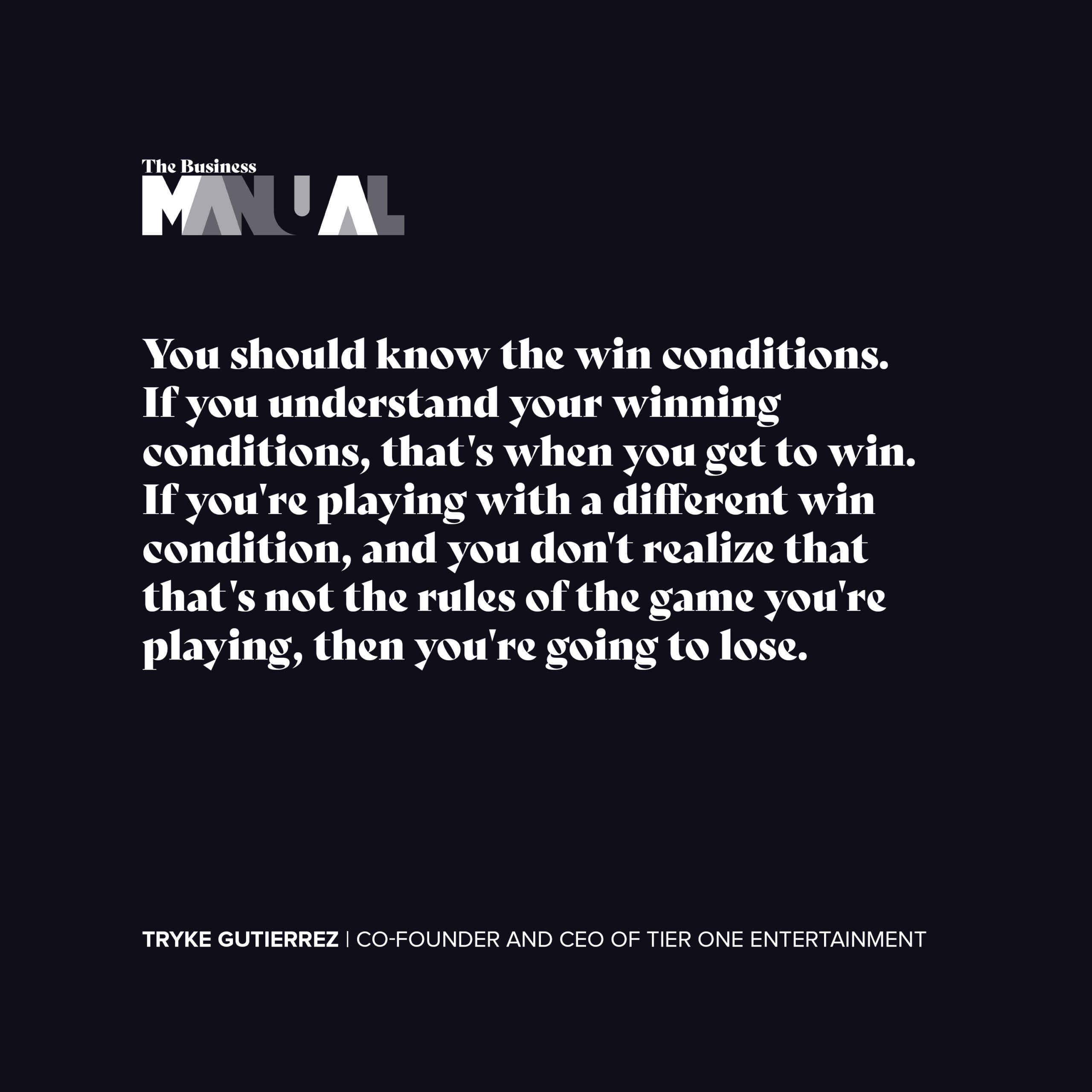
With a business model in place and a successful company to back it up, Tryke has also effectively paved the way for the esports and gaming industry. “My advice to different entrepreneurs is that, first, you should know the win conditions,” he declares. “If you understand your winning conditions, that’s when you get to win. If you’re playing with a different win condition, and you don’t realize that that’s not the rules of the game you’re playing, then you’re going to lose.”
“Second, I think it’s it’s really finding the right leaders and the right people because there is a certain cycle in a business where you can do it yourself. And while that’s enough, you’re [also] gonna get to a point where you need other people too. So I think finding leaders is also very important.”
And finally, he adds: “I think for one, really understanding your unit economics. Because when a crisis happens, it only exposes the things that are already there. You know, it amplifies everything. It amplifies your weaknesses, it amplifies your strengths. So I think for us, [this means] revisiting the unit economics of how many dollars are we putting into each of the items that we spend on and going into which clients bring the most revenues.”
Text DIANE NICOLE GO
Photography KIERAN PUNAY
Sittings Editor RJ LEDESMA
Art Direction MARC YELLOW
Videography EXCEL PANLAQUE
Video Producer MIGUEL LIM
Shoot Coordination TONI MENDOZA
Shot on Location TIER ONE ENTERTAINMENT, BGC
More From Features