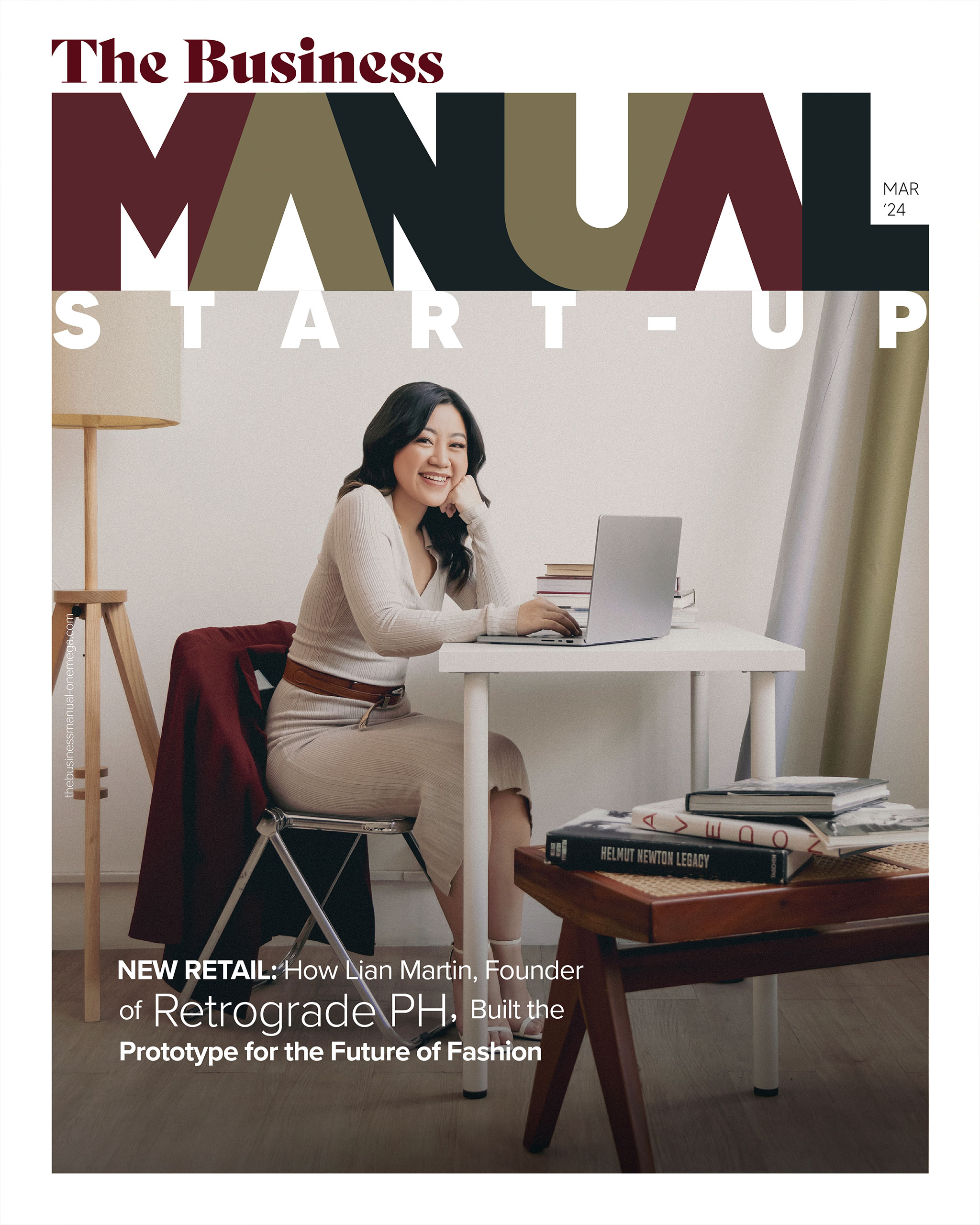
New Retail: How Lian Martin, Founder of Retrograde PH, Built the Prototype for the Future of Fashion


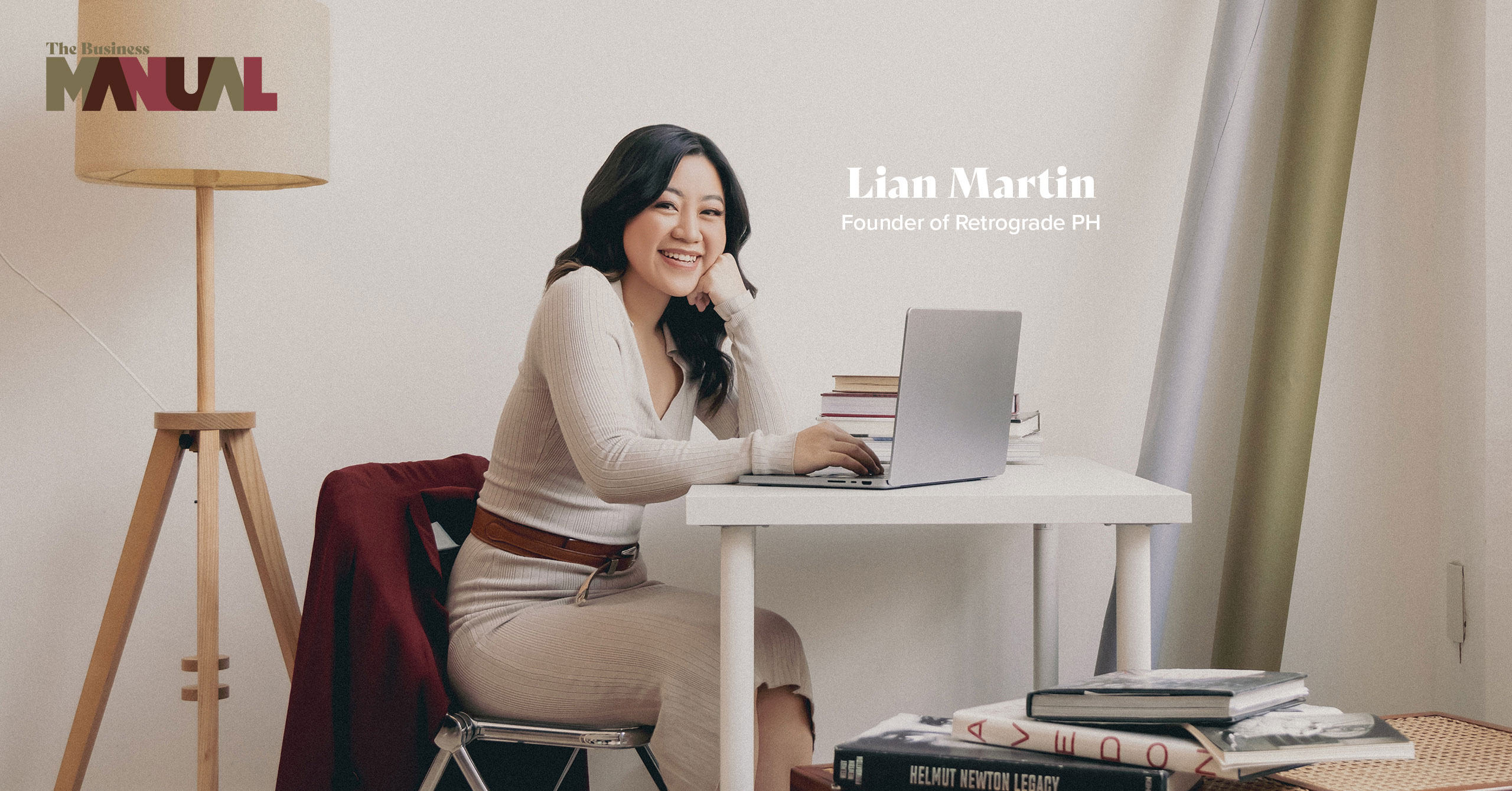
With Vintage Apparel Store Retrograde PH, Lian Martin Takes the Future of Fashion Retail Online
Retrograde PH is a company of powerful contradictions. It is an online vintage store with one foot firmly in the past, and yet, in many ways, it is also the future of retail. Its 24-year-old founder, Lian Martin, is young by any measure, but as a pioneer of Instagram selling she can be considered long in the tooth in the rapidly changing landscape of the Internet. In 2017, with a teenager’s allowance, she created a fashion brand which sources products from and sells to lovers of vintage apparel across the entire nation. And yet what drives the company is its social conscience and commitment to the environment. Past and future, young and old, profit-driven and socially aware, Retrograde is the prototype start-up company of tomorrow, built by a unique new kind of entrepreneur.
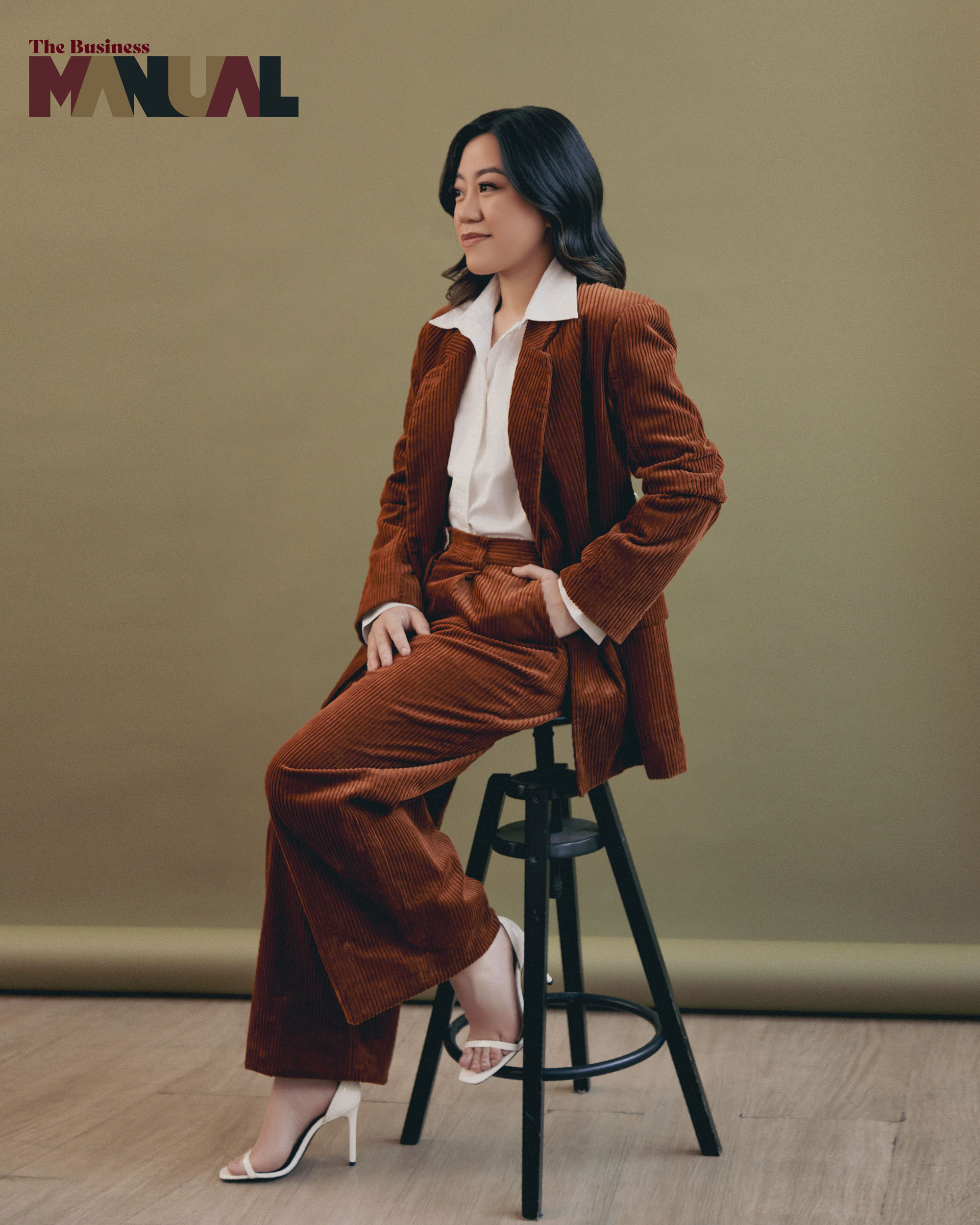
The Business Manual sat down with Lian Martin, founder of Retrograde PH, in a pre-war colonial building in Escolta, to trace the beginnings of her entrepreneurial journey and take a look at the future for ventures like hers. Martin, who now lives in Australia, where she works as a chef for the restaurant Nobu, tells us what it took to establish the company and shares her reasons for why she continues to run–and grow–Retrograde.
In celebration of Women’s Month, The Business Manual puts the spotlight on Martin as a young, woman entrepreneur and highlights her experiences on what it takes for women to not just make it in the business world, but become unstoppable.
The Vintage Future
Three years before Instagram released a set of features for e-commerce in 2020, collectively known as “Instagram Shopping,” Lian Martin’s Retrograde PH was already a thriving online store on the platform.
Retrograde began in 2017 when Martin was just 17 years old. In that time, online selling wasn’t the juggernaut that it is today, and social media platforms had yet to introduce their own marketplaces. She recalls, “I had an P800 allowance for the week. And I decided to save that up and invest it into my thrifting business.” With that as capital she would hunt for vintage clothes online, buy them, and then resell them.
Martin’s inspiration for starting a business built around thrifting came even earlier. “What inspired me the most is how my mom instilled in me the love for thrifting,” she explains. “This was since I was three years old. And she would take me out, she would buy clothes for me in thrift stores, and she would teach me also to look for nice secondhand stuff.”
Martin compares the search for thrifting finds to a hunt. And for her, the hunt was all about finding fashionable vintage apparel at bargain prices. And yet, the hunt was only the beginning. “I wanted to hunt,” she says. “I wanted to show everyone my love for the hunt, and make Instagram a treasure trove for those vintage apparel.”
Because Instagram is–to borrow a Gen Z term–“aesthetic” and a logical home for followers of fashion, the platform was, for Martin, the natural place to sell her products.
“I was obviously a teenager who grew up posting on Instagram and relying heavily on likes and comments,” Martin says of those early days. “That was way back, and I was like ‘What if I pour all my energy into something that could give back to me?’ And I realized [on] Instagram, it’s possible… So I tried to harness that into my strategy for Retrograde and I realized it’s good to try. If it fails, fine. But if it booms, then we’ll keep going.”
Fast forward to the present, and Lian Martin shows no signs of stopping.
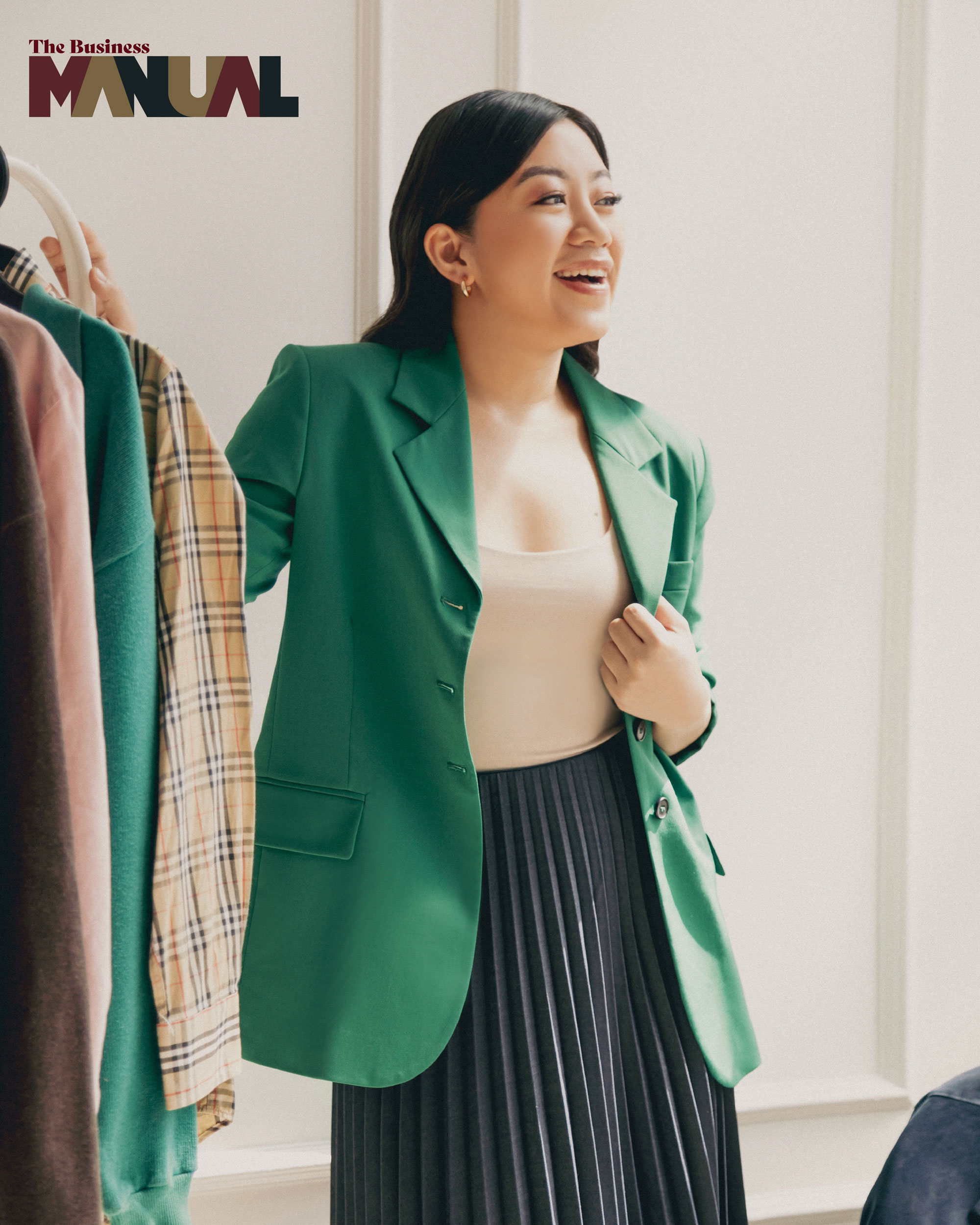
Challenges and Triumphs
For Martin, there was no shortage of challenges in starting an online business. She explains, “I was [in] high school. From there pa lang you see the challenges already. And I gave myself the pressure of wanting to show my parents, ‘Hey you don’t have to give me my allowance anymore.’ I could get it from my business. And slowly it just snowballed and snowballed and I was unstoppable from there.
“I faced a lot of challenges in terms of juggling school and the business. Some customers are chill but some are also very demanding. So during my exam weeks I had to ship items. It was very hard for me to prioritize because I was still starting and I didn’t know how to manage my time. So that was the number one challenge: time management.”
In the beginning, Martin also ran the entire business on her own. “Working as a one-woman team obviously comes with a lot of challenges,” she shares, “because I had to take the pictures, I had to source, I had to steam, I had to launder, I had to ship the items myself.” And as someone who is detail-oriented, she insisted on providing a quality experience. “I don’t just pack it,” she continues. “I used to create watercolor cards, write letters to my customers, and include them in the packaging along with their orders, adding some candies as well.
“To this day, I ensure our packaging is exceptional, aiming to give customers the feeling of unwrapping a gift for themselves. Making my customers smile and feel special is something I truly enjoy.”
Despite these difficulties, success came to Retrograde PH. Part of this success came from tapping into two key characteristics of Filipino consumers: 1) a love of brands and 2) a love of bargains. The two came together in Martin’s fledgling business.
She says, “Filipinos, I noticed, they’re very much into name brands and they’re very much into, like, ‘Oh… this is an expensive brand, this is a top-tier brand.’ And this shop is selling it for the low. They would rather purchase it from a secondhand store rather than the brand new counterpart.”
Soon, word spread about Martin’s vintage store on Instagram.
She recalls, “I was walking around the mall. I got a notification. I got 10,000 followers and it was organic. I’m like ‘Hold on. This was all from word of mouth…’ Influencers were catching on as well and they were not even asking me to give them PR packages. They were just buying from me and commenting ‘Dibs.’ And celebrities as well, and stylists were hitting me up. That’s how I knew. ‘Wow, people know my brand now. People know Retrograde PH and they want to wear vintage.’”
Location, Location, Location
Retrograde PH has built its success with a purely online business model. However, despite not having a physical store, Retrograde’s operations headquarters is in Baguio City–a key ingredient to the company’s success.
Why Baguio? Martin explains, “I was born and raised there. I’m a Baguio girl. And that’s one of the biggest thrift hubs in the Philippines…they call it the bagsakan [the place where used clothing drops]. So apart from Davao, it’s also Baguio.”
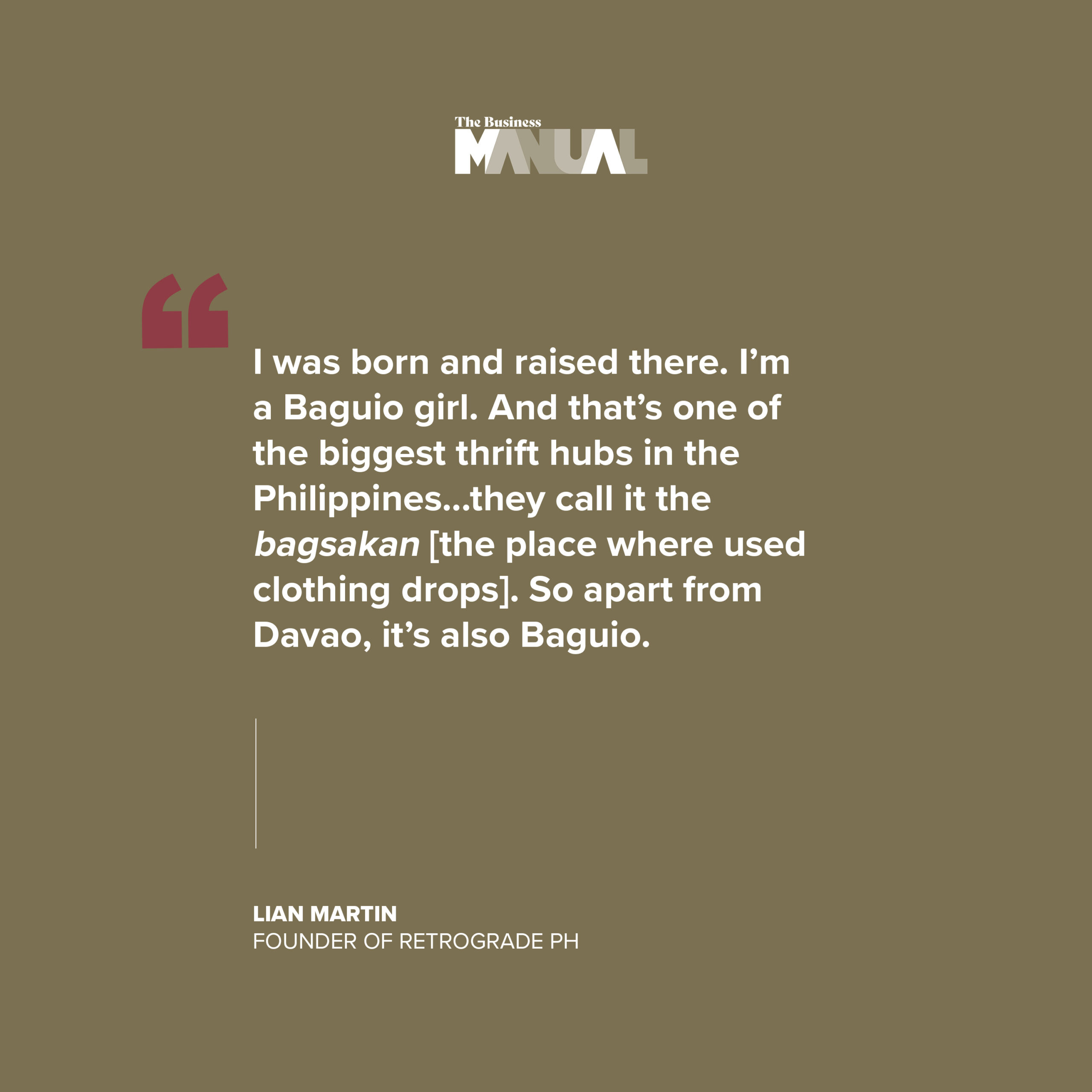
The spirit of thrifting is alive in Baguio, from the secondhand clothing mecca that is ukay ukay to small businesses selling used clothes. “Everywhere around Baguio you will see thrift stores,” Martin says enthusiastically. “You will see small houses hanging their pre-owned clothes, selling it to their neighbors.”
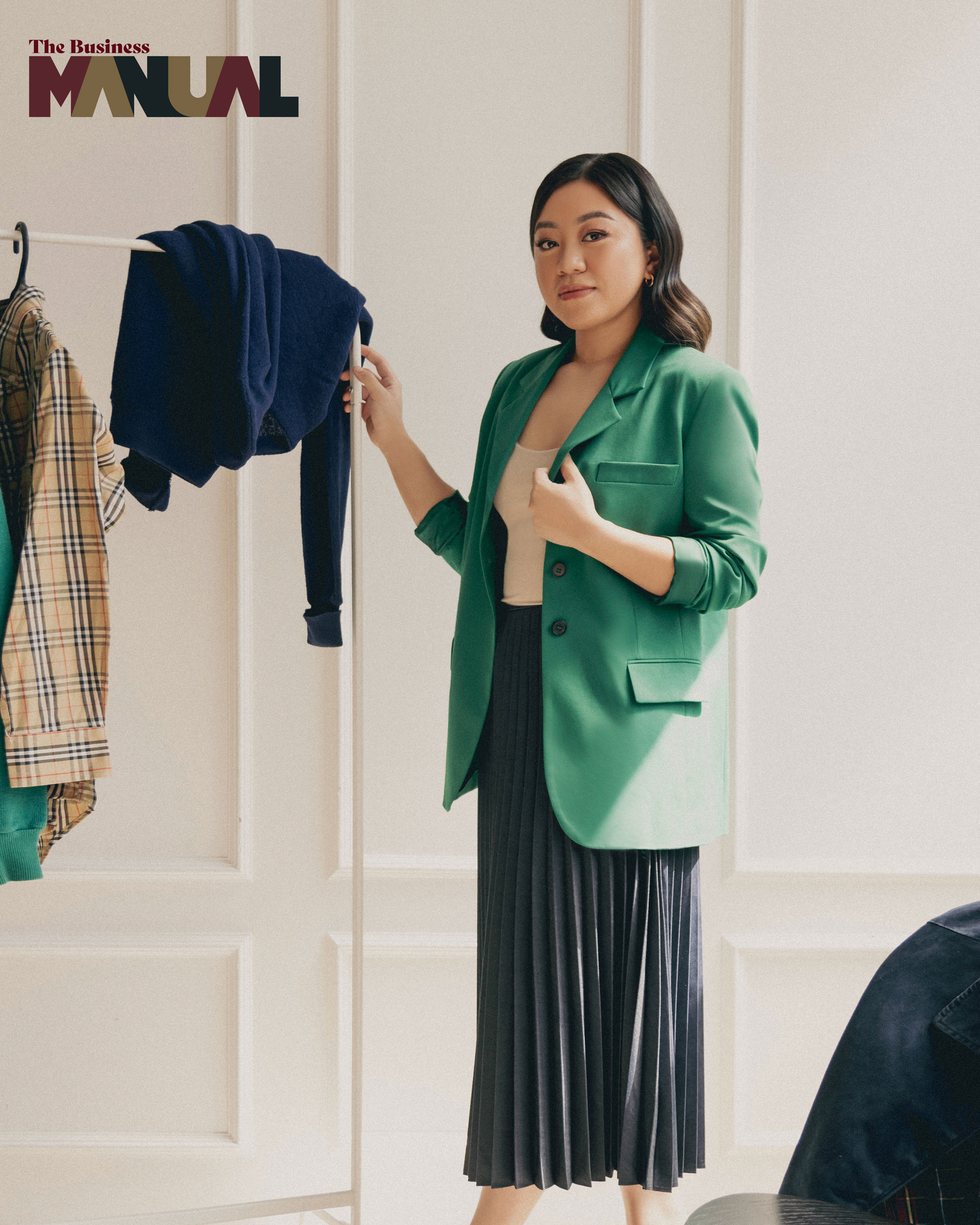
It is this thrifting spirit that Martin seeks to spread with Retrograde PH. And even though Retrograde has no physical stores, the company has found a way to reach new customers in the retail space through collaborations with pop-up stores.
“For me pop-up stores are very flexible in a way na you get to move around the metro, you get to move around the country… and if you have a physical store, you’re just there. Your stocks may remain stagnant. Meanwhile for pop-ups you get to meet new people from different places and different backgrounds. It’s a unique opportunity for small businesses to engage with customers and foster loyalty, as well as rub elbows with the like-minded. You are able to test new markets or locations without the long-term commitment of a permanent store.
“Pop-up stores create a sense of urgency and exclusivity, which can generate buzz and interest among customers. With this we’re able to promote special offers, driving foot traffic, sales, and brand awareness.”
Profit and Sustainability
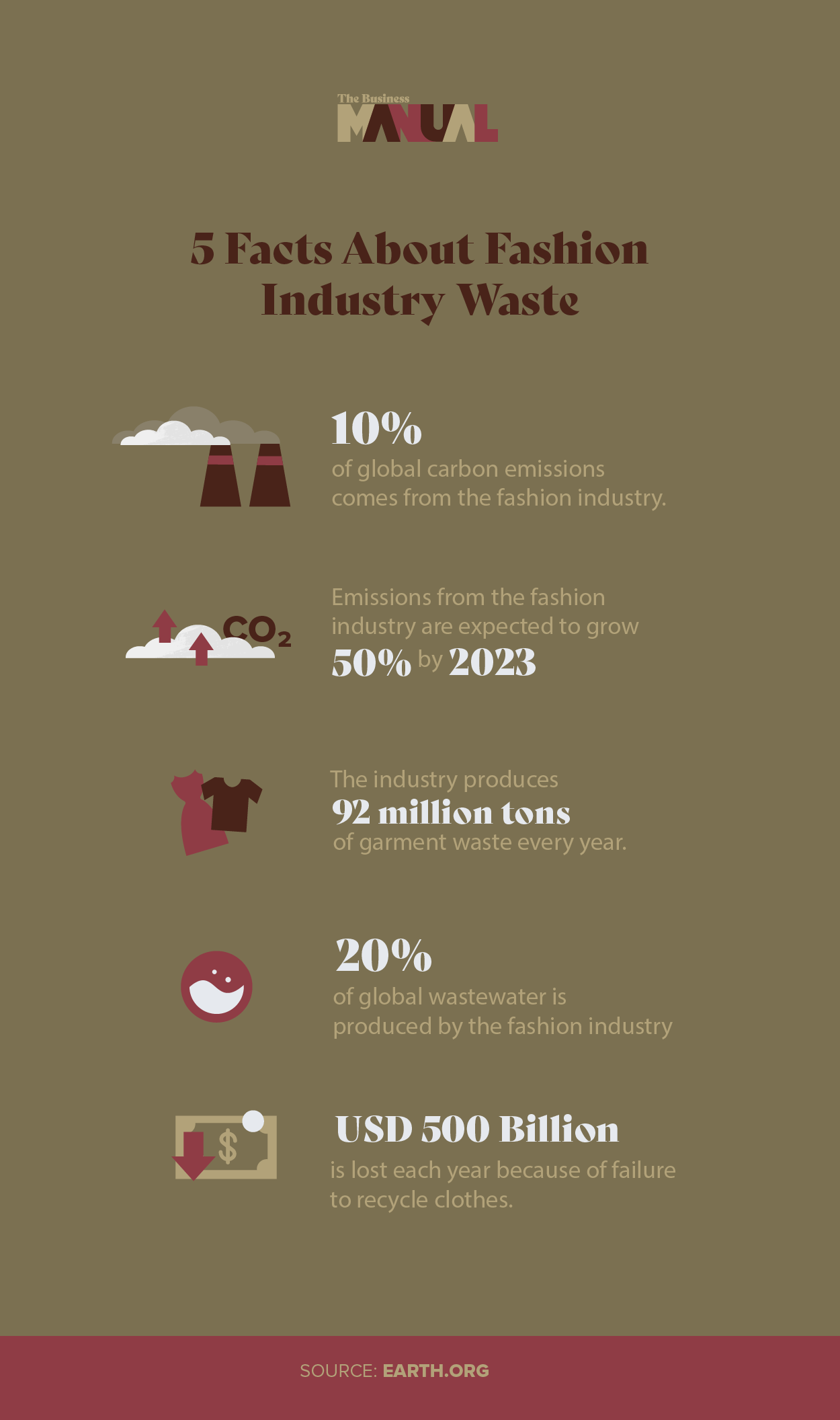
The fashion industry is one of the top polluters in the world, and it contributes significantly to carbon emissions, wastewater, waste in landfills and even microplastics in the ocean. This fact is not lost on Lian Martin as she runs a popular fashion brand. However, while Retrograde PH is a business built for profit, that isn’t its only goal. Martin saw that there was an opportunity to champion sustainability.
“I wanted to introduce sustainability through vintage clothing to the Philippine market,” she says, “since I’m one to love the environment. I read about the waste, the clothing waste and all that from brands like Shein, Forever21, H&M, those brand new outlets. There’s [millions of] tons of clothing that go into the landfill and it just really contributes a lot to the destruction of our environment.”
Unlike other fashion brands, Retrograde is about reusing and recycling. From the ground up, its thrifting philosophy allows those who love fashion to buy pre-loved vintage clothes instead of buying brand new garments from fast fashion purveyors.
Stewardship of the environment isn’t the only cause that Retrograde PH champions. Martin is also keenly aware of the impact her company makes, especially for her suppliers and partners.
When she moved to Australia, she was faced with the option of closing down the company, but she chose not to. “Retrograde is my baby. I could have easily just closed it down,” she says. “But then I knew I was one of the pioneers in the online vintage scene so I knew that I did not want to just close it down that quickly because I’m not just helping myself, I’m also helping the environment and in my own little way… It helped not only me but also my suppliers.
“And I heard some of my suppliers [say], ‘Dati, tambay lang kami [Before, we were jobless],’ but because of ukay, because of thrifting, we now make a living, we now put food on the table. And I think that’s a big thing.”
Today, Lian Martin runs Retrograde remotely from Australia, maintaining close links with her team in the Philippines.
Speaking about the future, she envisions Retrograde expanding internationally both in the online space and IRL.
“I do plan to branch out internationally,” she says. “And I want to put up a store in Australia since I’m based there, and I think and I know that it will do well with me manning all of that physically and being able to see all my tangible materials and deliverables, everything. That’s the plan. And maybe put up a store in Manila one day. We’ll see how it goes.”
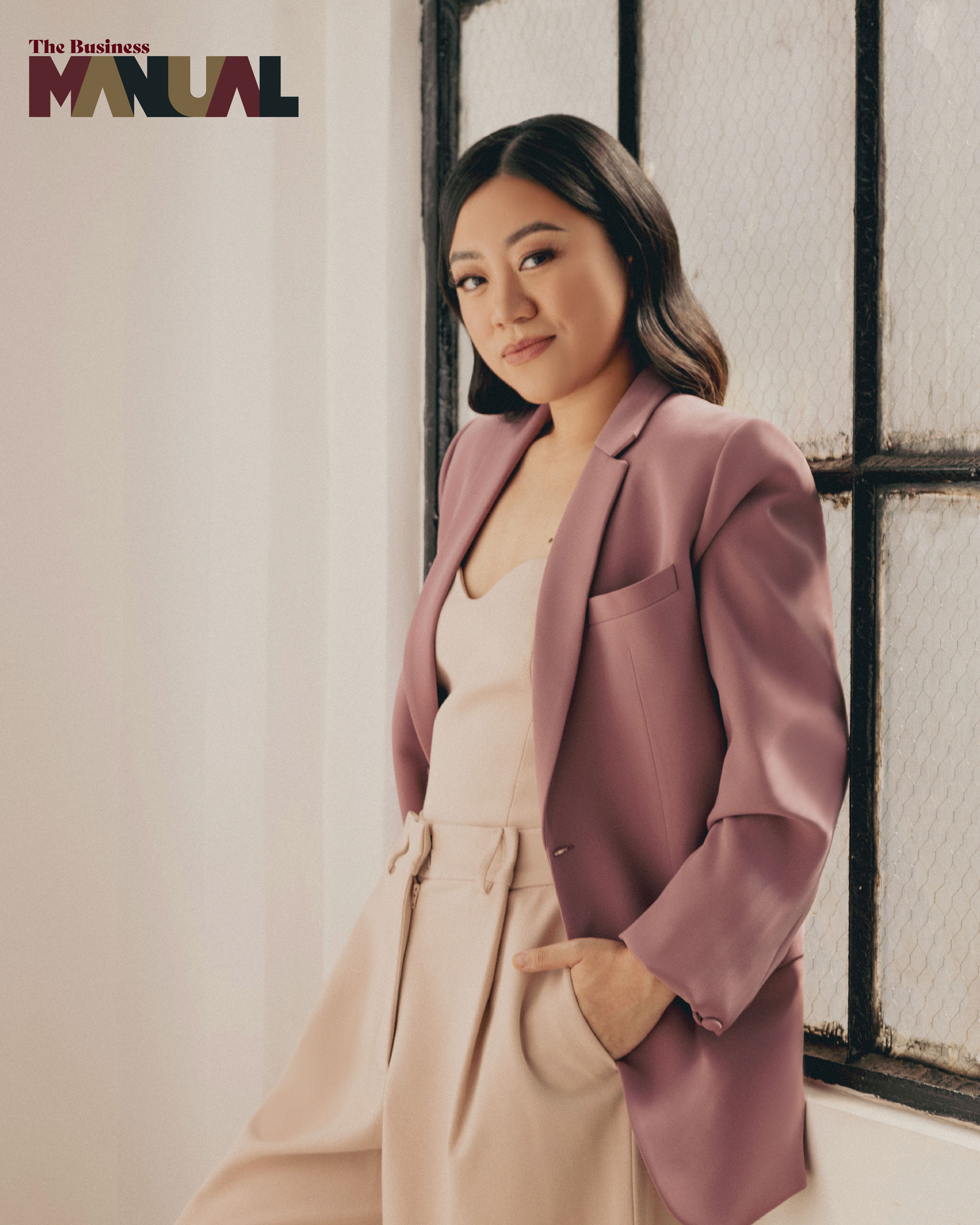
Advice for Young Entrepreneurs
In many ways, Lian Martin is living the dream of many young entrepreneurs. She pioneered online selling on Instagram and bootstrapped her way to a successful business in fashion. At the same time she is blazing new trails, promoting sustainability and improving the lives of those she shares her business with. What can she impart to these young entrepreneurs?
She says, “My advice for young people who would like to start a small online business or any business for that matter, I would say, learn how to execute… As the old saying goes, ‘A dream without a goal is just a wish. And a goal without a plan is just a dream.’ So execute, and then your dreams will come true.”
To women entrepreneurs, she has a special message: “Don’t fret. Don’t fear… All I want to say to women is don’t be scared to execute your dreams because you yourself can do just as much as men can do and maybe even more. And just be confident… But always stay on the ground. Be humble.”
Text VINCENT SALES
Photography EXCEL PANLAQUE of KLIQ, INC.
Videography JR RAMIREZ of KLIQ, INC.
Art Direction MARC YELLOW assisted by ANDREA SANGCO
Makeup Artist JEARMAYN SILLEVA of SETTE SB ARTISTRY
Hairstylist LHUIZ JHAY C. SANTOS of SETTE SB ARTISTRY
Stylist JOHN MANUEL GUMATAY assisted by LOIDA CHING and MIGUEL VIEN
Sittings Editor VINCENT SALES
Shoot Coordination TONI MENDOZA
Shot on Location ESPACIO CREATIVO ESCOLTA