Features June 29, 2026
Bookmark feature is for subscribers only. Subscribe Now to save your favorites.

The Economic Impact of LGBTQ+ Entrepreneurship in the Philippines

FacebookXEmailCopy Link
About 55,000 businesses in the Philippines, contributing 2% of the country’s GDP, are owned and operated by LGBTQ+ entrepreneurs.

About 55,000 businesses in the Philippines, contributing 2% of the country’s GDP, are owned and operated by LGBTQ+ entrepreneurs.

The Love Laban Pride Festival held on June 27, 2026, at the University of the Philippines (UP) Diliman campus welcomed 300 thousand participants, according to news reports. Comprising the festivities was a Pride march, a rally with speakers voicing their support to the LGBTQ+ (lesbian, gay, bisexual, trans, queer, and additional sexual orientations or gender identities) community, and free HIV (Human Immunodeficiency Virus) testing.

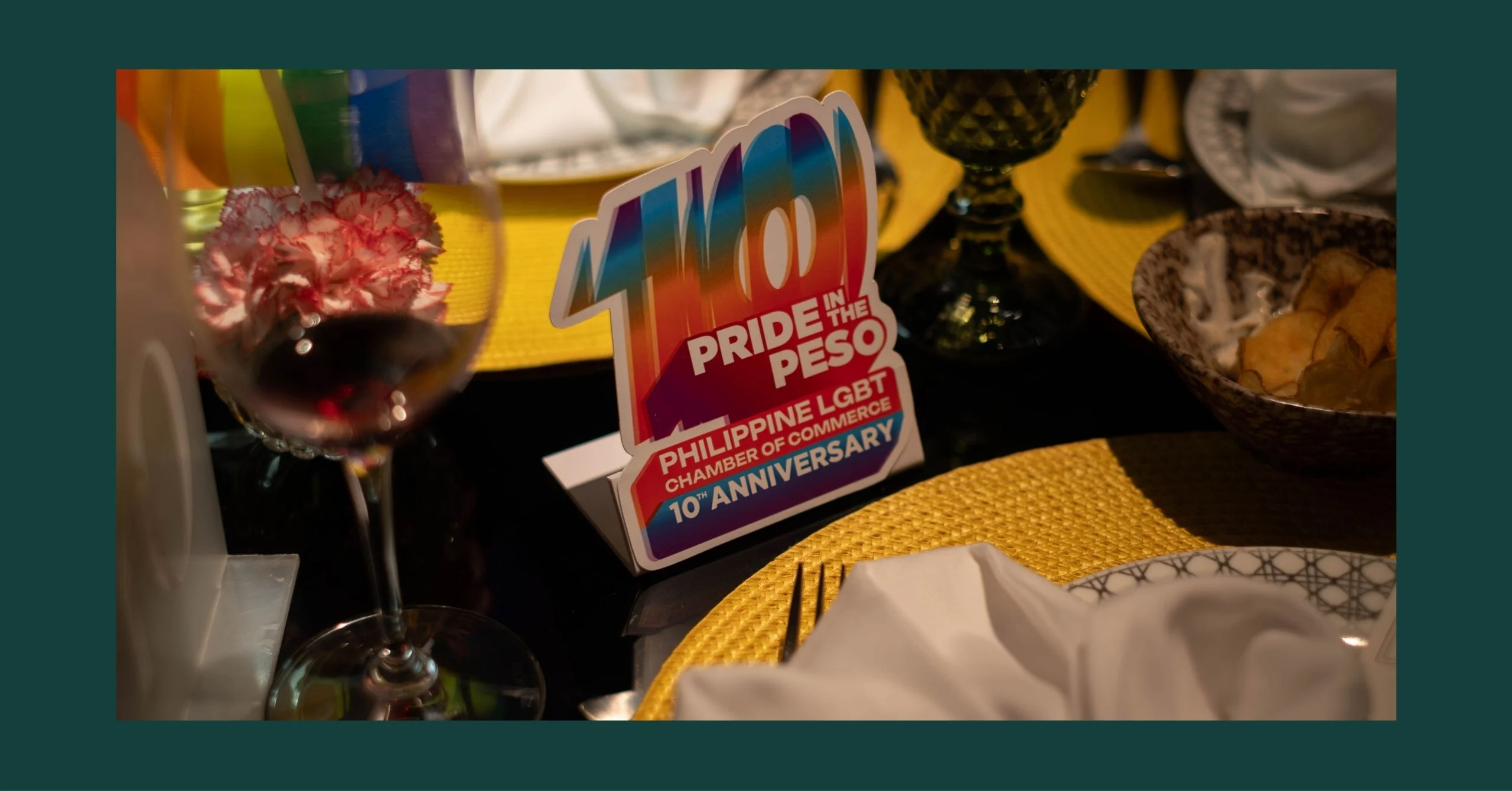
Ronn Astillas, current chair of the Philippine LGBT Chamber of Commerce (PLCC), estimated that over 120 LGBTQ+-owned businesses would join Love Laban, he told The Business Manual in an interview a day before the festival.

He said that the presence of LGBTQ+ entrepreneurs in events like Love Laban represents a deeper call for genuine respect and acceptance for the queer community.

“We believe that our presence is a manifestation of our greater rights,” Astilla said. “We need to show up because we need to take up that space.”

Around 55,000 businesses in the Philippines are owned and operated by LGBTQ+ entrepreneurs, according to PLCC’s internal data. Astillas said they contribute to 2% of the country’s gross domestic product (GDP), or around $9 to 10 billion.

In an interview with The Business Manual, Astillas sheds light on the realities LGBTQ+ entrepreneurs face and the work that organizations like the PLCC are doing to create an equitable playing field for micro, small, and medium enterprises (MSMEs).

What is the Philippine LGBT Chamber of Commerce?

Founded in 2016, the Philippine LGBT Chamber of Commerce (PLCC) is a business group whose goal is to empower LGBTQ+ entrepreneurs in the Philippines.

It has over 100 member-businesses, and its members also include those working with governments and leading corporations to push for diversity, equity, and inclusion (DEI).

A key function of the chamber is to provide LGBTQ+ entrepreneurs with the knowledge to run their businesses. One of their programs, EXCEL (Entrepreneurship and Employment Connectivity for the LGBTQIA), offers participants entrepreneurship training through a 2-3 day workshop. 

The sessions cover topics that include business registration, product and service development, and social media marketing.

The chamber also calls the training workshop “NegoShantay Ako Sessions,” a play on words of the line "Shantay, you stay!,” popularized by the American reality show, "RuPaul's Drag Race.”

To Astillas, the phrase ‘NegoShantay Ako’ is a phrase of self-affirmation for LGBTQ+ entrepreneurs who may not have felt supported and seen because of their Sexual Orientation, Gender Identity, and Expression (SOGIE).

“We’ve always been told, ‘Just stay on the side. Be quiet. Don’t engage with us. Just do your thing, but don’t be loud.’ If society has been telling us to do that for decades, or for centuries, how do we think for ourselves? How can we break that mindset?” he said.

“We need to get out. We need to awaken ourselves.”

Another event, the business expo QueerCon, was debuted in 2025 in partnership with the Quezon City government. This year’s iteration was held at Ayala Malls Trinoma, Quezon City, featuring appearances from queer artists like Precious Paula Nicole and Pura Luka Vega.

The recent event was a barometer for Astillas, who received positive feedback about QueerCon being a platform for LGBTQ+-owned businesses. 

“That’s a success story for us. That’s inspiring. For me, that’s a KPI (key performance indicator), a qualitative, anecdotal KPI. That’s really what matters to me,” Astilas said.

What Challenges do LGBTQ+-Owned Businesses Face?

Discrimination costs the Philippines P147.6 billion a year, or 0.67% of the GDP, according to a 2024 report by Open For Business, a global coalition of businesses advocating for LGBTQ+ inclusion.

The report points to the ongoing brain drain of highly skilled queer workers who seek to live in more inclusive societies as a key reason for the negative impact. Open For Business also points to other factors like the high cost of LGBTQ+-health treatment in the Philippines and the country’s mixed record on LGBTQ+ rights.

32% of surveyed businesses said they faced online harassment because of their LGBTQ+ identity, according to a 2023 study by e-commerce builder GoDaddy.

Astillas said a barrier LGBTQ+ entrepreneurs face is access to financing, a problem many MSMEs in the Philippines also experience. 

This content is available to our subscribers. Join our community to access premium content and elevate your business knowledge.

Already a subscriber? Login
OR
ANNUAL
1,000
per year
SEMI-ANNUAL
500
per six months
QUARTERLY
250
per three months
MONTHLY
100
per month

Frequently Asked Questions

According to internal data from the Philippine LGBT Chamber of Commerce, about 55,000 businesses in the Philippines are owned and operated by LGBTQ+ entrepreneurs. These businesses collectively contribute around 2% of the country's GDP, equivalent to approximately $9 to $10 billion a year.

Founded in 2016, the PLCC is a business advocacy group that empowers LGBTQ+ entrepreneurs in the Philippines through capacity-building programs, business expos like QueerCon, and partnerships with government and corporations to advance DEI inclusion in the Philippine business ecosystem.

The LGBT Enterprise Fund, proposed by PLCC chair Ronn Astillas, would provide zero-to-low interest, no-collateral loans to LGBTQ+ entrepreneurs, modeled on DTI-backed funds. The proposed allocation is P1 billion, with Astillas projecting it could double LGBTQ+ businesses' GDP contribution.

According to a 2024 report by Open For Business, anti-queer discrimination costs the Philippines P147.6 billion a year — or about 0.67% of the GDP — driven by brain drain of highly skilled queer workers, high LGBTQ+ healthcare costs, and the country's mixed record on legal protections.

The SOGIE Equality Bill, first filed in 2000, proposes to outlaw discrimination based on sexual orientation, gender identity, and expression in workplaces, schools, and businesses. If enacted, it would prohibit employers from discriminating in hiring and prevent businesses from denying services on the basis of SOGIE.

Mikael Borres

Mikael Borres

Writer

Mikael Borres is a writer for The Business Manual, authoring articles about Philippine small businesses, economics and finance. His work with the publication has a strong focus on uplifting Philippine micro, small, and medium enterprises (MSMEs) with fundamental business lessons and leadership insights.

Mikael has written pieces on evolving business trends and technology, as well as articles on branding and human resources. He also writes people-centred feature articles highlighting the work and stories of Filipino entrepreneurs and executives. He also covers events for the The Business Manual, highlighting developments in the Philippine business scene.

Mikael graduated from the University of San Carlos with a Bachelor of Arts in Political Science, majoring in International Relations and Foreign Service (IRFS).

More From Features

Features

How Philippine Consumer Fairs Create Opportunities for Small Businesses

Features

Business Community, Stakeholders Back a Circular Economy Through Legislation

Features

Levanto Restaurant Hub Hosts Lifestyle Asia’s ‘Crave’ Launch in Makati

Features

The Purple Gold Rush: Can the Philippines Keep Up With the Global Demand for Ube?

Learn straight from the top CEOs and business leaders. Access exclusive articles and videos.

Subscribe Now