Mega Prime Foods and CPF Boost Philippine Food Security with New Zamboanga Egg Facility


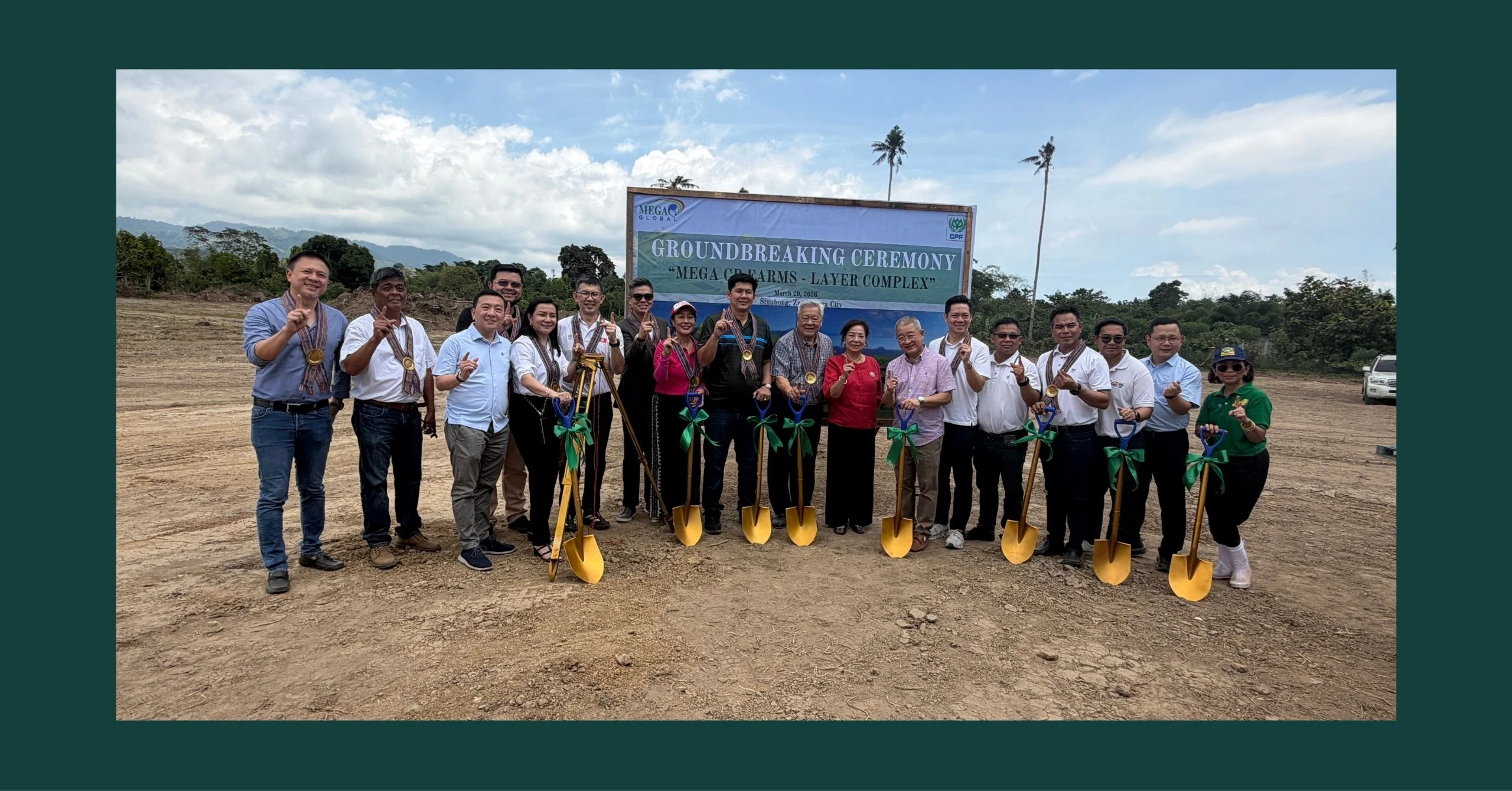
Mega Prime Foods Inc. (MPFI), in partnership with Thailand’s Charoen Pokphand Foods (CPF), scales its agricultural operations and boosts food security with a new 22-hectare egg-layering facility in Zamboanga.
MPFI, maker of Mega Sardines, and CPF, a global agro-industrial company, broke ground on the Mega CP Layer Complex in Zamboanga City for Zamboanga’s first world-class egg layering facility.
The latest expansion is a step in MPFI’s transformation into a diversified food company investing in the future of Philippine agriculture. The collaboration aims to build a more resilient and scalable food ecosystem that supports national nutrition needs and long-term industry development.
Building a Future-Ready Food System
Designed with an estimated capacity of up to 100 million eggs per year, the Mega CP Layer Complex will help meet the growing demand for affordable, nutritious protein among Filipino households. Initial estimates indicate that this capacity can scale up to five times its current level.
CPF will lead the implementation of technical systems and farm management practices, bringing its globally proven expertise to the Philippine setting.
Spanning 22 hectares, the facility is designed with sustainability at its core. It will feature environmentally responsible technologies, including an odor control system and a biogas facility that converts waste into renewable energy for electricity generation, thereby supporting more efficient and eco-friendly operations.
“By combining our strong local foundation with global expertise in agriculture, we are building a future-ready food system that supports both national nutrition and long-term industry development,” said Marvin Tiu Lim, chief growth and development officer of MPFI, in a press statement.
“As we expand beyond seafood, we aim to play a more active role in strengthening food security, supporting local communities, and delivering accessible, high-quality nutrition to Filipino families,” said Michelle Tiu Lim-Chan, MPFI’s president and chief executive officer, in the same statement.
Generating Economic Opportunities in Mindanao
The project is also expected to generate meaningful economic opportunities in Mindanao.
The development will create employment within the facility and support surrounding communities, contributing to local livelihood and community development.
This investment further positions Zamboanga as a key location for modern agricultural infrastructure, reinforcing its role in the country’s evolving food production landscape.
Further details are available on Mega Prime Foods’ official Facebook page and website.
This content was produced in collaboration with Mega Prime Foods. Our Partner Content stories help us advance our mission to provide relevant stories, expert insights, and business intelligence that empower Filipino entrepreneurs. The Business Manual oversees our partnership standards.
Frequently Asked Questions
The facility spans 22 hectares and is engineered to produce an estimated 100 million eggs per year initially. However, the infrastructure is designed for extreme scalability; MPFI and CPF indicate that the facility’s capacity can eventually be scaled up to five times its current level (up to 500 million eggs annually) to meet the rising national demand for affordable protein.
While MPFI provides the local foundation and logistics, Thailand’s Charoen Pokphand Foods (CPF) leads the technical implementation. This includes installing world-class farm management practices and automated systems. CPF’s role is to ensure the facility meets global agro-industrial standards, focusing on biosecurity, high-yield layering techniques, and efficient supply chain integration.
Sustainability is a core technical component of the complex. The facility features:
Biogas Facility: This system converts organic waste from the poultry into renewable energy, which is then used for on-site electricity generation.
Odor Control Systems: Specialized technology to mitigate the environmental impact on surrounding communities.
Waste-to-Energy: By closing the loop on waste, the facility reduces its carbon footprint while lowering operational costs.
This is Zamboanga’s first world-class egg-layering facility. By establishing large-scale production in Mindanao, MPFI reduces the region’s reliance on imported eggs from other islands, lowering logistics costs and ensuring a fresher, more stable supply of nutritious protein. It repositions Zamboanga as a critical player in the Philippines’ “evolving food production landscape” beyond its traditional strength in seafood.
Beyond food output, the project serves as a localized economic engine. It creates direct employment within the 22-hectare facility and indirect opportunities for local feed millers and logistics providers. The “Future-Ready” design aims to foster a scalable food ecosystem, which MPFI’s leadership notes will support long-term industry development and community livelihoods in Mindanao.
More From Features