Is Wholesaling a Good Option for Your Food Business?


While many food entrepreneurs choose a B2C model, wholesaling remains a viable alternative.
The food and beverage (F&B) industry has become a popular choice for both experienced entrepreneurs and newcomers alike. Typically, F&B businesses follow the business-to-consumer (B2C) model, which allows them to sell their products directly to individual consumers.
Given the stiff competition in the food and beverage sector, standing out is paramount for any business. For business owners who want to veer away from the B2C model and do something different, the business-to-business (B2B) model is another option.
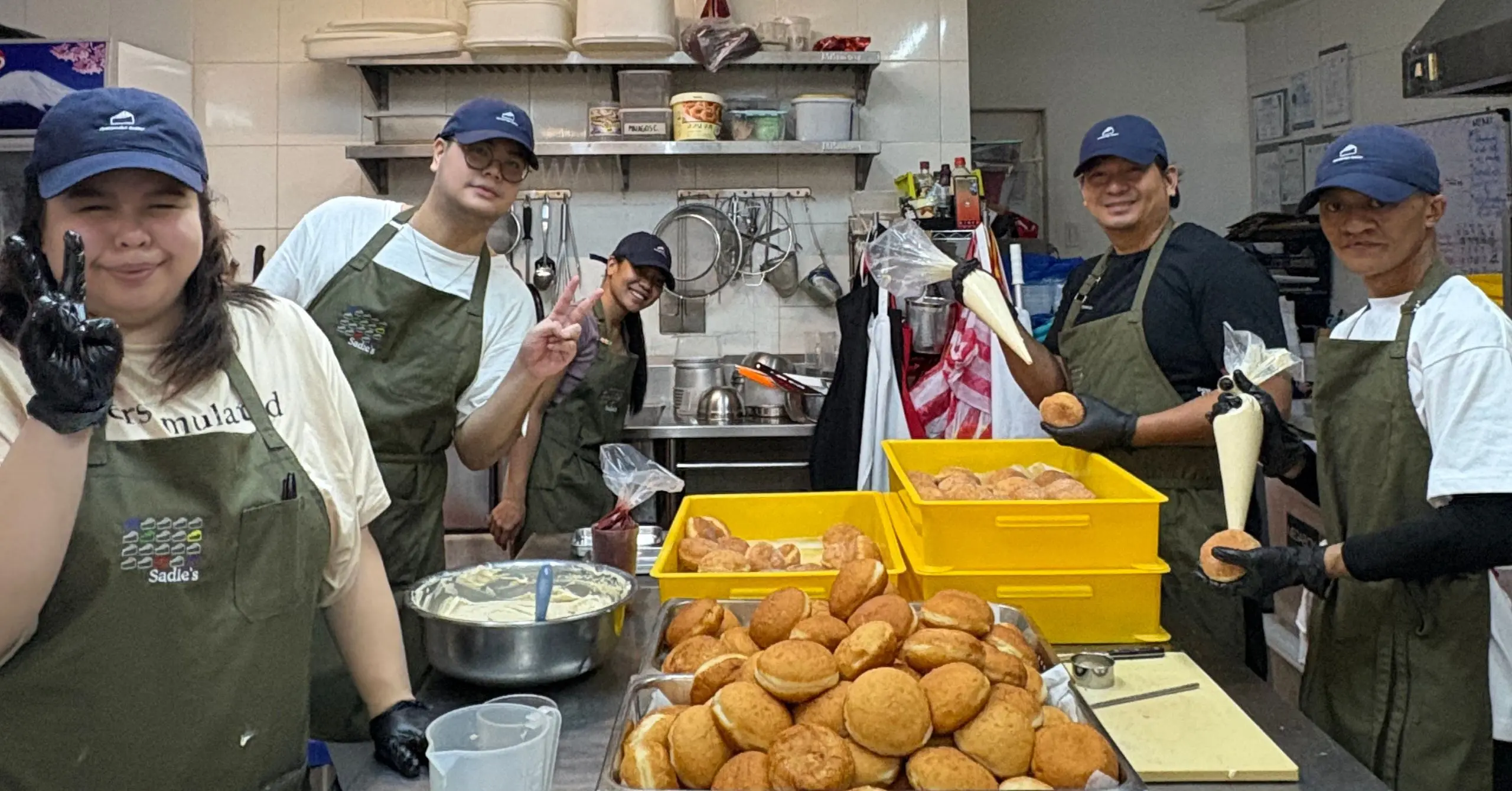
Specifically, wholesaling to fellow businesses is an option that business owners can explore. To get a better understanding of how this works, The Business Manual spoke to Edward Sadie Dela Cruz, the owner of dessert shop Sadie’s.
When Sadie’s was founded in early 2021, it began wholesaling its cheesecakes to cafes and restaurants in Metro Manila, including Deuces, Resonate, We the People, and Namnam. Sadie’s likewise wholesales to cafes and restaurants outside the metro, including Ninety Three Coffee in Angono, Vista Coffeeteria in Taytay, and A Slow Life in La Union.
Getting Started
The first seeds for Sadie’s were planted in 2020 when Dela Cruz, who pursued a degree in Culinary Arts in college and garnered experience working in New York City restaurants, began craving a cheesecake made by a friend back when he was still living in the States. None of the cheesecakes he could source matched his friend’s cheesecake, so he decided to make it himself.
“After a few attempts and some feedback from friends, I decided to start selling it on my Instagram,” says Dela Cruz. “Once it reached a point where people I didn’t personally know started messaging me for it, I decided to make it into a business.”
He went on to open Sadie’s, whose name he got from his mother’s maiden surname. However, following a B2B model wasn’t something that the business owner thought that he would pursue.
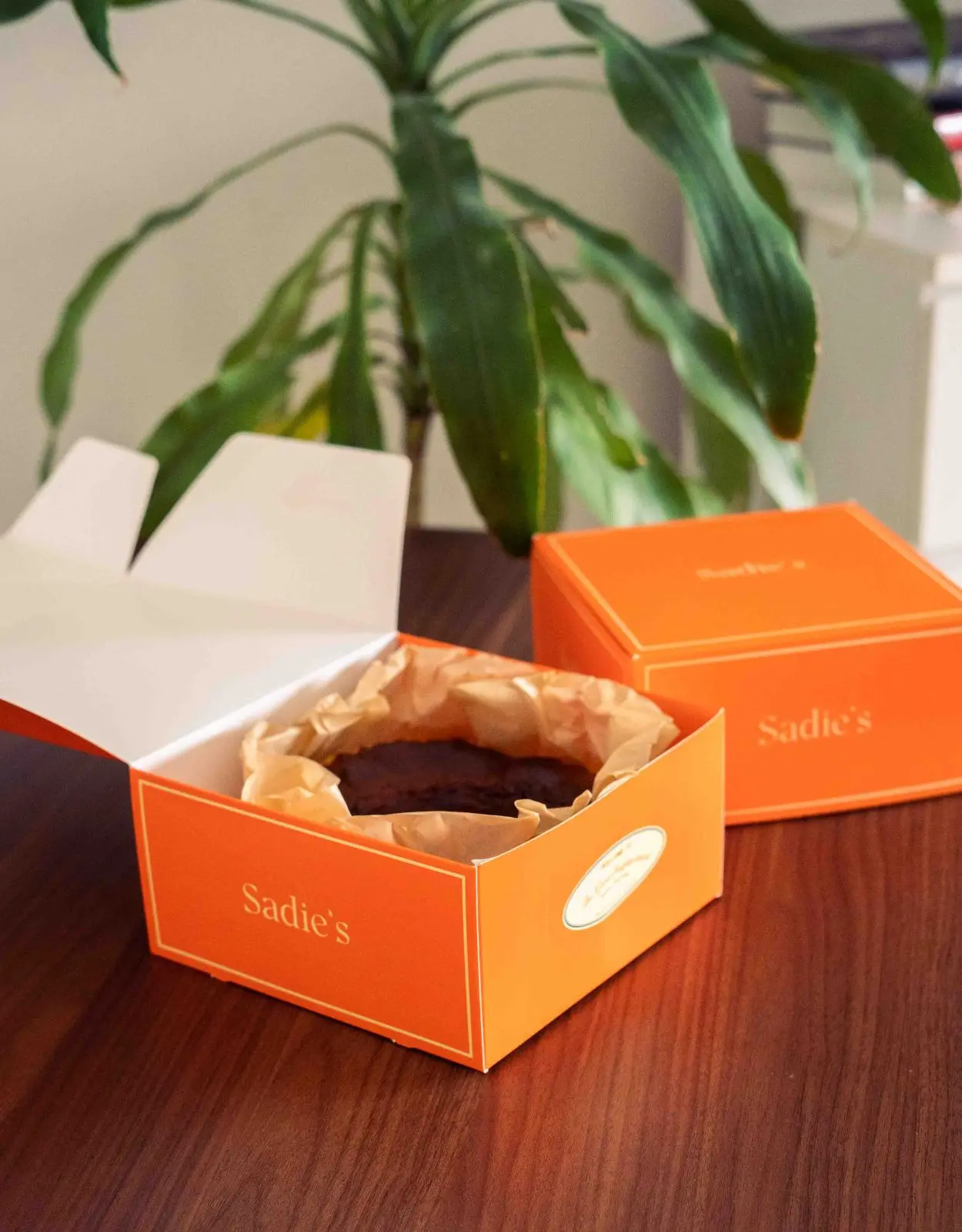
“I love service, and I recently realized that food is something I do well, but I only do it well because of my love for serving people,” he explains. “This was a big struggle in particular because a B2B model removed the link between myself and the customers I wanted to serve, and for a long while I didn’t know where to position myself because the skills I built and the direction seemed to be a bit misaligned.”
“But eventually we learned that service does not need to be limited to a direct customer, and that is something that we are now continuously asking ourselves how to do better,” the owner of Sadie’s adds.
Finding Clients as a B2B Business
Following a B2B model meant that Dela Cruz had to look for clients to wholesale his cheesecakes to. While he initially considered opening a shop for Sadie’s, he eventually decided that he would supply a soon-to-open cafe with cheesecakes instead.
“This opportunity gave us more direction to find more stability in our daily operations, which is difficult for an underfunded home business,” says Dela Cruz. “And so we tried to connect with anyone we knew that was running a cafe or a restaurant.”
Dela Cruz eventually received an order from an owner of a rapidly expanding cafe. Seeing the opportunity, he took the chance and asked if they wanted to carry Sadie’s cakes in their shop.
“I knew how busy they were and when I didn’t receive a reply, I thought it was a no,” he recalls. “A month or two later, I received a message in response to that query, asking if we could start the following week. That cafe was called Deuces.”
According to Dela Cruz, their B2B clients are companies that proactively reached out to explore partnership opportunities.
“It is only now that I have asked for help from some friends to lead the sales division, with the idea of expanding our operations for more,” he says.
B2B vs. B2C
For Dela Cruz, the differences between B2B and B2C are stark and mostly have to do with the idea of service.
“I have always loved the idea of serving people and I grew up nurturing those exact skills,” he explains. “Servicing fellow businesses was something I never even considered, and so I was very much lost in how to do that. Honestly, until now, I still keep asking myself and the team how we can make our B2B clients experience better service from us.”
He notes that “metric of reactions from direct customers don’t fall on us, but on our B2B clients.”
“And when there are issues regarding our cakes, it’s them that take all that responsibility,” Dela Cruz points out. “Which means there is an extra level of care that has to come from us, so that we don’t affect their business negatively.”
Because the Sadie’s team isn’t physically present at partner locations, handling incidents comes with added pressure. This presents a challenge to the production systems of the business.
“The challenge is how to make [the process] more efficient so that our staff is not overworked, because taking those extra little steps piles up when they have to make a big volume of cakes,” says Dela Cruz.
Advantages and Disadvantages of B2B
Another challenge that comes with following a B2B business model is the lack of control over the quality of products.
“I mentioned that there is a lot of pressure for us to take extra care, but it is out of our control when a cafe’s staff is not trained or willing to take the same amount of care during service,” Dela Cruz explains. “This is exactly why our products remain to be just the cheesecakes for now, because it only takes one step for them to put it on a customer’s table — take it out of the box.”
While Sadie’s had cream puffs on their menu before, the team eventually decided to remove them because the extra steps of reheating and filling proved to be difficult as far as consistency is concerned.
“Because of that, we focused on the cheesecakes and are now finding ways to make new exciting products via collaborations and pop ups, for which our team can be present and have more control over the outcome,” he says.
Still, there are advantages to running a B2B business, particularly when it comes to access to customers.
“We sell at a premium price, and it is a big commitment especially for new customers who don’t know if they like us yet, and for customers who only want the cake for themselves,” the owner of Sadie’s explains. Buying a cake for yourself, as nice as the idea is, is probably not something people will normally do.”
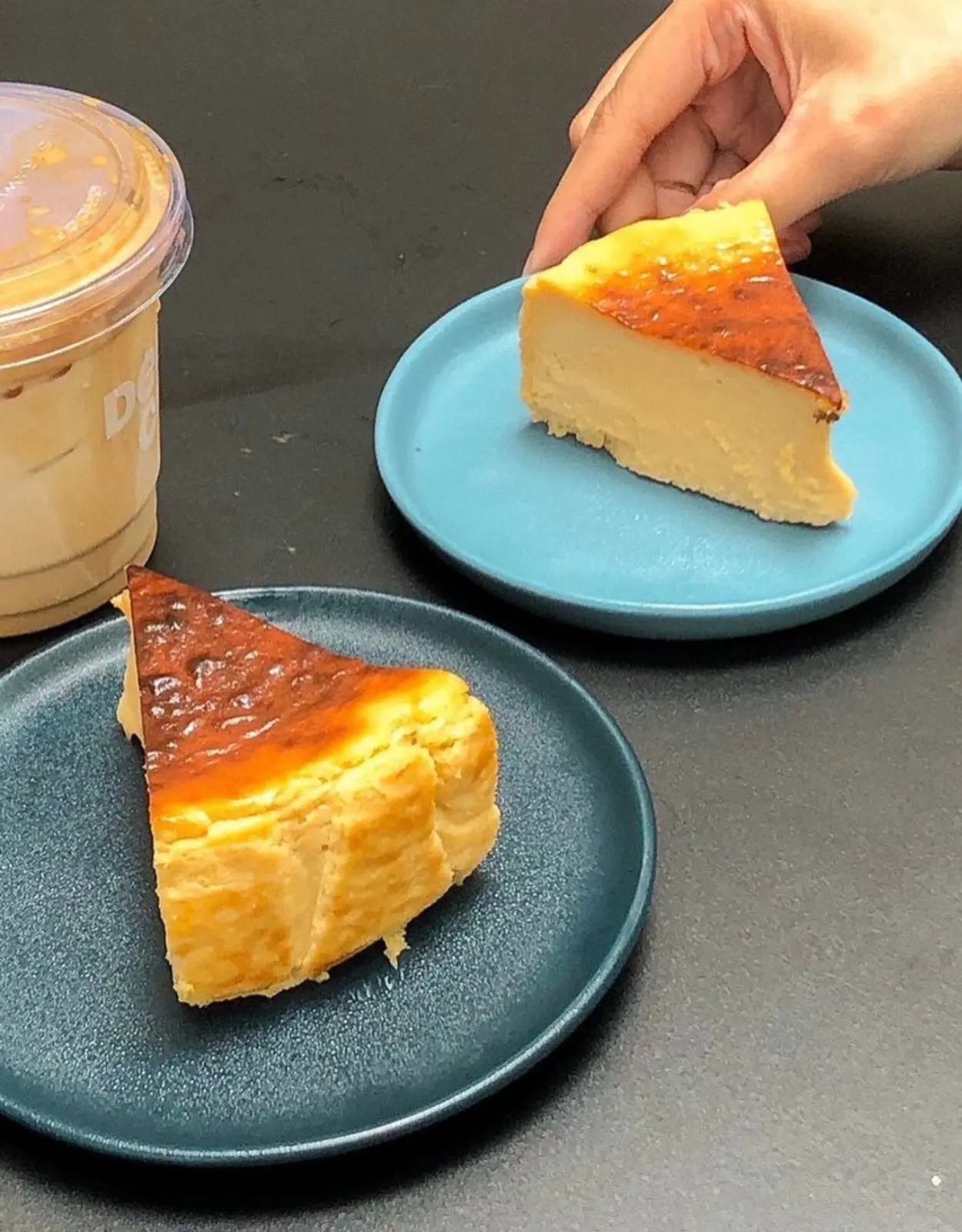
“Cafes and restaurants selling our cakes in slices bridge that gap,” he points out.
Choosing Between B2B and B2C
The owner of Sadie’s advises food business owners to keep the following considerations in mind when deciding between B2B and B2C:
- Does your product have a long shelf life and require minimal effort to be served by others?
- Is it efficient to make? Will it survive the trip from your place of production to the place of service? How much of your products might get destroyed during the delivery?
- Do you have the connections to help you distribute the products? If not, are you willing to make those connections? Connections for B2B are transactional, but the magic happens when it goes beyond that.
- Why are you even making the product in the first place?
Tips and Advice for Those Considering Wholesaling
For those who may eventually consider wholesaling and implementing the B2B model, Dela Cruz advises to ask the basic questions first.
“Like why would you sell to someone who sells for you, instead of making your own place wherein you have more control? If the answer is to manage risk, then make sure to explore other risks you might not be seeing,” Dela Cruz explains. “If it’s a lack of funding, then make sure your models still work after giving your clients the discounts they’re asking for.”
“For every answer to a basic question there is another one that follows,” he adds. “Dig deep and make confident decisions, even if it takes time to see results.”
Second, he advises building a business “so it works without you, but don’t ever leave it up to someone else.”
“If you want to build a business from wholesaling, the idea is that you’re not the one making the products by yourself. In the first place, the goal is volume,” Dela Cruz notes. “But don’t think that just because you need to reach volume, the values you had when you started out don’t matter [anymore] when you experience growth. In fact, that’s when it becomes more important.”
Leaving all of it to someone else means that there’s a very high risk that the business ends up veering away from the original vision. Let it go unchecked, and the business may turn into something the owner no longer identifies with and decides to sell.
“And if you find that you’re too attached to sell, that creates an emotional problem that will be very difficult to solve,” he points out.
Lastly, he advises owners to keep talking about their product, ideas, and even the problems that they’re observing. According to Dela Cruz, it’s important to let people know what’s going on.
“If there’s one thing I’ve learned from starting a business, it’s this — more often than not, people want to help. And if you’re afraid that someone will steal the idea, then check yourself on why that makes you afraid,” he says. “Someone somewhere is thinking of or has done the same exact thing as you. Everything has been done.”
Dela Cruz once shared the recipe of his cheesecakes to other chefs, but despite having the same idea and blueprint, the other cheesecakes turned out to be different. This made him realize something. “Even if we are given the same idea and there is a blueprint for it, people will always do things just a bit differently.”
“We’re humans, and we’re unique,” he points out. “Share your ideas so that you can grow, and don’t ever be afraid that someone else will grow from your ideas, too.”
More From Features