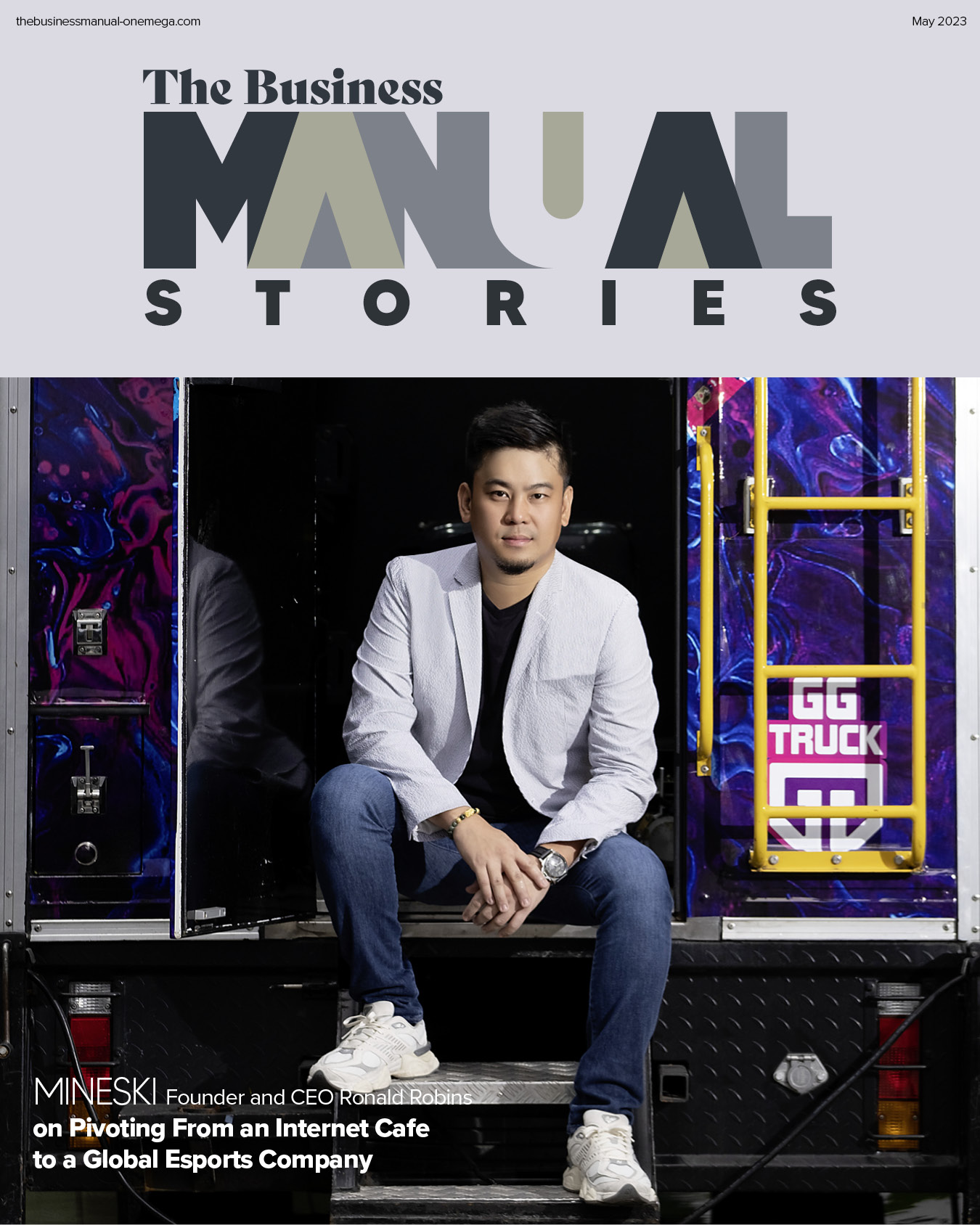
Mineski Founder and CEO Ronald Robins on Pivoting From an Internet Cafe to a Global Esports Company


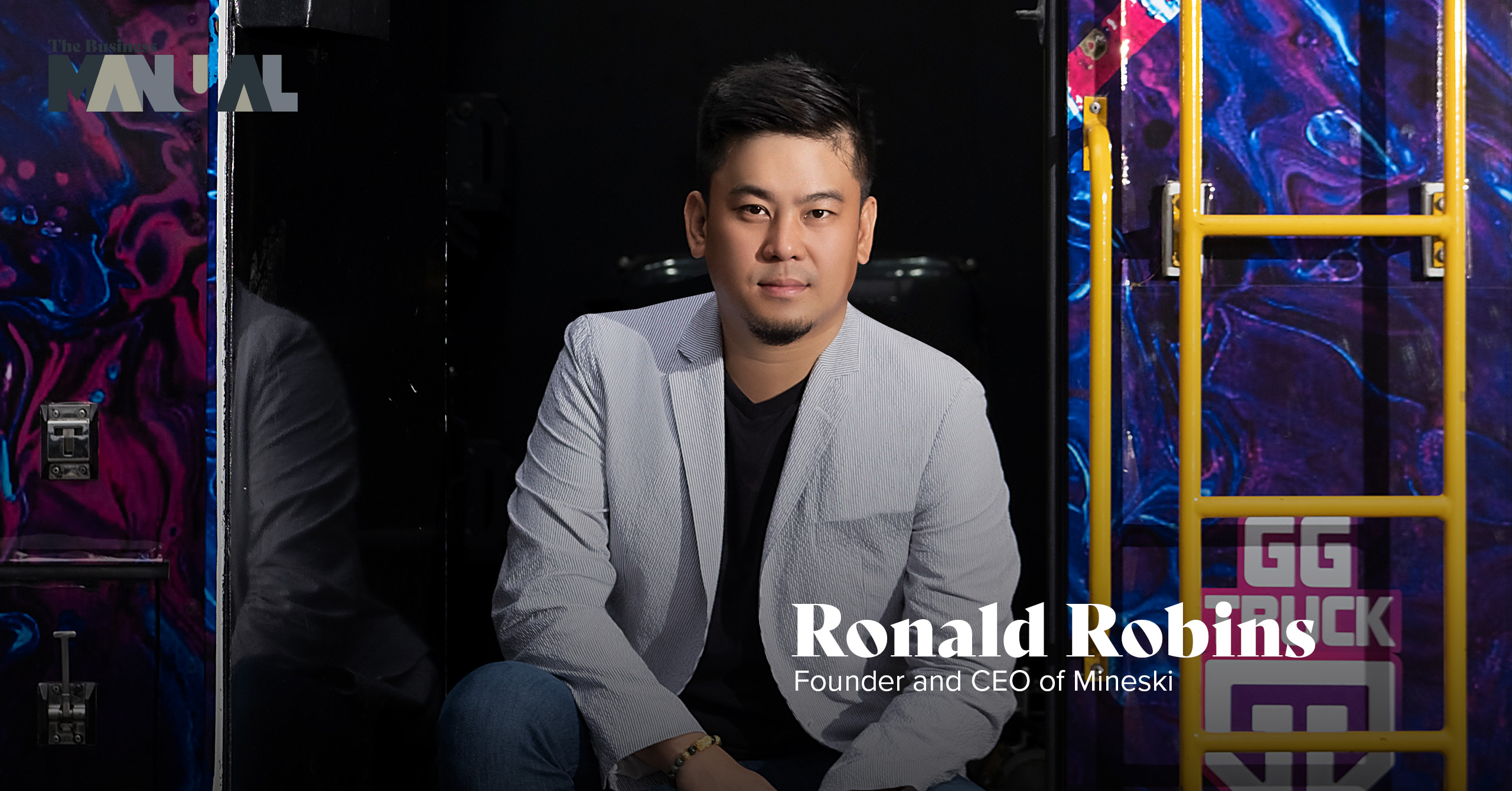
From a gaming team in college to a well-loved internet and gaming cafe, Mineski has constantly evolved to match the ever-changing trends of technology.
When people think of Mineski, the first thing that comes to mind is the 24-hour internet cafe chain from 2008, which had 140 branches all across the country. An after-school destination for millennial students, it was the go-to shop for schoolwork, gaming, and surfing the net—back when WiFi access was still an obscure concept and esports was still an underdeveloped industry.
Not many people know, however, that Mineski’s roots span deep. In 2004, it first started out as a college Defense of the Ancients (DOTA) team—founded by friends who loved gaming and wanted to turn their passion into a career. The year 2008 saw the rise of the internet cafe chain, while 2011 was the revival of the team’s gaming career with opportunities to compete abroad, and 2018 was when the team won its first major tournament.
At the helm of all this is Founder and CEO Ronald Robins. A gamer and entrepreneur by heart, he turned his passion into a business that has allowed him and his team to dominate the esports, gaming, and tech industries in the region. This is why–despite the many pivots that matched the advancement of technology over time–Mineski has evolved and transformed into an organization with over 200 employees and offices across Southeast Asia.
While the well-loved internet cafe Mineski Infinity is no more, its ethos of gaming still remains. In this exclusive interview with The Business Manual, Robins shares Mineski’s story of constant change and growth and reveals how a keen eye for opportunities has helped him keep afloat all this time.
Addressing Prevalent Pain Points
Before Mineski became one of the leading esports companies in the Philippines today, it first started out as a gaming team, while Robins was still a student at De La Salle University. “Mineski actually started as a DOTA team,” Robins begins. “I was a player myself in 2004. We eventually grew the team into becoming the Philippine team. We have competed in the World Cyber Games overseas several times and represented the Philippines as the official DOTA team representative.”
While bright-eyed and optimistic, the team experienced its first round of failure. “In 2008, we then realized there was a problem that surfaced. As an international team, we always lost overseas and we’re like, ‘Why…why is everybody else better [than us]?'” he laments.
“And then I visited Malaysia [and] Thailand. I saw their infrastructure was different, [and] I saw that there was a lack of venues for people to actually play,” the entrepreneur adds. “This thinking gave rise to Mineski Infinity—the popular internet cafe chain among students. During its inception, we started to create world-class internet cafes, top-of-the-line computers, and the first-ever 24-hour cyber cafe chain.”
From 2008 to 2018, Mineski Infinity grew to 140 stores. “It was our peak. [But while] coursing through that journey, we also realized that ‘hey, how do we actually find talent? Where’s the next for DOTA and DOTA 2?'”
“So we started MET—Mineski Events Team,” Robins says proudly. “We created tournaments locally all the way to Cebu, Davao within the Mineski ecosystem. There [were] mall events every quarter and there would be a big event at the end of the year for the qualifications for international tournaments.”
From one pain point to another, Robins was able to create many business ventures for Mineski. “We basically created and founded the whole esports ecosystem in the Philippines—now adding mobile games, console games, and so on and so forth,” he adds.
Mineski Infinity: Accessible Internet Gaming
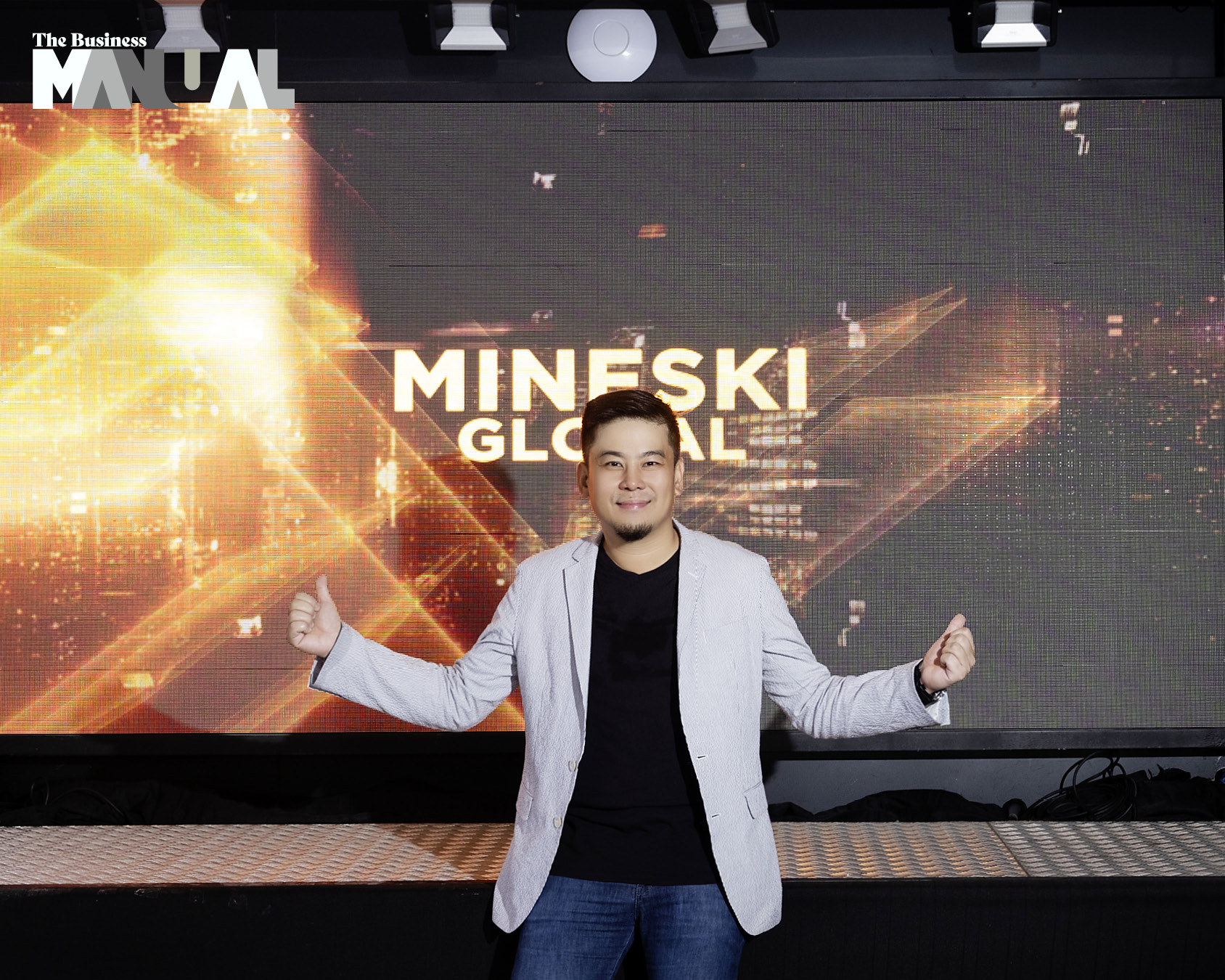
Although the internet cafe chain became a popular hub for students to do their assignments or browse the internet, Mineski Infinity’s original purpose was to be a place for gaming, as it had state-of-the-art equipment that not many could afford back then.
The goal? “It was actually having internet more accessible at that time was good for everyone,” Robins reveals. “We had better access to [the] internet. Before, it was [also] difficult for us to open stores in the rural areas, and the way that we saw the cafes even today, it will always be cheaper [to go to an internet cafe] than setting one up at home if it’s a [personal computer] PC internet.”
“In our cafes, usually, our customers spend an average of PHP 50 a day,” he continues. “They would go there three to four times a week, times four weeks…that amount of money cannot be more expensive than an internet subscription, plus a PC that you need to buy at least PHP 40,000 to PHP 50,000, and an air condition bill that you have to attend to in the house.”
Simply put, affordability and accessibility were the driving forces that gave rise to Mineski Infinity. “[Internet] cafes are really very, very economical. It is very good to provide Filipinos [with] access to technology and internet,” he points out.
Now, this business model is outdated, with WiFi access being common and many options in the market for gaming equipment, laptops, and the like, people have been able to recreate their own gaming setups at home. What’s more, the lockdowns and restrictions imposed by the government during the pandemic spelled the end of internet cafes.
“Until today, it’s kinda sad that we had to close down all our cafes already because of the pandemic, but I’m very happy that some of the stakeholders are still running cafes because it’s really helpful,” the entrepreneur says on a bittersweet note. “You can see students—they’re doing their homework because they don’t have internet and PCs at home. Sa PHP 20, meron ka na. [At PHP 20, you have that.]”
Pandemic Pivot: Bringing the Gaming Experience to the People
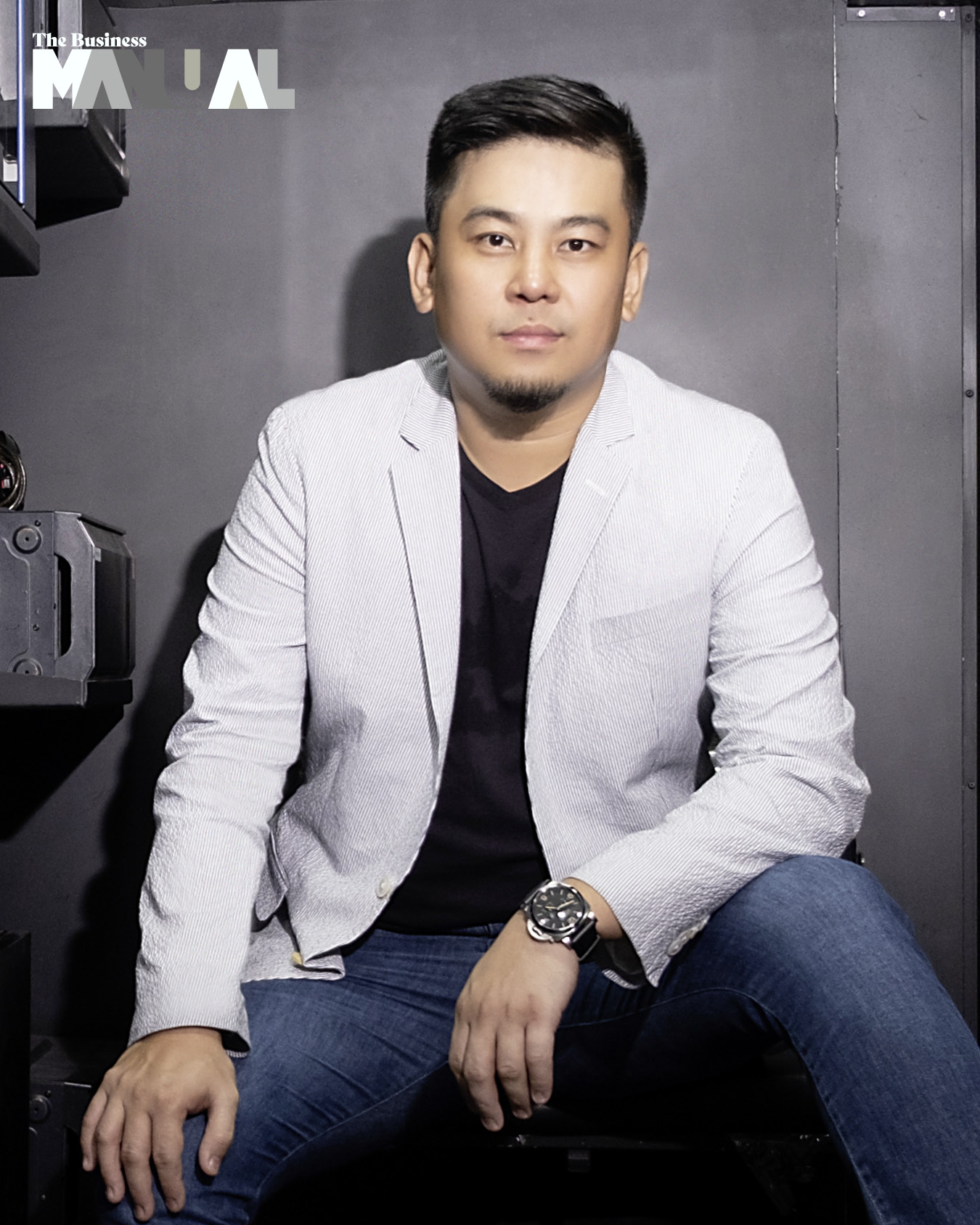
Like many industries, the lockdowns and restrictions from the pandemic have also hampered operations for Mineski. “During that time, we had two businesses. I left [the internet cafes] to my partner in 2018 to manage and I was focusing already on the esports and entertainment business,” Robins explains.
“In 2020, when the pandemic hit, it was like a double whammy for both Mineski-branded businesses. One, cafes were not allowed to operate because it’s classified as an amusement. Two, events were not allowed,” he adds.
This meant creating a viable business model during the pandemic. For one thing, it had to be able to operate remotely and it had to work. “So I had, like, six months. I got a little bit crazy from March 30 to Q3 of 2020,” he recalls. “We had two businesses that came about: the GG Truck and mgames. Those two businesses actually came out already by the end of 2020. Started to grow [in] 2021, 2022… and there you go. The pandemic was already a thing of the past.”
Pivoting from the pandemic, however, is a hit-and-miss, as some ventures do not survive after. But according to the seasoned entrepreneur, who has constantly changed Mineski’s business model, it all starts with identifying a problem. “The first problem we were looking at was our problem as well. Like, okay, cafes. Without cafes, where do grassroot esport activities happen now?”
“I’m a probinsyano. I’m from Cebu. I know that pain point where ‘Ugh, lagi na lang sa Manila ang tournament. Paano naman kami?‘ I know that by heart. I grew up in Cebu and lagi ngang wala doon eh. Sa Manila lang lagi meron,” Robins explains.
[Translation: I’m from the province. I’m from Cebu. I know that pain point where “Ugh, tournaments are always in Manila. What about us?” I know that by heart. I grew up in Cebu and there aren’t any tournaments there. It’s always in Manila.]
“So that was one of the problems we were trying to solve—where entertainment is inclusive,” he adds. “That’s why we brought forth the truck. We even have a saying [where] ‘the happiest place on Earth is Disneyland, but for everybody else, there’s a Mineski experience.'”
The GG Truck
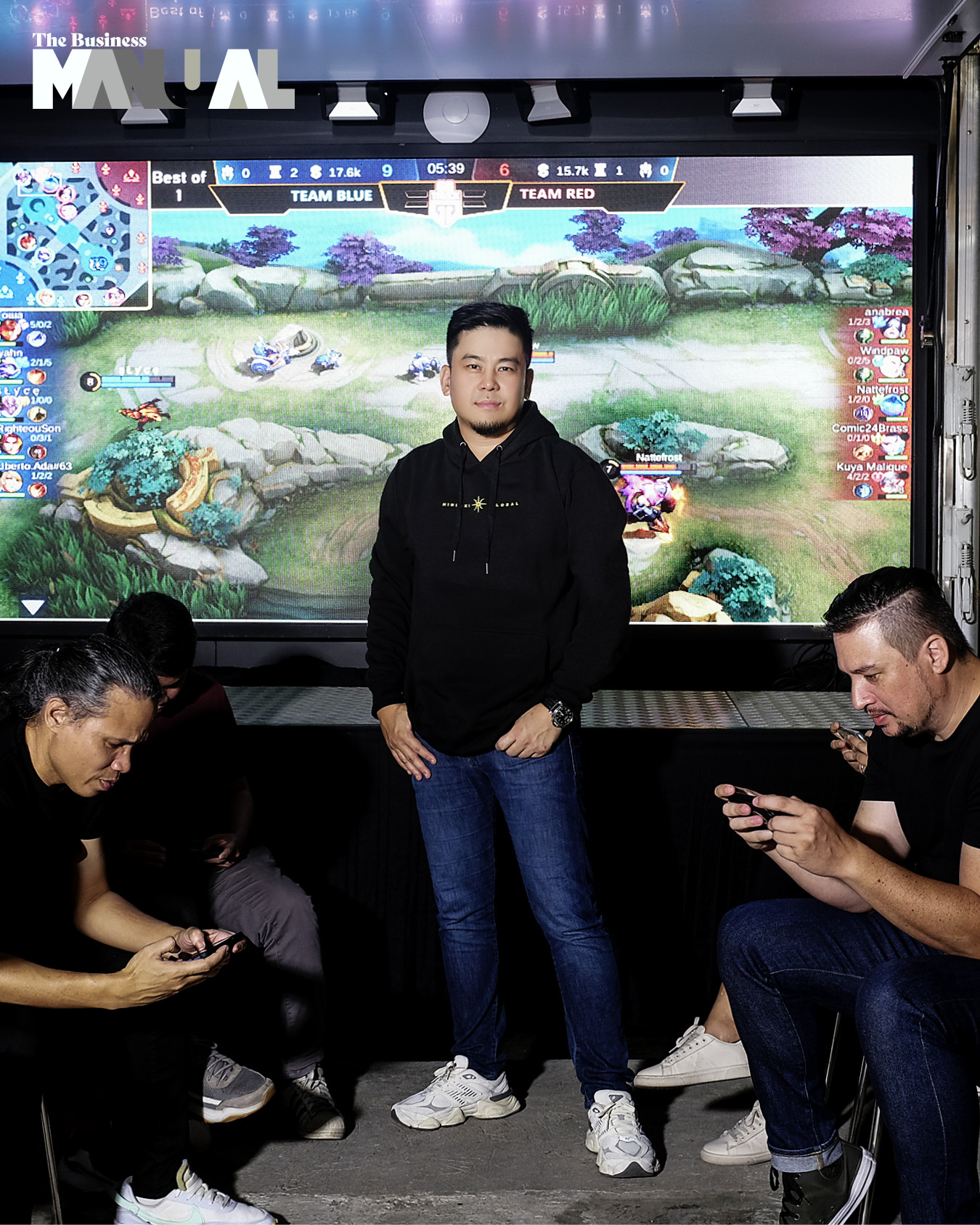
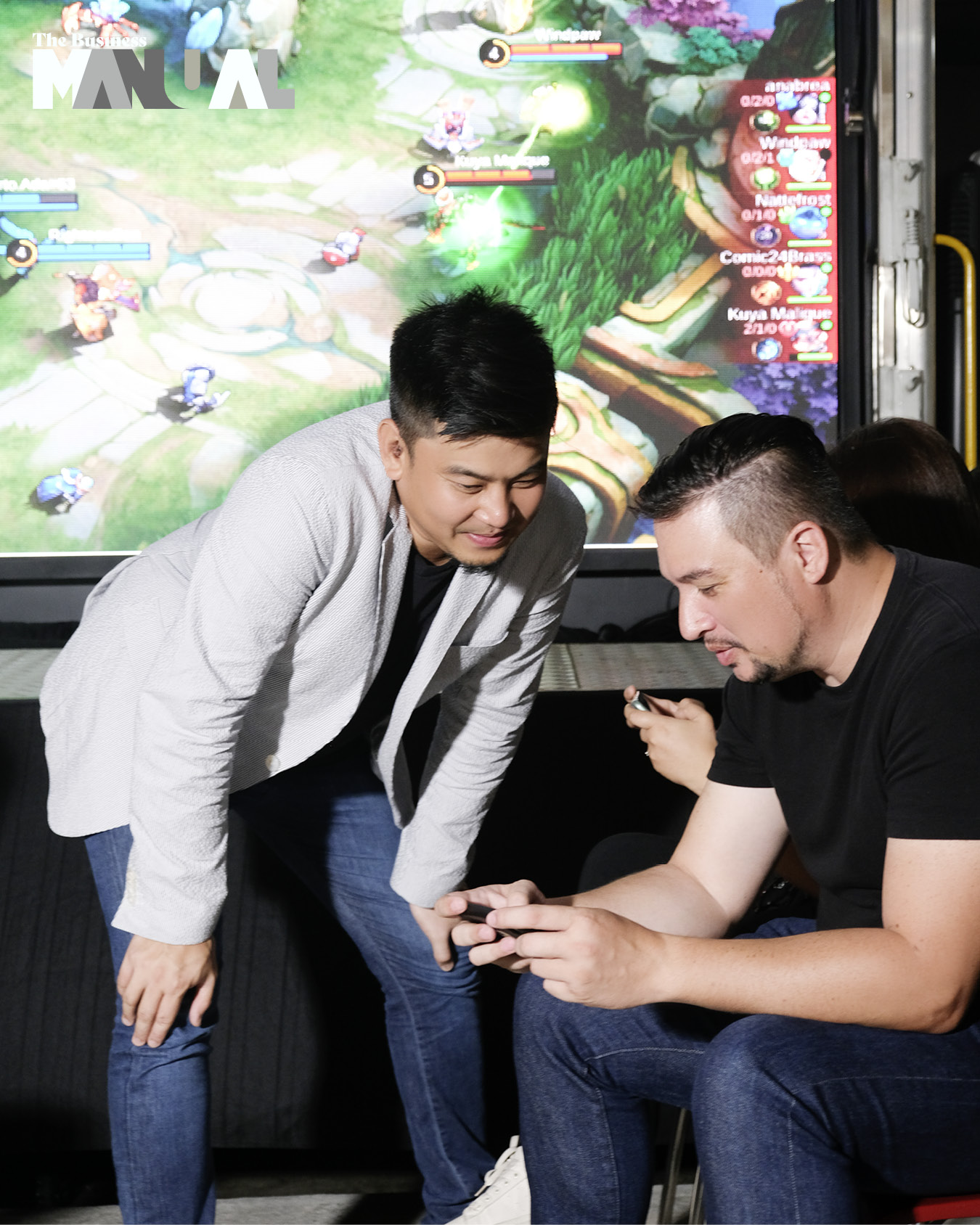
GG, which stands for “Good Game” is gamer lingo used to congratulate players after a game. Based on that concept, Mineski created a gaming truck—aptly named the GG Truck. “[The] GG Truck was designed to actually democratize events,” Robins explains. “During the pandemic, we ideated how we actually still reach out and engage with our audience without having to bring everybody all together. So we thought, ‘Hey, why not we go to them instead of them going to the event venues?'”
In fact, the CEO recalls with a laugh that this pandemic project was sketched on tissue paper. But since its inception, it has grown in leaps and bounds. “[The GG Truck] is an all-in-one Swiss knife of a truck with different formats of execution. Inside is actually four stations capable of running production.
“This is not just an LED. It is a tech truck,” Robins goes on to explain. “It has a parabolic antenna that gets internet, distributes WiFI in the area, capable of running Mobile Legends tournaments, for example—anywhere, anytime.”
Being mobile in nature means that the GG Truck has gone far. “Well, the truck now is everywhere. We have a truck in Batanes. We have trucks in Northern Luzon, Cebu—even in Cotabato.”
“We’re kinda into that—living or bringing out the grassroots environment, and that has been very successful for us since we’re the only ones actually doing this,” he says proudly. “We’re the only ones who care about innovating how grassroots events are done, especially in the rural areas of the Philippines.”
mgames
If the GG Truck is Mineski’s solution to both pandemic and post-pandemic events, mgames was created in response to the gaming and entertainment side of the company. “mgames is more of a digital arcade,” Robins explains.
“We have been working in the gaming industry for a very long time. More than a decade. And we’re very, very focused on [the] hardcore and esports competitive scene,” he continues. “mgames was our big leap outside of that—knowing that 95% of gamers are casual gamers.”
This meant catering to a market who wanted to play for fun. “Moms at home [are] playing Coin Dozer or Candy Crush. So when we launched mgames, we actually opened up a totally new market,” the entrepreneur reveals. “Up to today, we have five million players in our mgames system. We’re distributed not only in the Philippines, but we’re also partnered with Viber which actually has access to North Asia, CIS, north Africa, and the Middle East.”
In fact, Mineski is working with partners in Indonesia like LinkAja, Touch ‘n Go in Malaysia, TrueMoney in Thailand, and Viettel in Vietnam to cater to the casual gaming scene.
Mineski Slash
Now that Robins has his focus set on esports and events, he aims to take the latter to another level by introducing yet another Mineski service: Mineski Slash.
But why is that? “We don’t just disrupt and, you know, take something,” he explains. “We always do something where nobody else is doing anything at the moment. We’re creating a lot of value for the stakeholders, especially for event organizers. That’s something I’m very excited about.”
With the GG Truck to handle onsite events, Mineski Slash handles the operations of the event itself. “Mineski Slash is a platform that allows event organizers to convert their events into smart events,” Robins explains. “So we allow [a] registration system and a ticket buff. You can bundle vouchers and your tickets, and you can facilitate your raffle program on the platform.”
“It also allows you to discover and actually market your event on a consistent basis because we use all of the technology that we have learned already in the past to be applied there for retention strategies, for example,” he goes on to add.
The end goal of this, of course, is to build connections. “What we aim with Mineski Slash is to grow the industries that we’re actually partnered with—even if it’s outside of gaming. So, very interesting partnerships that we have. We’re partnering with music, K-Pop, anime, and a lot more. Even sports. You’ll be surprised where that is headed.”
Lessons on Pivoting Your Business
While the business model for the GG Truck relies on marketing activations, or engaging directly with target audiences, mgames, and Mineski Slash are digital platforms that can be interacted with digitally. “For our digital platforms, mostly they’re direct to consumer. We sell tokens—just like brick-and-mortar arcades do. People win games. They win prizes. For Slash, it’s B2B [business to business] software as a service to event organizers.”
This is the true strength of Mineski: constant pivoting. No wonder the company still remains relevant to this day—pandemic or not.
“Every time we create something, we always set it to a point where we’re creating something new,” Robins explains. “Mineski is a type of company where we always trailblaze. When we build something, we have a tendency to actually pass it to other stakeholders. We don’t need to stay there forever. We want to create new things.”
After all, in Robins’ words, “Technology is very scalable, so we have the bandwidth to actually still drive impact and create value because of that. So those are the things that we have learned in the past 19 years.”
Create Something That Solves a Problem
“In pivoting, number one, you have to have a purpose first,” the CEO points out. “What problem are you trying to solve? That’s one. And you have to be obsessed with that until you solve that problem because you cannot finalize or reach a product or a service that will be of value if you don’t pass the taste test of market fit.”
For example, Mineski has constantly evolved its services to fit the market need. In a time when the internet was scarce and gaming equipment was expensive, they established Mineski Infinity, the internet cafe. Since gaming was inaccessible in some areas, there was the GG Truck to bring the gaming experience to them. And when everyone was in lockdown, Robins and his team introduced mgames—a digital arcade.
Simply put, it means creating a product or service that people need. “You can create all of this fancy stuff. If nobody needs it, then what is it for? Find something that needs fixing.”
Be Adaptive and Learn to Collaborate
A dream team makes the dream work and Robins knows that for a fact. “You need to have a very passionate and committed team to execute. We are in a business of change. I just shared this statement in our town hall last week, and most of the people in the organization are always getting into the ‘What is my job description next quarter?’ kind of discussion,” he recalls.
“The inspiration for that is when we just started our company, Mineski,” he continues. “I went to Seattle and visited Valve, where DOTA 2 is actually being operated out of. They own DOTA 2, basically. And when I visited the office of Gabe Newell, all of the tables of their employees had wheels. And it had hydraulics so you can work standing up or you can work sitting down.”
“And I was thinking, ‘Why do all of your tables have wheels?’ Then the answer of my host was [that] here in Valve, we are a flat organization. Whatever team you are, it depends on what’s on the list, then you just bring your table there. If you have a project, you do it. Like, if I was marketing now, I’m not marketing forever. I can be marketing in general now. I can be marketing a specific new project next quarter. I’ll just take my table and go to a room with this guy.”
This approach is what he aims to bring to the company: the spirit of adaptability and camaraderie. “I can still visualize it even though it was more than 10 years ago. So that’s why Valve is a very big and successful company. Going through all of the changes—be it in a digital or technology play—they are basically now the biggest game distribution platform in the world. How did they do that? By being adaptive. So that’s something that’s very, very important in an entrepreneurial journey.”
Foster a Good Company Culture
Another important facet is injecting good values into the company culture. This goes hand-in-hand with scaling the business, too, as people from different countries have different cultures and mindsets. “You have to bring forth the culture to your people as well, to the team. How do we make things happen [in] an environment where most of these specifications are not currently present in the Philippines?”
“If you go through our organization right now, we have more than 15 nationalities. We have seven offices in Southeast Asia and 15 nationalities. We have Italian. We have Germans. We have French. We have Japanese. And of course, all of the Southeast Asians. And we mix and learn from the best practices from each other. Even our core management team is multinational,” he continues.
And with plans to take Mineski to these countries, Robins will need to take this open-mindedness, adaptability, and flexibility with him.
Future Plans for Mineski
With the GG Truck in full swing, and exciting partnerships for mgames and Mineski Slash, where does Robins envision the company in the future?
The Future of Partnerships
Beyond capitalizing on its existing services, Robins welcomes new stakeholders and partnerships, as this is a win-win situation for both. “For the past 10 years, I would say we have actually been very open to new stakeholders coming in,” he explains.
But even then, Robins knows not to bite off more than he can chew. “Like early 2015 [to] 2016, Facebook came to us with this Facebook creator program. We actually said no and said [that they] should go with other companies. For us, we do not need to take all because we cannot do all.”
The Future of Gaming
“For the gaming truck, you can think of it as… for it to be much simpler for me to describe, it’s a digitalized below-the-line experience,” the CEO explains. “The way that we look at the truck is that we are capable of executing high-quality experiences on-ground at a very good price because there is no ingress, egress, or rental of LED. It’s all here. The whole experience is already packaged and when we added all of these kiosks and experiences for all of the brands.”
Effective and efficient. This is what gets the GG Truck going, even with profit margins coming into play. “We discovered that our cost is actually only 10% [and] that we can do 10 times more. So that’s my indicator always in business. If you figure out something that has 10 times more value or 10 times cheaper, that is a big opportunity.”
“There’s an opportunity to transform. There is [an] incentive to transform from traditional methodologies because 10 times is just too big for you to ignore,” Robins opines.
The Future of Events
In order to make waves and continue introducing new products and services, it is highly important to build a strong foundation that will allow the industry to survive. Gaming and esports, for example, used to be underrated during the formative years of the internet, but thanks to efforts from companies like Mineski to make it relevant, it has continued to thrive and grow.
But how? Through a combination of smart people and technology. “The way we see things is when you want to build an industry to be really solid in terms of foundation, there need to be more smart people in the room, and our organization cannot provide all of those smart people,” he explains.
“Why do we want events to be smart? Because sponsors right now, they don’t just, you know, sponsor you just for the sake [of it],” the CEO continues. “They would ask you, ‘What kind of data do you have for me?’ So we know those pain points. That’s why create tools to enable other stakeholders to actually grow their passionate communities. That is our objective.”
Ronald Robins on the Many Lessons He Learned
In his 20 years of running the business, Ronald Robins is a seasoned business veteran with many lessons to share. When asked what he would tell his past self, he laughs. “Somebody asked me [that] before. It’s kinda funny. And my answer to that is I couldn’t tell him anything because the Ronald Robins [of 20 years ago] is stubborn.”
“Ronald Robins only learns when he makes a mistake,” he continues. “So if I give him a cheat sheet of mistakes, he still will not read that. He will not understand that deeply by heart because the formulation of how things go about is through a very rigorous process of failures and experiences. And then the moment these are structured and made into decisions, all of those are driven by historical data in the brain.”
“You know that kind of saying where ‘Good times breed weak men. Tough times breed strong men.’ I think that would be foundational advice [for him],” Robins ends.
Text DIANE NICOLE GO
Photography ED SIMON of KLIQ INC
Sittings Editor RJ LEDESMA
Art Direction MARC YELLOW and DENIELLE CARAG
Videography JR RAMIREZ of KLIQ INC
Video Producer MIGUEL LIM
Shoot Coordination PILAR ANGLIONGTO and TONI CALINGASAN
Shot on Location ROBINSONS CYBERGATE, PIONEER