Zig When They Zag: How Creativity Can Change Consumer Mindsets


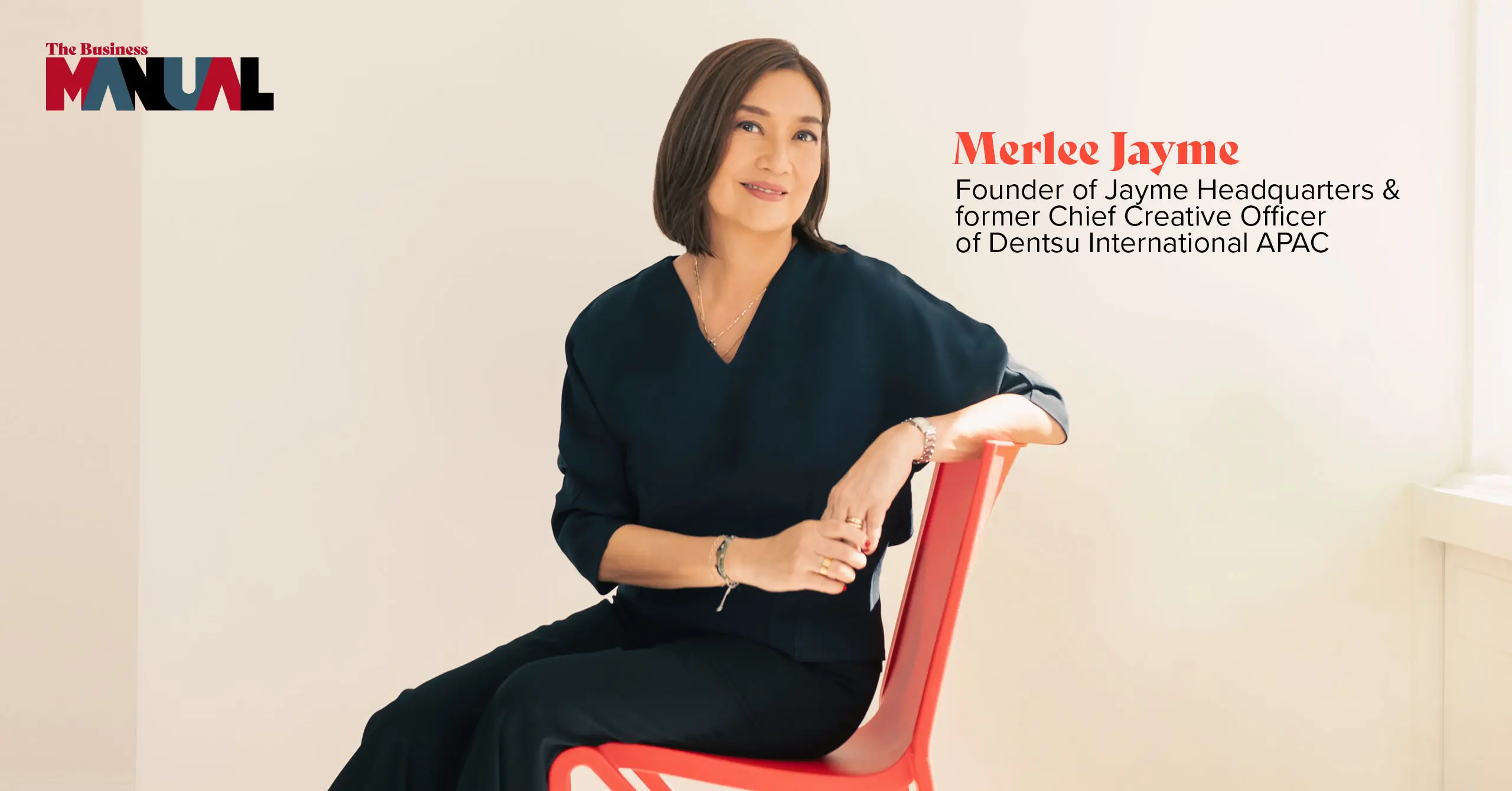
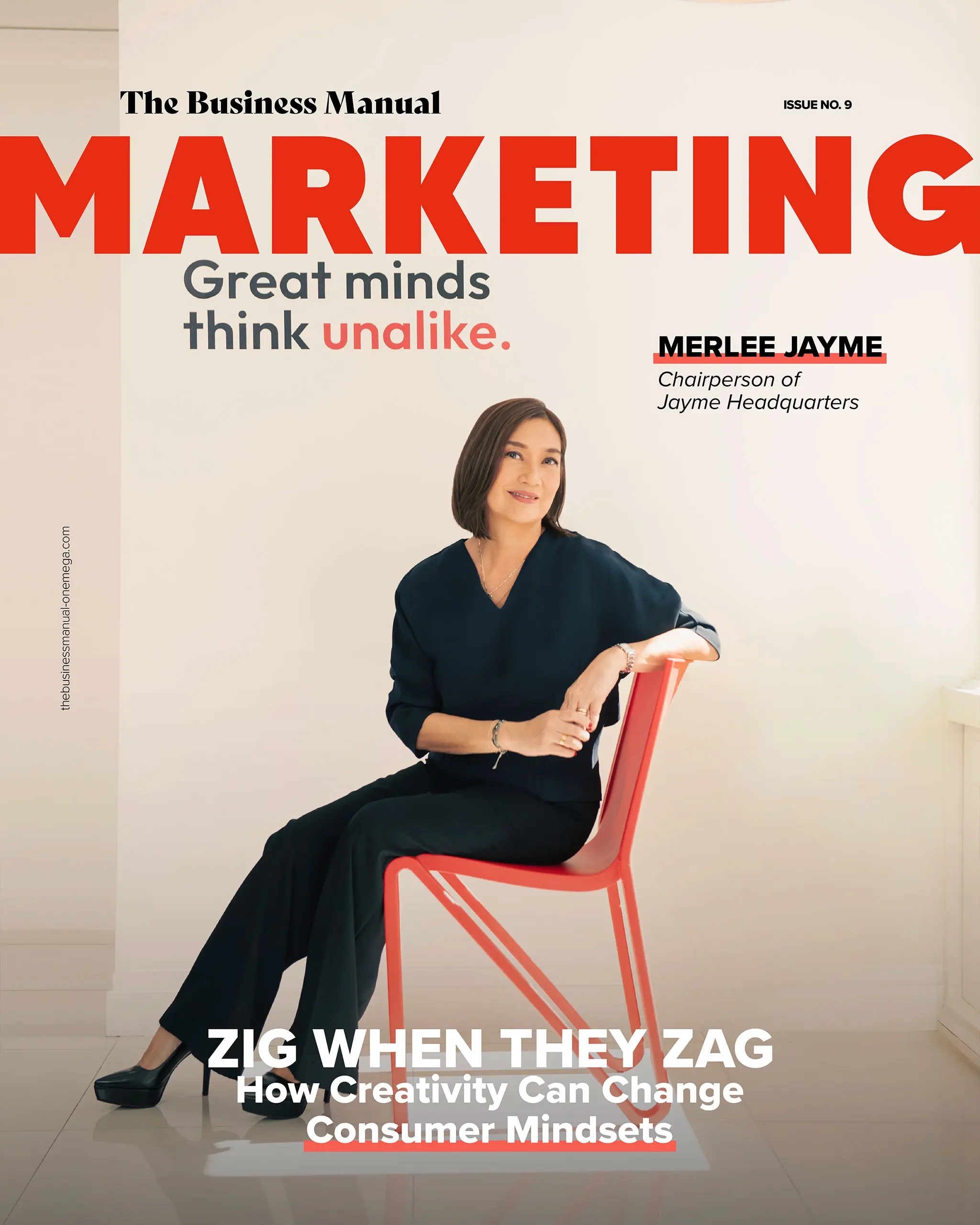
The Business Manual and Merlee Jayme discuss the larger role of creativity in business. Beyond marketing, how can creativity make a difference in consumer behavior, leadership, social responsibility, and innovation?
Creativity and business have always been strange bedfellows. Long employed in marketing and advertising, creativity in business hasn’t wandered far from the borders of communication arts. And yet to the world’s top creatives, creativity can have a much broader role–in online ads, yes, but also in product innovation, in management leadership, in social responsibility, and even in defining your organization’s identity.
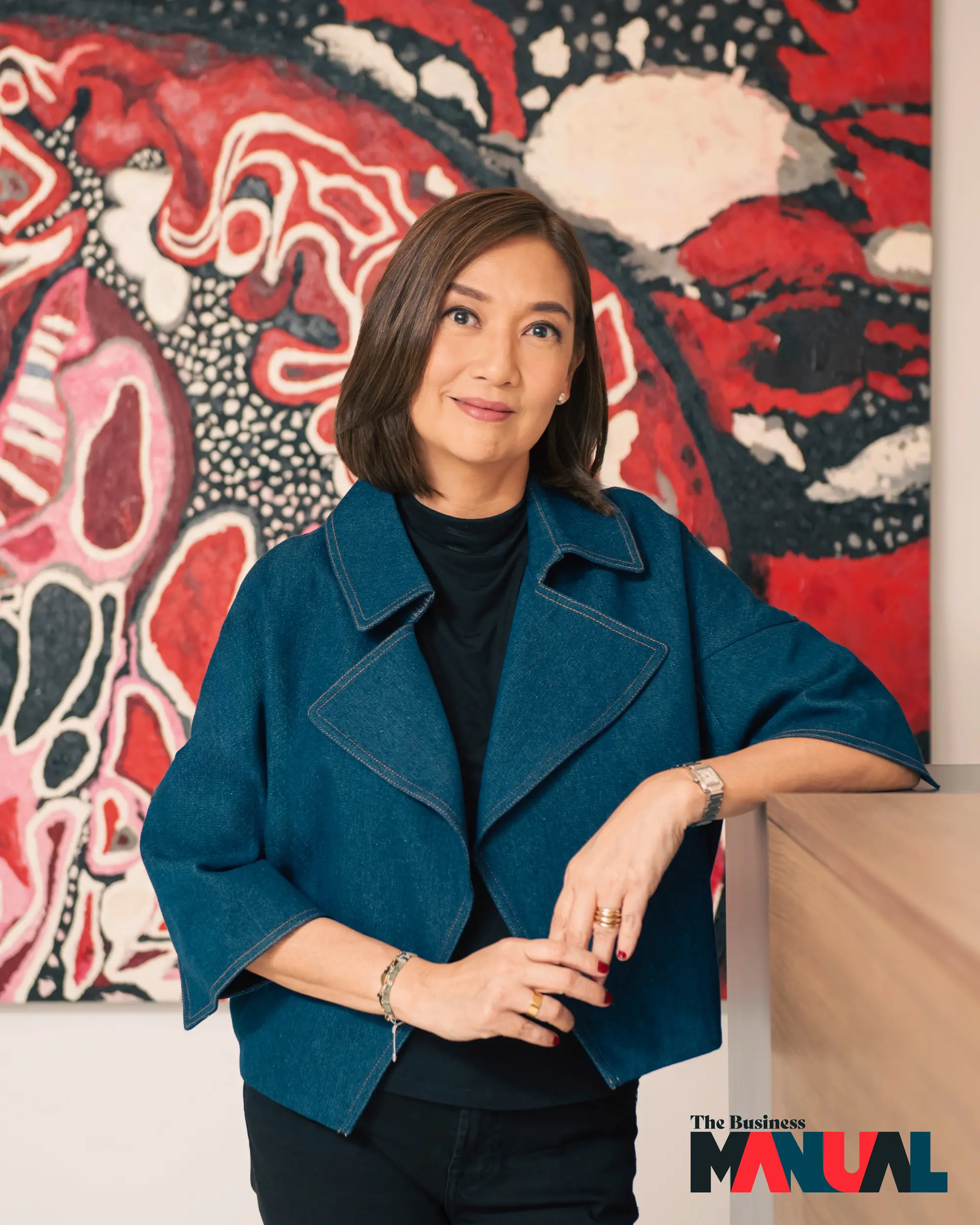
For Merlee Jayme, creativity is everything. As one of the country’s–and the region’s–top creative directors she has won an impressive collection of advertising award hardware, everything from Cannes Lions to Clios to One Show awards. At the same time, as Chief Creative Officer of Dentsu Asia Pacific and as Chairperson of Jayme Syfu Group, she has displayed creativity in leadership throughout her career, winning numerous Agency of the Year awards along the way.
Today, with Jayme Headquarters, she champions a different kind of creativity–one born from neurodivergent individuals in the creative workplace. It is a late-career surprise move from one of the industry’s greatest creative minds. But it is also typical of Jayme, who believes creativity can change consumer behaviors and attitudes, and the world as well.
The Business Manual spoke to Merlee Jayme, the only woman to be named as one of the top 20 creative directors in Asia by Campaign Brief, to discuss not just creativity in marketing, but also the larger role of creativity in business. The lessons she shares provide valuable lessons for those in positions of leadership. For smaller SMEs and for entrepreneurs, they serve as a guide on how creativity can create value beyond marketing campaigns to transform and to innovate.
Creativity in Business, Lesson #1: Great Marketing Changes Lives
If there is a guiding principle to Merlee Jayme’s body of work, it is that great marketing isn’t simply about moving product; it’s about changing behaviors, changing lives, and changing the world.
She shares, “I put this on the wall when I was in Dentsu. I said: ‘Change lives.’
“Your idea should change lives for the better and change the world for the better. If it doesn’t change the world in a big way, at least change lives. Change behaviors.”
It is this challenge to creatives–and to the role of creativity in business–that has driven Merlee to create campaigns with heart.
Her most memorable campaigns didn’t just generate clicks—they sparked meaningful change. Her Breeze campaign is a prime example. With this campaign, she took a globally mandated line–”Dirt is good”–that didn’t resonate locally and transformed it.
She explains, “Dirt is bad for Filipino moms because when you say, ‘Dirt is good,’ it goes back to them. When a kid is dirty, ‘Sinong mommy mo?’ You have a bad mother is what it means.”
Instead of following the global campaign, Merlee created a powerful social experiment that showed children performing acts of kindness—and getting their school uniforms dirty in the process.
“Dirt became a badge of goodness,” Merlee says.
In her work with Gabriela, an organization Merlee has been working with for decades, meaningful change is always the order of the day.
“Every single ad I came up with them was helping abused women and children or sex trafficking,” she says with pride. “I feel like I wanted to do it in a bigger way that resonated with the rest of the world.”
To do this, Merlee and her team addressed the problem women around the world face in reporting sexual abuse–such as shame, victim-blaming, or the victim’s relationship to their abuser. The solution was simple yet powerful: they created a chatbot for anonymous sexual abuse reports.
“We created a chatbot that is emotionless. Just type in what happened to you. At the end of it, it emails Gabriela a report… No questions asked. No judgment passed.”
The best marketing solves problems. These campaigns have shown the power of creativity in creating change. They’ve not only won awards, raised awareness, or met marketing goals—they’ve made a real difference in people’s lives.

Creativity in Marketing, Lesson #2: Make Ads That Don’t Feel Like Ads
Advertisers face unique challenges today. With shrinking attention spans and, at times, just six seconds to deliver your message, the task sometimes seems insurmountable.
Merlee says, “Most of the children now, they say, ‘I hate ads.’ Because it somehow stops their entertainment. When you’re in YouTube, you hate it, you skip it. When you’re in Spotify, you become embarrassed that you have ads in the middle.”
To Merlee this challenge was personal. “It hurts me because I love creating ads,” she says.
Her solution? “Make your ads a non-ad,” she says. “Make it like a lovable piece of material that they would want to listen to than simply skip away.”
Making “non-ads” is every creative’s challenge today, she says.
“How do you get to your consumer who’s so used to being entertained to love ads?” she asks. “How can that happen now? So I think the biggest challenge is for you to create ads without them knowing it.”
Merlee does this with humor and heart, as well as authenticity and relevance.
She points to the Apple Intelligence ad featuring Bella Ramsey—a real-life, relatable moment of forgetting someone’s name—as a brilliant example of an ad that doesn’t scream “BUY THIS.” It simply tells a human story, where the product is seamlessly embedded.
Merlee believes that humor, emotion, and authenticity are the strongest currencies in today’s attention economy.

At the same time, Merlee calls on creatives to not lose sight of the brand. She warns against grabbing attention for its own sake.
“Let’s not forget the brand,” she continues, “because with what’s happening today with the speed of social media, we just want shock value.
“But what is it about your brand that you want to be remembered for? How do you want people to really react to your brand, and why would they use your brand in the first place? So don’t forget that it’s still about your brand.”
Creativity in Leadership, Lesson #3: Lead with Imagination
Even in Merlee Jayme’s leadership positions as former Chief Creative Officer of Dentsu International APAC and Chief Creative Officer of Dentsu Jayme Syfu, she continued to display creativity–this time in her leadership.
She explains, “Creativity has always been about imagining things, then making it come alive, and then somehow, because of how beautiful you create it, other people will be inspired by it.
“Put that sentence into the business sense. You imagine things, you don’t just accept things as they’re thrown to you.
“Where do you want this company to go? And then you have to come up with action steps.”
Citing how creativity is crucial not just in the marketing department but also the boardroom, she says, “You put creativity even in the business decisions. And that is hard because in a room full of non-creatives you’re the smallest voice, but sometimes you make the bigger sense.”
As a creative on the board, or as chairperson or founder, Merlee admits that constant learning is the order of the day. Like many creatives, she had previously avoided the finance side of things. But as she matured in her career, she realized that this blind spot could be costly.
“I went back to school,” she says, having decided to correct that oversight. “I had to force myself to know a little bit about your day-to-day expenses and how you manage expenses… You know why? Because that’s the heart of it.
“This is a business of creativity. You cannot just do creative stuff without looking at the business.”
She understood that to truly lead a creative business, one needs vision and imagination. She also knew that one must understand how profits flow. This holistic mindset allowed her to make strategic decisions that benefited both her team and her clients.

Creativity in Social Enterprise, Lesson #4: Put People First
In today’s world of quick layoffs and profit-first mentalities, Merlee champions a different approach: protect your people at all costs. She views employees not just as resources, but as the heart of the organization.
“In the business world, the first to go is people, so I fight that,” Merlee says. “I always think of creative ways to make [laying off] people the last resort and then they would appreciate your creativity in that business sense.”
She believes that business decisions can—and should—be made with empathy. When companies are under pressure, she encourages leaders to think differently: Can we add services? Can we restructure creatively? Can we give employees new roles?
Her new agency, Jayme Headquarters, is a testament to this ethos. Instead of forcing neurodiverse creatives into toxic workspaces, she built a kinder, calmer, more supportive environment—one where talent is nurtured, not drained.
The seeds of Jayme Headquarters began with her work with The Misfits Camp, an organization that works to teach creativity to neurodiverse individuals. After working with The Misfits Camp, she decided to found her own neurodiverse agency, a “creative agency born from the belief in the boundless potential of the human mind.”
Merlee says, “As a global leader, and working in Asia Pacific, you’re always on the lookout for new talent… We haven’t really tapped into some other brains that are just there and as talented as ever.”
Speaking about her new start in Jayme Headquarters, Merlee calls it version 2.0 compared to the agencies she has built before in the notoriously toxic advertising industry.
“It teaches a kind of kindness in the workplace,” she says. “Here, you tend to look at yourself and be kind with your words. It actually taught me a lot.”
Creativity in Innovation, Lesson #5: A Combination of Gut, Intuition and Data Is Perfect
In a world increasingly moving towards metrics, algorithms, and A/B testing, Merlee encourages a balanced approach. She sees data as a creative springboard—not a creative cage.
“As creatives,” Merlee says, “you can work without data and you can work with data.”
At times, data can be helpful to the creative process, such as research that identifies consumer behaviors.
Merlee encourages the use of data this way–versus post testing that can gut creative campaigns–saying, “I don’t reject it at all. I just make sure data helps me out. Because when you look at data and you analyze it, you’ll get to see the behavior, how people consume the product.”
“A combination of gut, intuition and data is perfect,” she summarizes.
She tells the story of crafting a campaign for an alcoholic drink where most sales were happening in 7-Eleven stores. Thanks to this insight, they created a campaign tailored for that environment—an unexpected move that succeeded because it was informed, not dictated, by data.
Merlee reminds us that tech and its possibilities are not the goal. Creativity has always been about standing out, not following trends in technology.
“I feel creativity has to make you stand out. It’s always a zigging and zagging,” she says. “All the world is going this way, let’s do this. You know, always doing the opposite, doing something new, always fresh.”
Creativity Lesson #6: ‘Get Out of Your Comfort Zone’
Perhaps Merlee’s most universal lesson is this: don’t let fear stop you. She also believes that courage can be cultivated, one small step at a time.
“Get out of your comfort zone. Get into your courage zone,” she says.
Merlee Jayme’s legacy is proof that creativity in business is not just about selling products—it’s about creating ideas that change the world. Whether she’s elevating brands, empowering neurodiverse creatives, or teaching the next generation how to zig when others zag, she shows us that creativity is more than art—it’s leadership. For every aspiring entrepreneur, her lessons are both a challenge and a call to action.