Marketing Reimagined: Strategy, Insight, and Innovation in the New Market Era


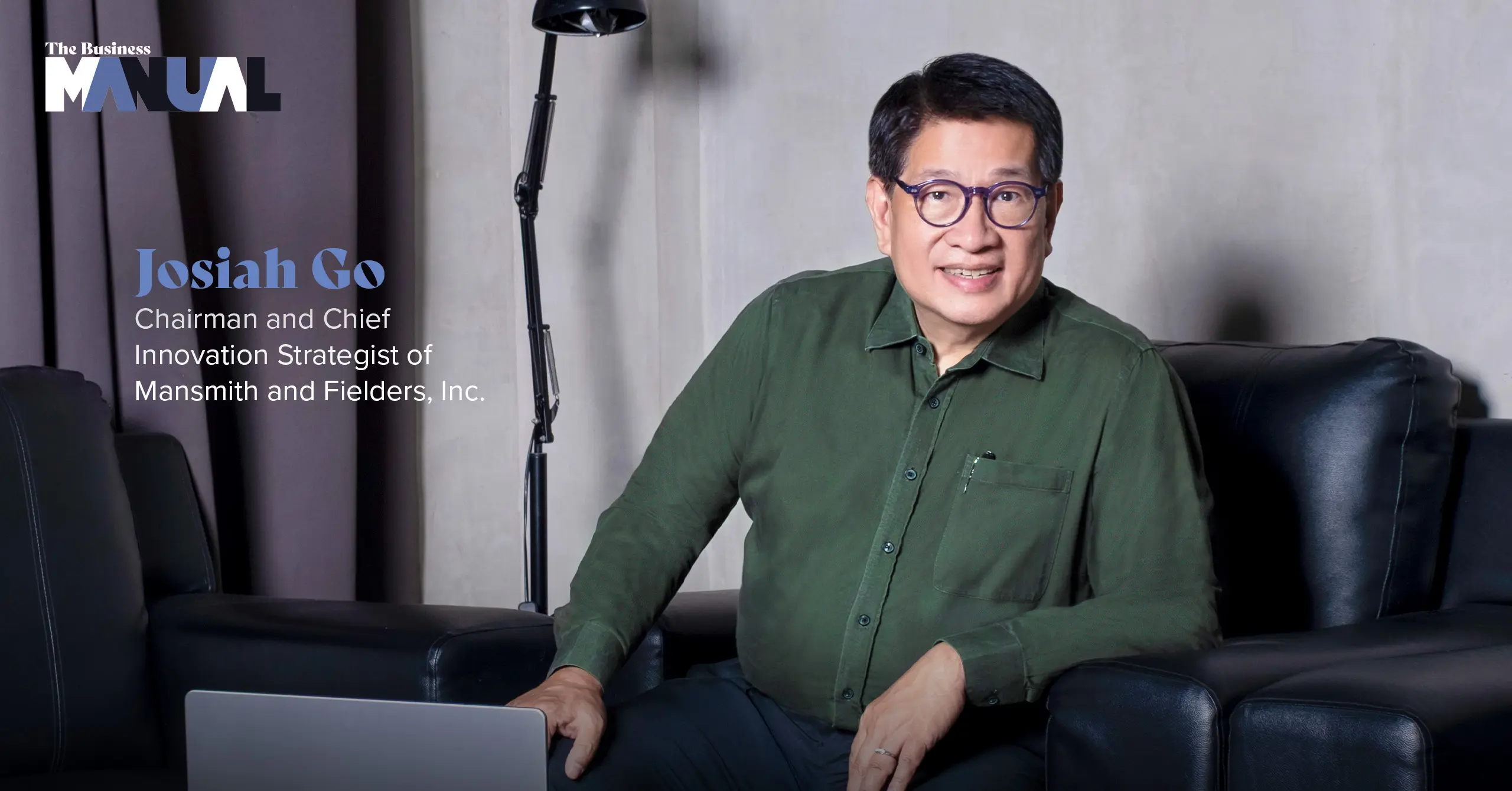
Marketing legend Josiah Go tells us why 99% of marketing plans are inadequate and what marketers can do to harness strategic innovation.
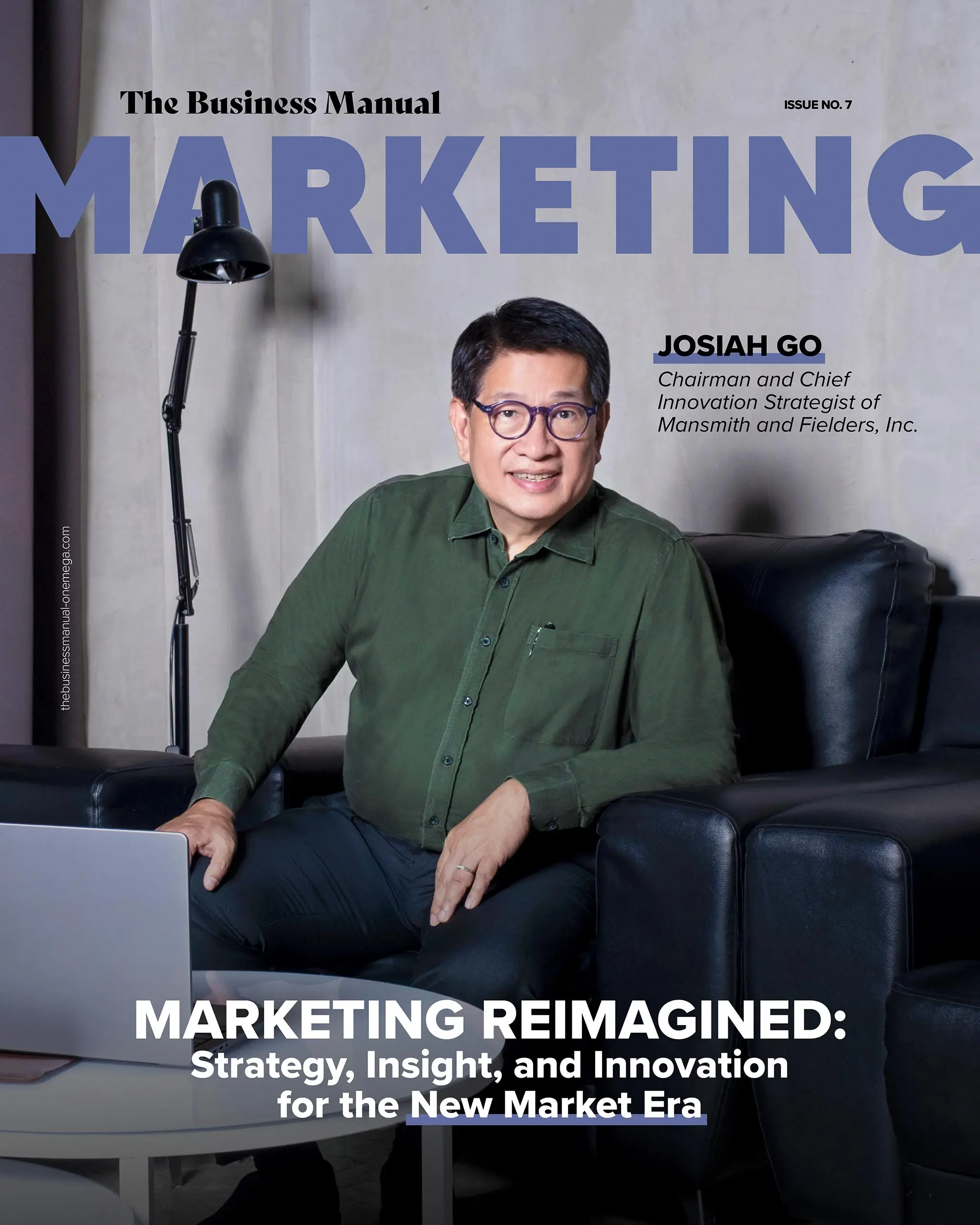
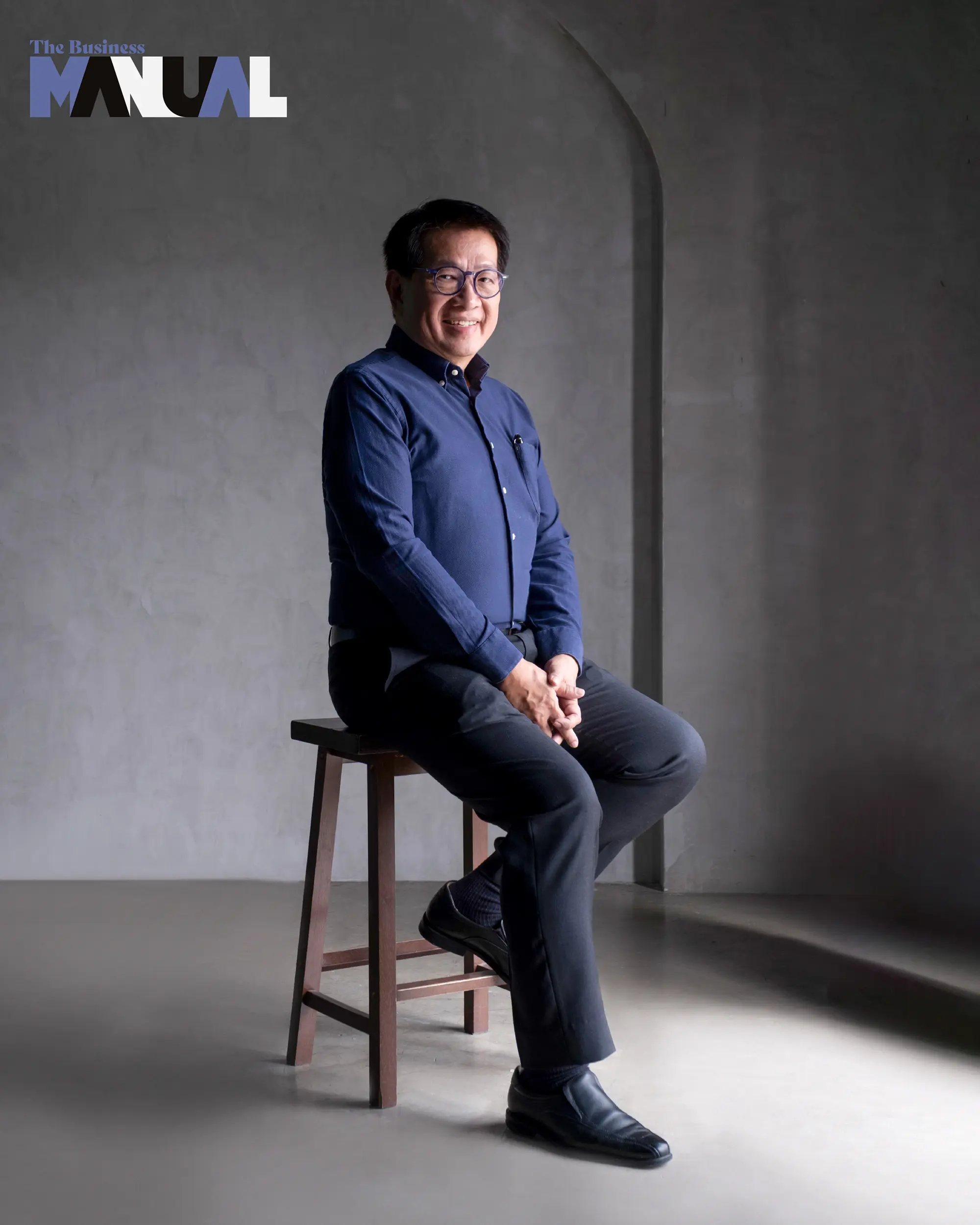
In the Philippines, one name rises above the others when it comes to marketing strategy and innovation: Josiah Go. To summarize an expansive career, he is, in equal parts, a business leader and a marketing guru. Sitting as chairman or director of over a dozen corporations, he leads from the front in today’s business landscape. At the same time, generations of marketers have cut their teeth on his generous mentorship. He is the author of over 20 marketing books, as well as the founder of the MarkProf Foundation. And fittingly, he is the current Chairman and Chief Innovation Strategist of Mansmith and Fielders, a leading training and consultancy company. Without exaggeration, Josiah Go is one of the most influential voices in Philippine business.
The Business Manual spoke to Josiah Go in an exclusive interview where he shared his wisdom, shaped by decades of experience. Here are six critical lessons that emerged from the conversation—ideas that can reshape how you think about marketing whether you are a seasoned practitioner or an entrepreneur in search of inspiration.
1. Marketing Is Half the Business Model
Go begins our conversation on marketing by defining how we think about business models. “Marketing is part of what is called the offering model,” he says. “The other side is called the operating model… And when you combine both, when you create value, deliver value, financial value is created.”
Even in this simple definition of terms, there are lessons to be learned–and yes, there is also an admonishment for those who underestimate the role of marketing in an organization’s business model.
He emphasizes that marketing is not just a department—it’s 50% of the entire business model. Marketing plays a central role in how any business creates and communicates value to the customer.
Josiah relates how it is this role of marketing that started his career.
“I asked myself the same question,” he says. “What’s the relationship of marketing and the business model?” He would spend the rest of his career answering the question.
“That’s called capturing value,” Josiah continues. “That’s the relationship between business model and marketing.”

2. Drive the Market
Marketers know that the most successful businesses don’t start with what they can do—they start with what customers need.
Josiah Go explains, “Businesses with a good business model, they’re relevant in the first place, which means that instead of supply side thinking, they have demand side thinking–first. They look at the voice of the customer. And after the voice of the customer, then they look at the voice of the enterprise.”
In practice, however, it is a different ball game. Josiah laments that many companies focus on brand switching, spending their time trying to capture market share from competitors. This is a strategy he calls a zero-sum game—one with no winners and losers—saying, “You gain somebody else’s market share. Next year, they’re going to gain it back.”
Instead, he urges marketers to think beyond cat-and-mouse games for market share. He entreats businesses to focus on the unserved, creating brand new categories and driving the market instead.
Other times, companies are affected by what Josiah Go calls “supply side thinking.”
He explains, “A manufacturer starts with thinking, ‘This is what I can do.’ So the gap is in the factory, not in the marketplace. That’s very dangerous because you’re creating unknown value. It’s creating value to yourself, not to the marketplace. And therefore, it’s not asking ‘What do the customers need?’”
Supply side thinking results in irrelevant offerings that don’t resonate in the marketplace. To avoid this, Josiah Go advises starting with the customer—first and always—ensuring that any product or service begins with real consumer demand.
To illustrate, Josiah Go uses examples from his own ventures. With Waters Philippines, instead of competing in the crowded bottled water space, he introduced a new category—a 3-in-1 purified, mineral, and alkaline water system. Similarly, with Mansmith, he launched zero-fee marketing awards, creating a category of public service recognition that didn’t previously exist.
3. Insight First
In marketing, much value is placed on “the big idea,” or the concept behind a winning strategy. According to Josiah Go, insight is the starting point for any marketing strategy.
“it’s not just about coming up with a bright idea,” he shares. “The idea must have a basis, and the basis is called insight… What’s the consumer insight? And then they convert that insight into a big idea, and then the strategy follows the big idea.”
Before jumping into campaigns or creative concepts, marketers must have a deep understanding of the why behind consumer behavior. This goes beyond demographics and data—it’s about motivations, frustrations, and unmet needs.
As an example of how insight is crucial to forming the idea behind any campaign, Josiah shared the now-legendary story of how a simple insight reversed the decline in a famous brand’s ice cream sales.
Observing a drop in sales, the brand asked mothers why they were switching to buying cakes instead of ice cream. The mothers explained it was a practical decision—they couldn’t afford to buy three separate tubs of ice cream for three children who couldn’t agree on one flavor. The answer? The now-iconic 3-in-1 ice cream tub, with three flavors in one affordable container.
4. Challenge Assumptions Relentlessly
“I always say, 99% of marketing plans are inadequate,” Josiah Go says. “And at the end of the day, we need to challenge what the marketing plan is all about.”
He invites marketers to keep asking questions and challenge their assumptions relentlessly.
“I realize that many people do what they do based on assumptions. So if you ask, why do you do what you do, many times people are taken aback and say, ‘Why exactly are we doing it?’”
Josiah Go champions critical thinking and challenging assumptions as keys to innovation. He encourages marketers to ask basic but powerful questions: “Why are we doing this?”, “Is this the only way?”, and “What if we tried something else?” Often, the answers reveal that decisions are being made out of habit, peer pressure, or fear of standing out.
This approach is at the core of his Game-Changing Innovation course, where students are trained not to accept the status quo, but to reframe problems and challenge norms. He also recalls how Mansmith questioned its own reliance on intimate seminars and shifted to large-scale conferences—a move that opened up new possibilities for learning, networking, and recognition.

5. Strategic Thrift Is a Superpower
Marketing is often perceived as something that costs a lot of money—a realm of business where big brands and big agencies rule. Josiah Go places this perception on its head and encourages both big and small businesses alike to embrace “strategic thrift.”
“[Having] limited resources is a good start,” he says. “We call it strategic thrift. Because many times, if you have a lot of money, you take a lot of shortcuts. You hire agencies. You hire others to do it for you… But if you don’t have a lot of money, you’ll be forced to think of something that is not going to cost so much money. You start thinking about collaboration, for instance.”
Go flips the script on resource limitations. Instead of seeing them as a hindrance, he sees them as creative constraints that spark brilliance—doing more with less through collaboration, ingenuity, and passion.
He also encourages marketers to adopt an “intrapreneurial” mindset—behaving like deeply invested, problem-solving entrepreneurs within a company. This means owning your ideas, finding workarounds, and pushing projects forward even without full backing or big funding.
6. Go Beyond the Job Description
Whether it’s in sales, marketing, or operations, Josiah Go emphasizes that excellence comes from doing more than what is required. In his years of managing the Mansmith Sales Masters and Young Market Masters Awards, he cites that a common trait among winners is their willingness to innovate beyond expectations.
From his experience, he says, “[The best managers] are not interested in the status quo. They always go beyond, which is a lesson for everybody to learn. The job description is there, but going beyond the job description is what really counts.”
![PULL QUOTE “[The best managers] are not interested in the status quo. They always go beyond, which is a lesson for everybody to learn. The job description is there, but going beyond the job description is what really counts.” –Josiah Go, Chairman and Chief Innovation Strategist of Mansmith and Fielders, Inc.](https://assets.thebusinessmanual.ph/wp-content/uploads/2025/05/Josiah-Go-of-Mansmith-and-Fielders-Inc.-Quote-3-scaled.webp)
From creating new platforms for customers to developing tools that help partners succeed, these high-performers focus not just on hitting targets—but on changing the game. They redefine their roles, seek growth opportunities, and look for ways to serve better and smarter.
The Power of Asking the Right Questions
If there’s a single thread tying all of Josiah Go’s marketing wisdom together, it’s this: Ask better questions. From uncovering hidden pain points to reframing assumptions and reimagining possibilities, great marketing is less about finding answers and more about asking the right questions.
Josiah calls it the elevator test because he once got on an elevator with a client and by the time he got to his floor, he had all the answers he needed.
“Start with the pain points of the customer,” he recounts. “But, you know, I usually follow up with another question: ‘Do you have a wish list?’”
By asking the right questions, “you’re going to have an entire picture,” Josiah Go says. And that’s where marketing innovation begins.
Text VINCENT SALES
Photography ED SIMON of KLIQ INC.
Videography JR RAMIREZ of KLIQ INC.
Art Direction ANDREA SANGCO
Sittings Editors RJ LEDESMA and JILL TAN RADOVAN
Shoot Coordination TONI MENDOZA
Shot on Location STUDIO SIMULA, CUBAO, QC
Frequently Asked Questions
According to marketing strategist Josiah Go, a complete business model balances two distinct halves: the offering model and the operating model. Marketing represents 50% of this structural equation through the offering model, commanding how an enterprise defines, packages, communicates, and captures real value within the commercial marketplace.
Traditional supply-side thinking operates purely from a factory-first layout, where a firm creates a product based solely on what it has the internal capability to manufacture. This creates unknown or irrelevant market value. In contrast, demand-side thinking prioritizes the voice of the customer over the voice of the enterprise, ensuring that production pipelines directly satisfy verified, unserved consumer needs.
By prioritizing underlying consumer insights over superficial demographic statistics, a prominent ice cream brand discovered a hidden pain point among suburban mothers. These consumers were pivoting to buying cakes because purchasing separate single-flavor tubs to satisfy different children was financially inefficient, leading directly to the innovation of the multi-flavor standalone container.
When corporate teams possess access to excessive capital pools, they frequently bypass deep strategic thinking by executing expensive shortcuts and entirely outsourcing creative tasks to external agencies. Embracing a framework of “strategic thrift” leverages resource limits as a creative constraint, forcing teams to rely on grassroots cross-functional collaboration and intrapreneurial problem-solving.
The elevator test is a rapid diagnostic framework used to map out consumer friction and design opportunities in minimal time. Rather than relying on rigid, closed surveys, the model uses open-ended, strategic inquiries that ask clients to identify their absolute greatest operational pain points, immediately followed by an explicit request to detail their ideal operational wishlist.