Leveraging the Power of Emerging Media: 6 Ways Digital Marketers Can Harness the Explosive Growth of Podcasts


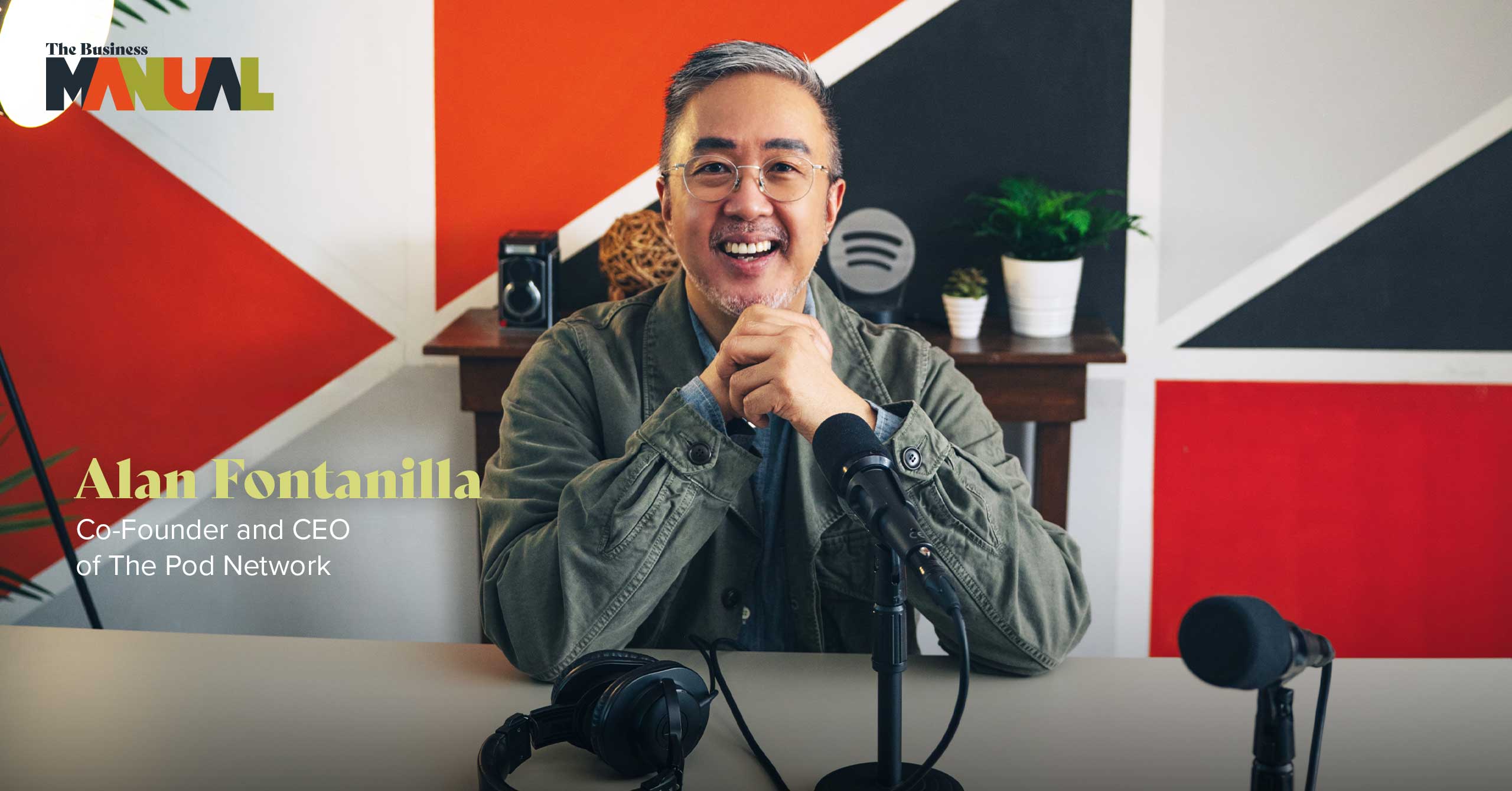
Alan Fontanilla, Co-Founder and CEO of The Pod Network, shares why 17 million Filipinos are tuning in to podcasts and how brands can join the conversation.
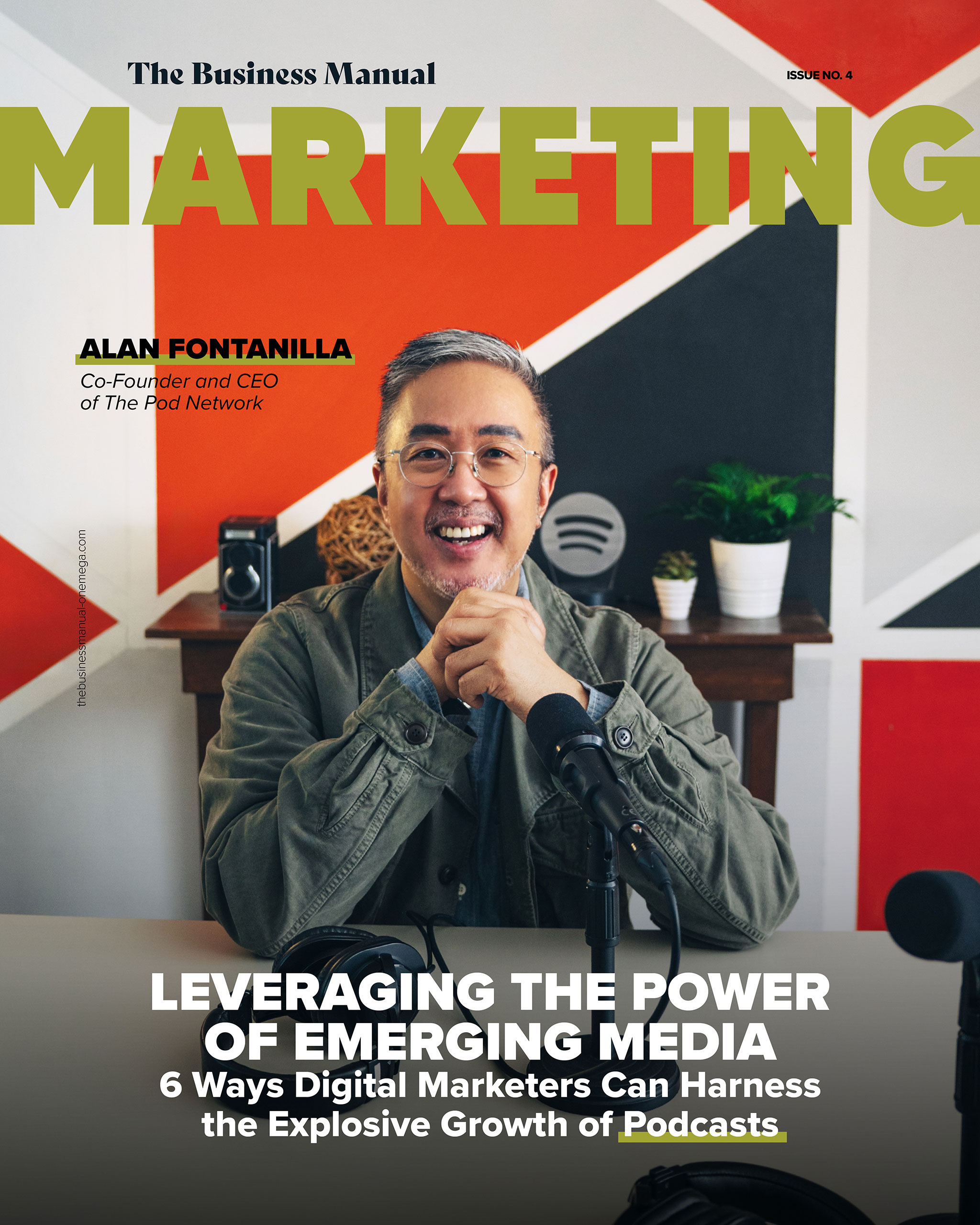
Podcasts are on the rise. Evolving past the early days of the venerable iPod, the modern-day on-demand podcast has re-emerged in today’s digital landscape as a powerful marketing and communications tool. And with 17 million listeners in the Philippines, podcasts have grabbed the attention of digital marketers. Yet, despite the impressive numbers, podcasts remain largely misunderstood and under-utilized. How should marketers use this medium? Are they an essential part of campaigns? And what are the opportunities available?
The Business Manual spoke to Alan Fontanilla, Co-Founder and CEO of The Pod Network, who shared invaluable insights into the podcasting industry, its marketing potential, and the lessons businesses can apply to maximize their reach. As a marketing expert who is the COO of the Lennon Group, Marketing Head of Packworks, and a board member of the Digital Marketers Association of the Philippines (DMAP), he has much to share about the marketing opportunities in podcasts. Here are five key takeaways to help businesses navigate the rapidly growing podcast space.
1. Experiment with Emerging Media
According to Fontanilla, podcasts are still an emerging medium, which he likens to being in “the toddler stage.” Podcasting first blew up in the Philippines during the pandemic when almost 30 million Filipinos tuned in to podcasts. Since then, the number of podcast listeners has stabilized to current levels, which is around 17 million.
Fontanilla remains unfazed by the post-pandemic drop. “At least now you have a core audience,” he says. “These are consumers or listeners that really tune in regularly.”
These regular listeners have grown into a segment that is impossible to ignore–and the segment is growing in leaps and bounds. In a report created by the country’s three largest podcast networks, Fontanilla’s The Pod Network, Anima Podcast, and PumaPodcast, collaborating with socio-cultural research firm The Fourth Wall, researchers found that these 17 million Filipinos listened to podcasts weekly in 2024. Crucially, these podcast listeners represent 19.8% of the internet-connected population aged 16 to 64–a massive rise from 2.6% a year prior, in 2023.
How should marketers employ podcasts then? Fontanilla emphasizes the importance of experimentation when adopting emerging new marketing channels like podcasting.
Just as brands cautiously explored Facebook advertising a decade ago before it became mainstream, businesses should allocate a budget to test podcast marketing.
However, experimentation shouldn’t be haphazard. Companies should set clear objectives beyond mere brand awareness. For instance, brands should define marketing objectives: whether they want podcast listeners to visit their website, purchase a product, or engage in deeper conversations. As Fontanilla puts it, “Push the companies like us to say, ‘What else can I do aside from just awareness?’”

2. Understand the Unique Power of Podcasting
As a new medium, podcasts offer unique opportunities that haven’t existed before. To understand it, Fontanilla compares podcasts to radio. “It behaves like radio,” he says. But like radio on steroids.
Like radio, many podcasts have 30-second or 60-second ad spots. And again, just like radio, there are ways that hosts can say something about the brand, often in the form of micro endorsements.
The key difference? “It’s on-demand and it’s evergreen content.”
Unlike radio ads, which are transient, podcast ads remain accessible indefinitely. “On radio, once you listen to the ad, it’s gone. In podcasts, if the host talks about your brand, it’s there forever,” Fontanilla explains.

Aside from the on-demand and evergreen nature of podcasts, Fontanilla emphasizes how podcasting is an intimate experience. When people listen to podcasts, they are usually alone, with headphones on, fully immersed in the conversation. This gives brands a unique opportunity to become part of their audience’s lives in ways other media cannot.
“If you listen to podcasts, it’s right in your ear,” Fontanilla explains. “As a brand, you somehow join in the conversations happening in the podcast space. So, for example, if you have advertising material and you just use your radio material and put it in a podcast, it doesn’t work. So you need to create new advertising assets for the very intimate listening experience.”
3. Data Is Essential And Evolving
Data drives digital marketing, and podcasts, a digital medium, are no different. Fontanilla explains how data is evolving in the podcast space.
“When podcasts started in 2020, at least in the Philippines, it was really more just [about] content. There was not much effort, I think even globally, in terms of putting the measurements in place,” he says.
But things are changing. “Podcasts live in the digital space,” Fontanilla continues. “Almost anything and everything digital can be measured. So, the tools are there. The technology is there to be able to measure that.”
A major challenge for brands hesitant to invest in podcast advertising is the perceived difficulty of measuring success. However, Fontanilla reassures that podcasts, being digital, are highly measurable. Businesses can track listenership, click-through rates, and conversions from podcast placements.
Brands should work closely with their tech teams to implement tracking mechanisms to gather data on podcast-driven consumer actions. And as more brands enter the podcasting space, data-driven insights will shape more effective campaigns.
Fontanilla shares how brands and advertisers are becoming more demanding, and he welcomes the challenge. “When I say demanding,” Fontanilla explains, “it’s really more of asking for more specific data. So, in a way, we educate them. They learn more. They ask for more information. They ask for more measurements, which is good because it’s there. It’s really just waiting to be unlocked.”

4. Know Your Listeners
For marketers, knowing your audience is one of the most important parts of the job. And when it comes to podcasts, understanding your audience starts with the content they listen to.
Fontanilla begins the topic by debusting a common myth. “There’s this perception that podcast listening is just reserved for the A-B market,” he says, “for the sosyal, for people who drive cars or stay in air-conditioned offices or houses. Not anymore. The 17 million Filipinos that listen to podcasts are your regular millennials.”
“You have your tricycle drivers,” he continues, “and they’d be listening to horror podcasts while they’re refilling their motorbikes in a gas station.”
Knowing these regular millennials and talking to them with relevant messages begins with understanding the content they consume.
Returning to how podcasts mirror the content on radio, Fontanilla paints a picture of the content available on podcast networks. “There are a lot of talk shows about love. There are a lot of horror shows, radio dramas, or dramas that are on podcasts, aside from the usual talk shows.”
By the numbers, the podcast report commissioned by The Pod Network and other podcast networks cites that about 74% of those surveyed revealed they listen to comedy podcasts. This was followed by podcasts on personal development (64%), culture (55%) and politics (49%).
5. Build Your Audience
Knowing all this, should brands jump in and start their own podcasts? Fontanilla pragmatically advises testing the waters first. Oftentimes brands underestimate the challenge of building an audience from scratch.
Fontanilla advises brands to first engage with existing popular podcasts through sponsorships, guest appearances, and ad placements before launching a branded podcast.
“Creating your audience in this space is very, very hard,” he says, emphasizing how building an audience is key. “From zero to 100 to 1,000 to 5,000 to 10,000. It’s very, very hard.”
To properly build an audience, Fontanilla helps the brands venture into podcasts. “We want the experience of the brands to be designed for success,” he explains. “You need to make the audience ready. Do not do your own branded podcast right away. You can start with segments in popular podcasts, guesting, or having ads first.” Once a brand is recognized in the podcasting space, then it can consider launching its own show.

This approach ensures that brands establish credibility and trust with podcast listeners rather than struggling to attract an audience to an entirely new platform.
For creators, Fontanilla advises joining a podcast network instead of going solo.
“if you want to be part of a network,” he says, “there are many ways [to participate]. One is for you to co-produce content, co-produce a show. If you have an existing show and you want to remain independent, we can just add you to our inventory of shows that we offer to brands for advertising.
On your own, as a solo creator, it’s hard to knock on the doors of brands, of agencies, to say, ‘Hey I have my podcast.’ Whereas we have an inventory of shows, you’re part of that.
Beyond selling ads, The Pod Network is also making inroads by innovatively selling audiences.
“We do not just sell this show, this show, or this show. We sell ‘Who do you want to talk to?’ [Let’s say] you want to talk to Millennials 25 or 27 years old. Then here are the shows because we think you’ll be interested in these genres.”

6. Adapt to the Changing Digital Landscape
“Podcasting is not a fad,” Fontanilla says. “Podcasting is not going to be just a passing technology. It’s there and it’s just continuously evolving just like how digital, the digital space for advertising is continuously evolving.”
With this evolution comes new opportunities, which brands must rise to meet. Marketing strategies must evolve with the changing digital landscape.
Fontanilla highlights the opportunities in podcasts by highlighting podcasting’s unique “intentional media consumption,” where audiences actively choose what to listen to, rather than passively consuming content.

He explains, “Now I see a lot of young people saying, ‘I don’t want to be on social media, I just want to read a book, I just want to listen to a podcast because there’s no distraction.’ There’s some intentionality to how they want to consume it.”
This shift presents an opportunity for brands to integrate seamlessly into their audience’s chosen content rather than relying on disruptive advertising. “Who doesn’t want to join the conversation?” Fontanilla asks. “If you’re not in that conversation that’s happening among 17 million Filipinos, you might be missing something out.”
Moreover, the rise of video podcasts and visual content on podcasting platforms indicates a growing trend that brands must consider when planning their media strategies. Marketers need to be open to continuous learning and innovation to stay ahead.

A Roadmap to Navigate the Evolving Media Landscape
Alan Fontanilla’s insights provide a roadmap for businesses looking to leverage podcasting as a marketing tool. From strategic experimentation and trust-building to data-driven decision-making, these lessons offer valuable guidance for brands navigating the evolving media landscape. As podcasting continues to grow in the Philippines and beyond, companies that embrace and refine their podcast marketing strategies will gain a competitive edge in capturing engaged, loyal audiences.
In closing, Alan Fontanilla focuses on the entrepreneurial aspects of The Pod Network by advising other entrepreneurs to persevere in the face of hardship and adversity.
“It’s a 24-7 job,” he says. “You cannot take vacations because even while you’re on vacation, you’re still thinking about your business, right? Other people are relying on you for their livelihood. So, it’s tough.
“It feels more fulfilling because I know it’s for me. It’s for this idea that you want to make happen.”
Text VINCENT SALES
Photography KIM ANGELA SANTOS of KLIQ INC.
Videography JR RAMIREZ of KLIQ INC.
Art Direction ANDREA SANGCO
Sittings Editor RJ LEDESMA
Shoot Coordination TONI MENDOZA
Shot on Location SINEMATIKA, MANDALUYONG