Don’t Sell a Solution, Understand the Problem: On Using Technology to Aid Micro Entrepreneurs according to Ibba Bernardo, Bing Tan, and Hubert Yap of Packworks



By providing business solutions for sari-sari store owners, Packworks created a platform that is empowering Filipino micro entrepreneurs all over the country.
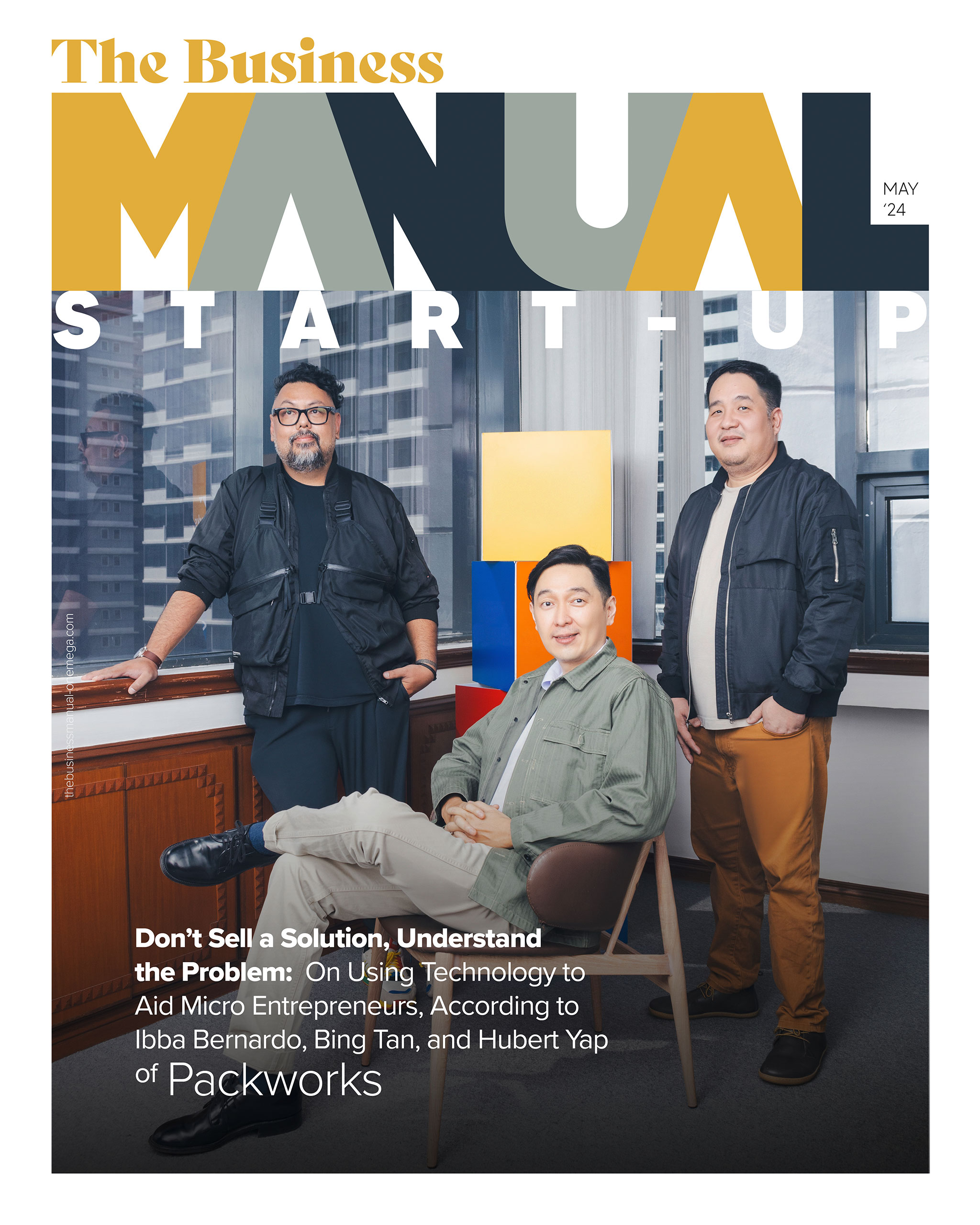
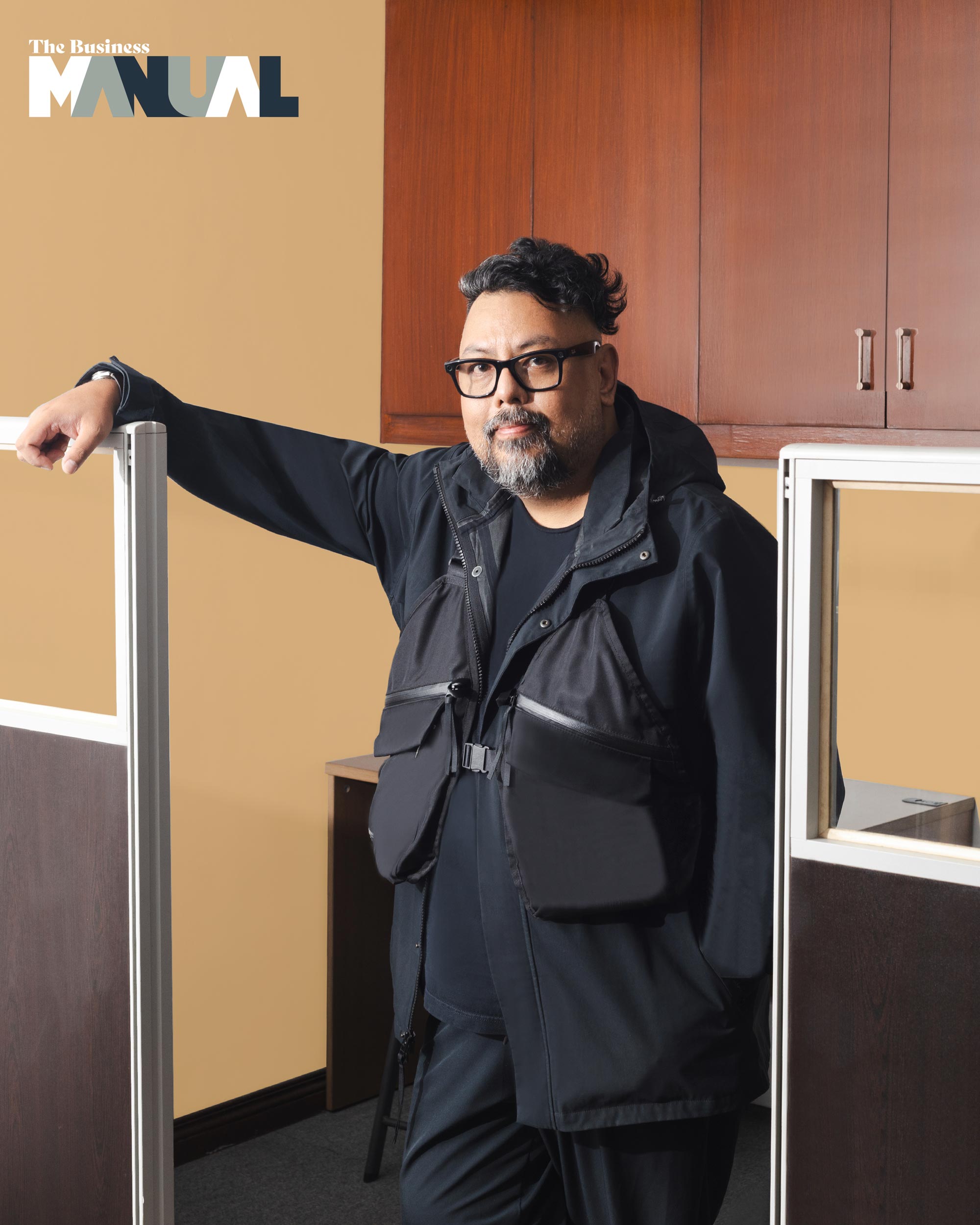
Packworks is on a mission. The tech startup, founded in 2019, has been celebrated in startup competitions and the media alike for their platform which empowers micro entrepreneurs–in Packworks’ case, sari-sari store owners specifically–all over the Philippines. Speaking to the company’s co-founders, Bing Tan, Hubert Yap and Ibba Bernardo, it quickly becomes clear that Packworks is not about the disruptive business idea behind it. It’s not about the robust tech that powers it, their vision for the most remote parts of the country, nor their route to financing either. Time and again, the co-founders return to one thing: the sari-sari store owners. And it is this mission to serve the “nanays [mothers]” who run these micro businesses that drives everything they do.
The Asian Preparedness Partnership estimates that there are 1.3 million sari-sari stores in the Philippines. These micro businesses are the backbone of their respective communities, with 94% of consumers relying on these stores for their daily needs, according to data gathered by Packworks’ business intelligence tool, Sari IQ. And yet, at the same time, sari-sari stores are some of the most underserved businesses. Oftentimes, a sari-sari store is run manually, by pencil and paper, on a cash basis, with poor access to wholesalers and little or no access to loans or credit.
Enter Packworks, a B2B tech company that builds software for sari-sari stores. “By digitizing the process,” Packworks CEO Bing Tan says, “we are able to make them communicate with FMCG [Fast-Moving Consumer Goods] companies and financial institutions so that the sari-sari stores can get the cheapest access to goods and also the cheapest access to capital.”
It’s a big idea for businesses that are among the smallest. Through an app on the store owner’s phone, tablet or laptop, they can order goods, manage their inventory, or keep track of their customers’ utang [debt]. It’s a simple yet revolutionary idea that has proven to be a boon for the bottom line of Packworks’ 270,000 sari-sari store owners. This is reflected in sari-sari store revenues (PHP 8 billion) which grew by 21% in 2023 compared to the previous year.
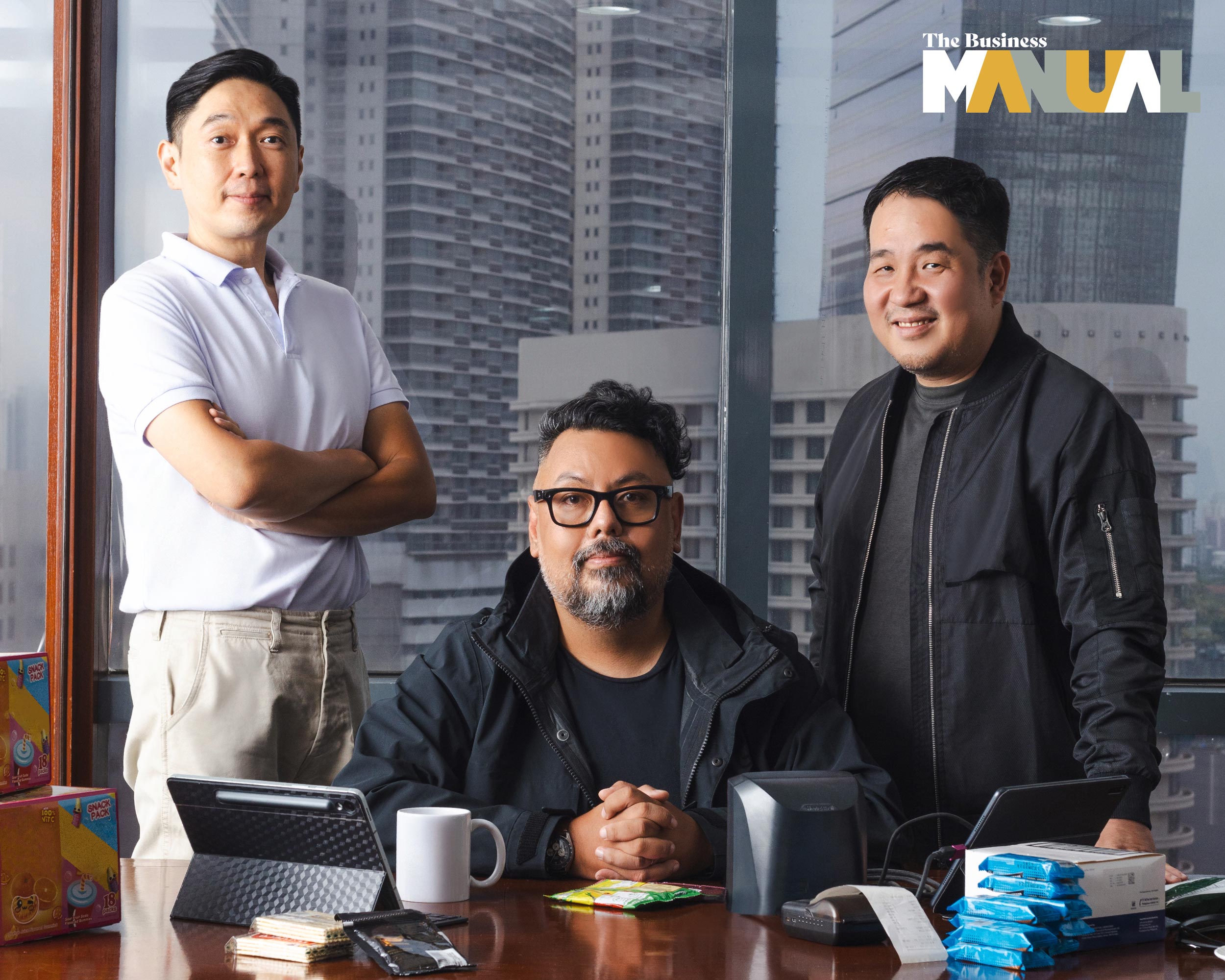
The Business Manual spoke to Packworks’ three co-founders, Chief Executive Officer Bing Tan, Chief Platform Officer Hubert Yap, and Chief Marketing Officer Ibba Bernardo about the origins of this tech startup and its singular focus on providing micro entrepreneurs with solutions that empower them.
Packworks Assemble
Packworks’ origins can be traced to each of its founders, with each bringing in a diverse set of experiences and expertise. In broad strokes, Bing Tan provides the technology background having worked with enterprises ranging from telcos to airlines; Hubert Yap is the FMCG expert with vast and deep experience in distribution; and Ibba Bernardo has worked in everything from startups to social enterprise.
For Ibba Bernardo, the journey began while working with the Solar Energy Foundation. He recalls, “I took my motorcycle [for] 16 days,16,600 kilometers, to over 70 off-grid communities. And if you go to the most remote communities–floating schools in Agusan, islands off the coast of Zamboanga–you’re going to see a sari-sari store… And it blew my mind, na parang walang tubig, walang kuryente [there’s no water, no electricity], all of the things that are difficult, no? Pero [Yet] there’s a successful entrepreneur.”
The next question on Ibba’s mind was “How do we help these communities?”
The answer was to assemble a team. Comparing the Packworks founders to Marvel’s Avengers. Ibba jokes, “I guess maybe I’m a fat Samuel Jackson. I’m a fat Nick Fury.”
First, Ibba reached out to Hubert Yap whom he had worked with before. “He’s like the A Beautiful Mind of distribution,” he says about Hubert’s supply chain work for one of the largest national distribution companies in the Philippines.
Hubert recalls, “When I started this journey, which was about 12 years ago, I [saw] the world of distribution changing, where tech is a key enabler. That’s how the journey started.”
Ibba says that once Hubert knew about the work he wanted to do with sari-sari stores, Hubert was insistent that they do something. He says, “[Hubert] would bug me all the time. Because I wanted to do a social enterprise. I wanted to help sari-sari stores. He kept saying, ‘You know, we can do business solutions. We can help the sari-sari stores.’”
Ibba also reached out to Bing Tan who he compares to a “tech guru,” someone who has done multiple startups.
“Bing has worked with all of the top companies in the Philippines, all the telcos, manufacturers,” Ibba says. “So he has a tech staff that is incredibly deep. Everything from HR systems… to PoS systems to doing stuff for manufacturers, farms, airlines. So all of that technology is already something that we had.”
With all the pieces in place, the trio founded Packworks in 2018.
Right Idea, Right Time
2019 was a period of rapid change. E-commerce, cashless transactions, and digital banking were all on the rise, as the pandemic–a key accelerator for many tech startups–was on the horizon.
The sari-sari store solutions that Packworks provides couldn’t have come at a better time. While the startup was built on an idea whose time has clearly come, Bing Tan is quick to point out the good fortune of their timing.
He says, “There is an inflection point in the country. Internet is widely available. Your median age for the workforce is fairly young, all millennials at the 25-year-old age range. Plus the cost of devices just got cheaper and cheaper… Having these three things work together, we were able to build technology where we put the user in front. We were able to use technology that a sari-sari store can afford to use for their business.”
Packworks began by creating its platform, which could be accessed by sari-sari store owners through a mobile app. They started with a small pilot program with just five stores. The app received positive reviews from all five stores, and by the end of 2019, 10,000 sari-sari stores were using Packworks’ app.
By any measure, this would be a resounding success. But Packworks was far from over. Bing says, “And then, as luck would have it, COVID struck. Everyone closed down.”
The pandemic was a tragedy for millions around the world. However, today, we know that it was also beneficial for many tech companies by accelerating burgeoning digital trends. Once again, timing catapulted Packworks to success.
Bing recounts, “And that was where we really saw an uptake on our usage. We grew our store base from 10,000 stores to 250,000-270,000 stores today. Primarily because it was driven by a need, a need where people couldn’t travel. But they needed technology to connect their orders and process their business trade.”

Micro Entrepreneurs at Packworks’ Core
In many entrepreneurial narratives, this would be the end of the story. But the Packworks founders emphasize the amount of hard work, as well as the determination, it took to get to where they are today.
“In our first two years, we did about 200 iterations [of the app],” Hubert says. “Our people, including me and Bing–there’s about ten of us including our developers–[stayed] in the sari-sari store every day for how many months… It was sheer grit and really understanding it from their eyes.”
It is this focus on sari-sari store owners that drives everything Packworks does. And it is what the co-founders credit for their success.
Bing continues Hubert’s thought, saying, “The products that we saw prior were always outsiders looking in. It’s an FMCG guy trying to make a tech solution. Or vice versa, a tech guy trying to solve a sari-sari store problem, who did not understand the way of doing sari-sari store business.
“And that’s where Hubert came in, and saying ‘Alright, this is a need for the sari-sari store, let’s tweak it.’ Not providing them everything at once but really picking things that solved problems for them, and little by little increasing the functionalities that would help them.”
This deep understanding of the needs of the sari-sari store owner is at the very core of Packworks’ business. Today, with data from over 270,000 users, Packworks has an even more detailed picture of the sari-sari store owner. And it releases its learnings through Sari IQ, Packworks’ business intelligence tool, a product it sells to the other side of the B2B formula, such as large FMCG companies.
This keen insight into the sari-sari store owner is perhaps most obvious in how they refer to them–not by the term “micro entrepreneur” or the mouthful that is “sari-sari store owner.” Instead, they call them nanay [mother]. This name is born as much from the experience of spending time with sari-sari store owners as the data gathered by Sari IQ. In fact, according to Sari IQ, 75% of sari-sari store owners are women, usually mothers who put up a family business.
‘May the Best Idea Win’
Just as building Packworks products with a focus on nanays was a challenging yet critical task, managing the decision process within the startup was also a challenge for Bing, Hubert and Ibba.
“If you wanna change the world, you can’t be a people pleaser,” Ibba says. “You need to have your own perspective. You need to believe in it. And you need to have real arguments, like claws out. And a lot of friction. A lot of friction creates polish. It creates a greater product.”
Despite inevitable conflict, Hubert is guided by a philosophy he learned before starting Packworks. “‘’May the best idea win,’” he quotes. “You’re gonna hate me, but may the best idea win.”
Bing puts the conflict into perspective, once again returning to the nanays Packworks serves. “I think it’s easy to talk about because we remember the times we fought,” he says. “But in reality, I think, in our 40s, we bring a level of maturity first. That’s the very foundation if you get to work with people of the same maturity level and you’re all driven by executing something for the benefit of your customer. In this case, it’s our sari-sari stores, right? And so we’ve always had that guiding star to say that the best idea is the one that serves the sari-sari stores the best.
“But when we agree to execute, we execute together. And if we fail, there’s no blame.“

Sari-Sari Store Future
In many ways, Packworks has just begun. Even with the impressive number of 270,000 micro entrepreneurs using their platform, with 1.3 million sari-sari stores in the country, there’s still room to grow. Proudly emblazoned on the Packworks website is their goal to reach 500,000 in the near future. But beyond growth in the number of users, there is also growth for the users in revenues and new services, as well as new functionality for the platform–everything from microfinance to becoming micro Internet service providers (ISPs).
Bing explains how far they have come, saying, “We’ve been saying lately, we’re present in all provinces, Aparri to Jolo, except Aparri and except Jolo. We’re close to getting at least a sari-sari store in every city in the country, which I think is very powerful, right?”
“As more people are using the platform and they’re seeing it,” he continues, “we’re actually winning sari-sari stores because they’re seeing the impact on their business. We’ve seen sari-sari stores increase their sales by as much as 50%. And that I think is the true power. You can’t keep on pushing it without real value. And I think that’s the real message that we’re very proud of.”
Ibba, meanwhile, is focused on new Packworks initiatives with various partners–the “sci-fi” vision he calls it. He says, “We’re making them into hospitals. We’re making them into telcos.”
Partnering with MediClick, Packworks is initiating a program that turns sari-sari stores into accredited pharmacies. “They can have remote access to healthcare professionals,” Ibba says, “because there’s no hospital nearby, there’s no Mercury, right? And medicines aren’t available to those communities.”
With sari-sari stores being the backbone of local communities, it also makes sense for them to provide more essential services, such as providing Internet, especially in remote areas.
Ibba explains, “Another thing that I’m super proud of is we’re partnered with AWS (Amazon Web Services), StarLink and Help.NGO and what we’re doing is we’re bringing satellite internet to sari-sari stores that are off-grid. And they’re providing Internet for free to their communities.”
For one nanay, a surprise benefit of becoming an informal ISP was a dramatic rise in sales. “In the first month, it doubled her transaction count,” Ibba recounts, “and she’s super happy. And she’s able to now do Zoom calls with her OFW [overseas Filipino worker] husband, right?”
For Hubert, the dream is for Packworks to go beyond the Philippines, into other emerging markets. He says, “I always keep telling my other co-founders, ‘Why don’t we dream bigger and be an inspiration for Filipino startups that we can even grow to other markets?’”
Finally, for Bing, the consummate entrepreneur, the future of Packworks is about financial literacy for sari-sari store owners and supporting their businesses. He says, “I think, foundationally, the problem with micro entrepreneurs is they have not learned to separate their personal wallet from their business wallet. And we’re on that point, right, of turning them into true businesses. And that’s why we’re very excited about it as well… It’s all part and parcel of what we’re doing primarily because we look at the sari-sari store at the center of our business.”
Lessons for Startups
Given the company’s rapid success and innovative business model, Packworks has become the paragon among today’s tech startups. It has won industry honors from the Anvil, Araw and IMMAP awards, and it has also won distinction in the Forbes 100 to Watch List, and the KMC Startup Awards, among others.
What lessons do Packworks’ founders have to share with other startups?
Ibba is quick to point out, “Actually, it’s not us going to startup events and listening to founders. A lot of the things that we’ve implemented were things that we learned from sari-sari stores… We run Packworks like people run sari-sari stores.”
For Hubert it’s about trying something new as an entrepreneur and living life without regrets. He says, “For me, it’s about financial inclusion. We all know the problem of sari-sari stores. They pay the highest rates for any financial services. So my goal here is to bring down the friction of money, basically the cost of money, and then inject money to our platform, to our ecosystem… to drive change. Then in the end, when we’re 90 years old, at least you won’t say to yourself, ‘What if I did that?’ I try to live a life of no what ifs.”
Bing Tan echoes Hubert’s sentiment, saying, “What you do has to have purpose. The reason why I’m willing to go all-in is that at the end of the day if you fail, you’ve actually made impact to 270,000 stores. That’s 270,000 families, right? And so, if your heart’s set to that purpose, why fear the unknown? Just go do it.”
Text VINCENT SALES
Photography EXCEL PANLAQUE of KLIQ, INC.
Videography KIM SANTOS of KLIQ, INC.
Art Direction MARC YELLOW assisted by ANDREA SANGCO
Sittings Editor RJ LEDESMA
Shoot Coordination TONI MENDOZA
Shot on Location at PACKWORKS, BELVEDERE TOWER, SAN MIGUEL AVE., ORTIGAS CENTER
More From Features