From Strategy to Breakthrough: How to Create a Business Plan That Actually Works


Learn the real-world process of creating a business plan that drives decisions, attracts investors, and sets the stage for growth.
To any entrepreneur starting a business, one of the most common pieces of advice is this: Write a business plan. But what is a business plan exactly? How do you go about writing one and what are its elements? Do you even need a business plan? Why is it so important? And is a business plan still relevant in today’s fast-changing business landscape?
To help us answer these questions and more, The Business Manual spoke to Elmer “Jojo” Malolos, the CEO of PayMongo, a leading Philippine fintech company that enables digital payments for businesses. It enables merchants to receive payments via credit and debit cards, e-wallets like GCash and Maya, online banking, and more. Founded with the mission to accelerate digital commerce in the Philippines, PayMongo is trusted by tens of thousands of businesses—from startups to the country’s largest digital brands.
In his 40-year career, Jojo has also held executive roles in companies like GoTyme Bank, Smart Communications and the Gokongwei group, with leadership experience in fintech, digital banking, and venture capital. As an investor and board advisor to over 20 startups, Jojo is the ideal expert to help entrepreneurs navigate their way in the critical early stages of starting a business.
These experiences have shaped his views about planning, which he describes as “iterative, grounded in execution, and never divorced from the reality on the ground.” Read on to learn more.
What is a business plan? Where do I start?
Business plans are as varied as the business people who make them. Yes, you can jump into writing a business plan with a Canva template. But before that, let’s take a closer look at the purpose of business plans and what we hope to achieve by making one.
A business plan is a dynamic tool that can help define your business and your strategies. Think of it as a roadmap to get from Point A–where you are right now–to Point B–where you want your business to be.
Business plans are commonly used by entrepreneurs when they’re starting a business. At this stage, crucial decisions like your business’ mission, your market, and your strategies to reach this market are defined. But it’s important to note that it’s just as useful in later years.
For Jojo Malolos, a business plan isn’t just a piece of paper that you fill out once and then forget about. It’s a living tool that changes through the years. He says, “In today’s digitally-enabled ecosystems, a ‘business plan’ is no longer just a document—it’s a dynamic tool for alignment, clarity, and course correction.”
The business plan may be a roadmap, but the route is always changing. And your business plan is about staying true to your organization’s goals and forming a strategy to get to both short-term and long-term destinations. Jojo continues, “I’ve seen it evolve from department-level forecasts based on last year’s numbers to corporate-wide strategic blueprints guiding entire organizations.”
What’s the purpose of a business plan?
Guidance and structure
A business plan is similar to a roadmap. But at the same time, it is also about your company’s identity. Defining this identity, and the underlying company structure, can be critical in decision-making later on.
Attracting investment
Your business plan doubles as a tool for attracting investors. As your strategic guide to business, it is also useful as a document to present this strategy to potential partners and investors. It’s your chance to show what your business is all about.
Identifying strengths and weaknesses
The process of writing a business plan can help identify both the strengths and the weaknesses in your business idea.
Understanding your market
Writing your business plan can also help identify your target market and competition.
Instead of using demographics to describe your market, Jojo advises, “Start with behaviors, not segments. I’ve learned that identifying your market isn’t about broad categories like ‘SMEs’ or ‘millennials.’ It’s about understanding how specific people behave.”
Asking questions about your target market is more important than defining age, sex, and social class. Ask questions like: Who’s afraid of digital transitions? Who benefits if I disrupt fintech this way? Who needs this service to be easier?
“Your initial market isn’t your ceiling,” Jojo says. “It’s your laboratory.”
Planning for growth
Laying out the roadmap for your company’s growth isn’t just about making revenue assumptions or best guesses. You need to look at the larger picture.
“Don’t just talk about revenue—talk about economics,” Jojo explains. “What’s your CAC (Customer Acquisition Cost)? LTV (Lifetime Value)? How do margins improve over time? In the corporate startups I’ve helped run, we relied on these unit metrics to separate scalable models from fragile ones. Now with AI tools, you can even simulate how operational decisions affect these numbers in real time. That level of clarity is what builds investor and team confidence.”
What are the elements of a business plan?
There is no universal or one-size-fits-all template for a business plan. Every business person has a different approach. However, there are common elements that are shared by the best business plans. A business plan that works is often about 1) defining a purpose and identifying a market need, 2) financial forecasting, and 3) setting measurable goals.
Defining a purpose and identifying a market need
The first part of any business plan starts with asking the big questions. Why are you putting up this business? What’s your mission? What problem are you solving? How are you making lives better? Who needs this product?
According to Jojo Malolos, “The ‘why’ is your North Star. It’s what aligns your team, informs your product roadmap, and motivates resilience when things go sideways.
“For founders, discovering your ‘why’ means going beyond the product to ask: whose life improves if this works? And how will we know we’ve made a difference?”
Financial forecasting
Part of your roadmap includes how you will finance your business. Will you get a loan as seed money? Will you bootstrap and channel all your profits back into the business? Will you go the startup route and open yourself to funding? Will you seek partners? Or will you seek angel investors? Make your forecasts as concrete and as specific as possible.
Setting measurable goals
Finally, it’s important to set clear, measurable goals for your business. How soon do you expect a return on investment? When do you plan to scale up? What are your plans for expansion?
What else goes into a business plan?
There is no fixed format for a business plan. Each is as unique as your business, and you may include elements that are not traditionally found in other plans. Your business plan should tell your story: who you are, who your business is for, what you are setting out to do, and how you plan to do that.
Given the importance of marketing in business, many business plans include a marketing plan or a go-to-market strategy. Jojo Malolos advises that entrepreneurs include this in their business plan. This strategy should include three things, according to him:
• A well-defined execution plan tied to both short- and medium-term metrics.
• A partnership strategy that leverages trust, reach, and influence—be that platforms, banks, or regulators.
• A frictionless customer onboarding and retention flow, especially critical in financial services.
While there’s no one-size-fits-all format for a business plan, the slides below highlight the key elements that are typically included. The slides below showcase these elements. Click on the arrow to see the rest of the slides.
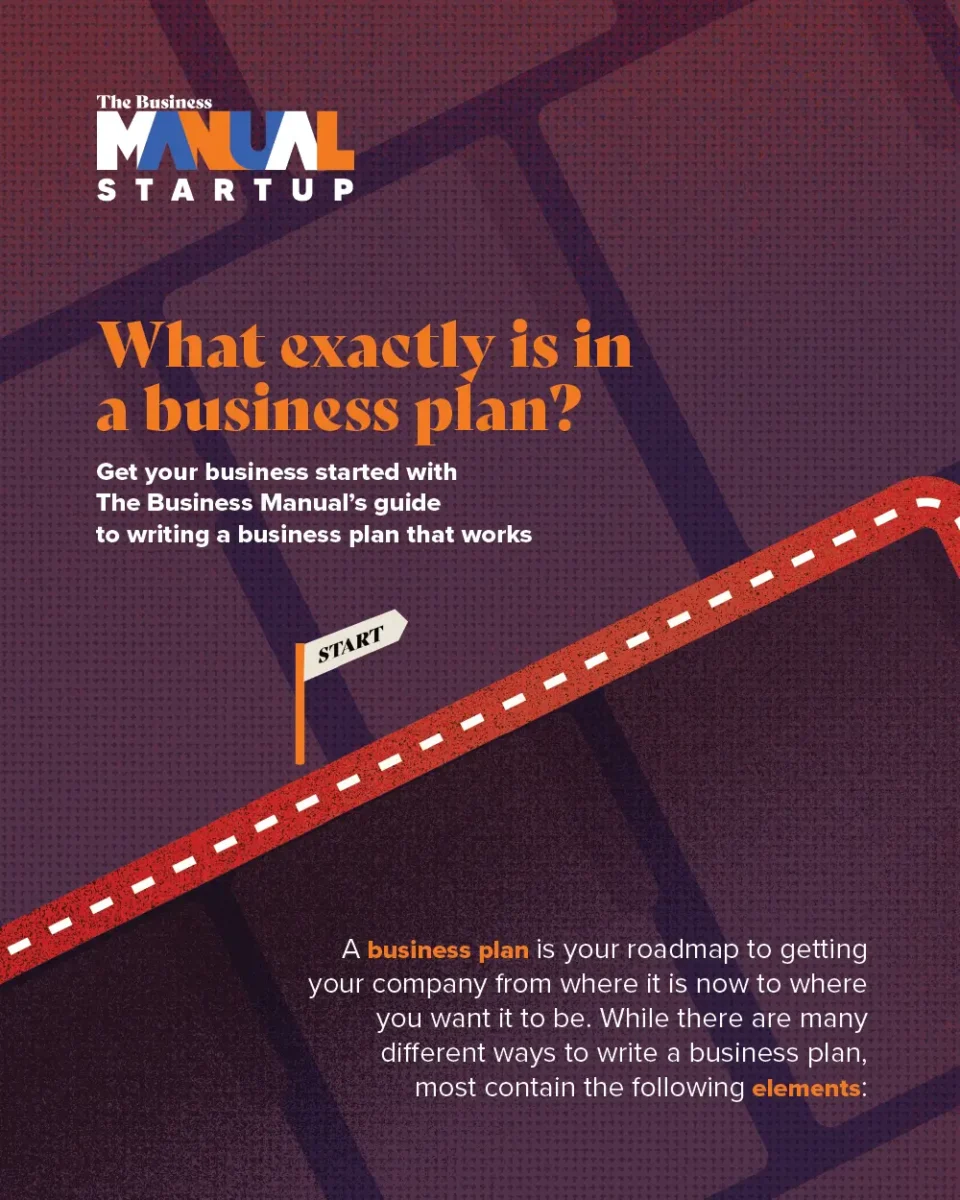
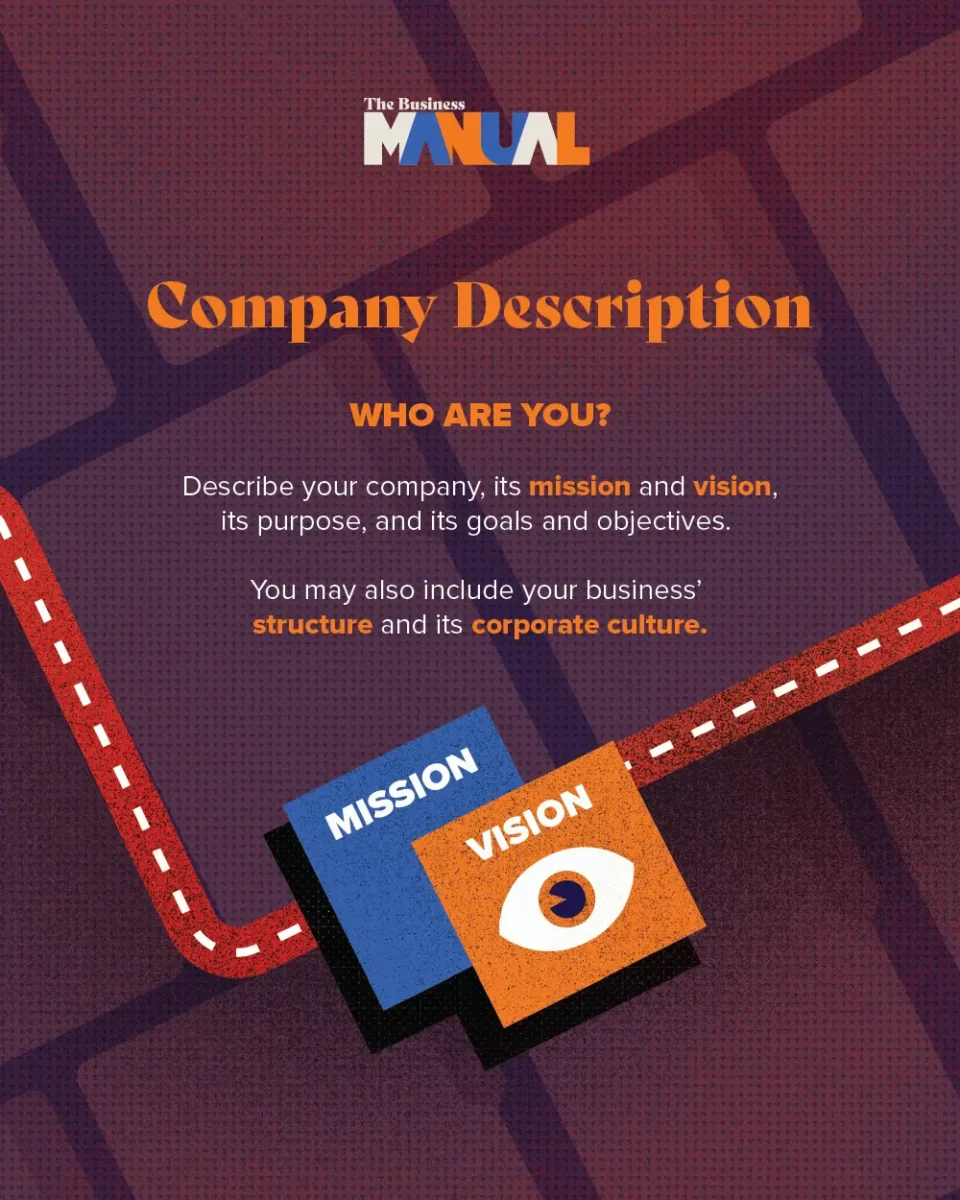


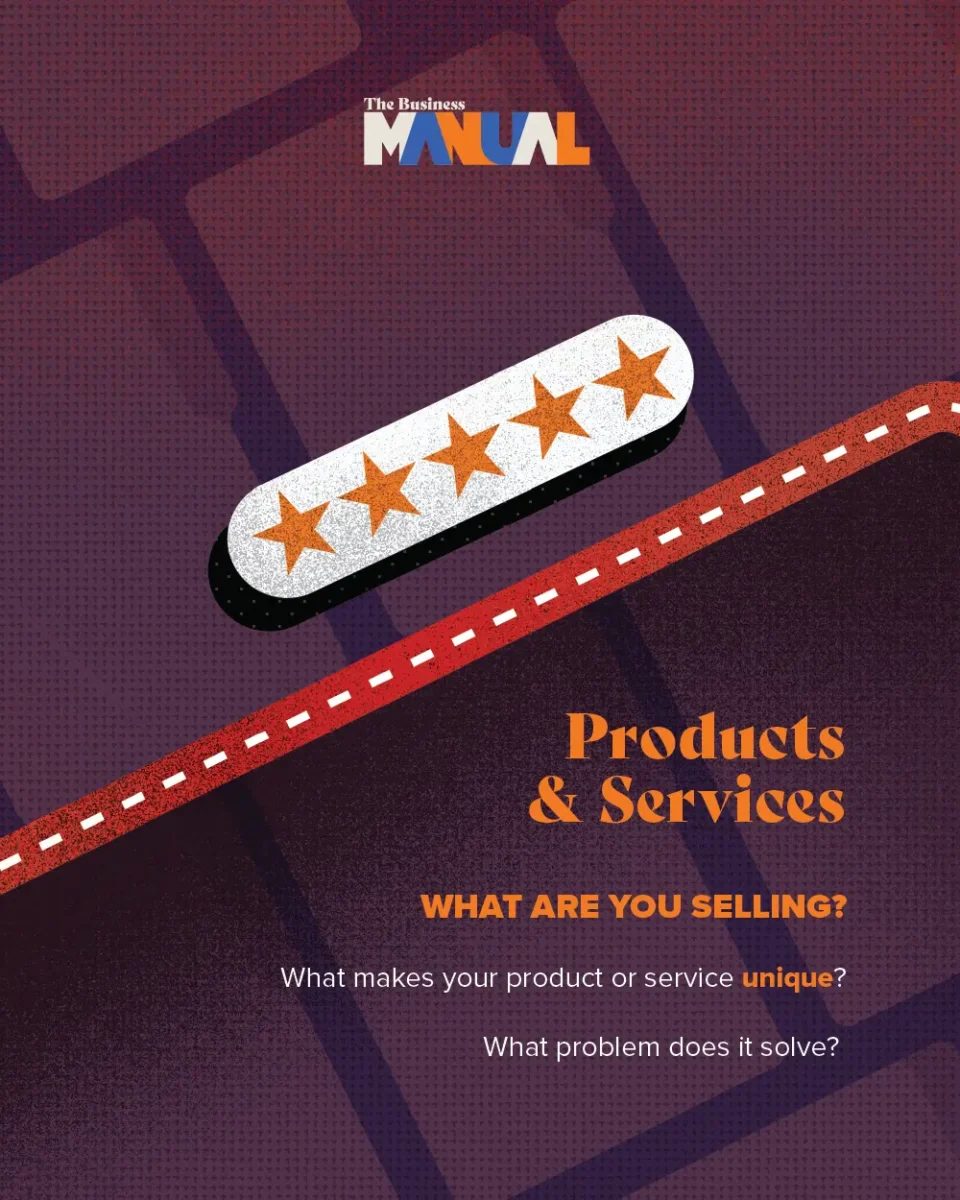
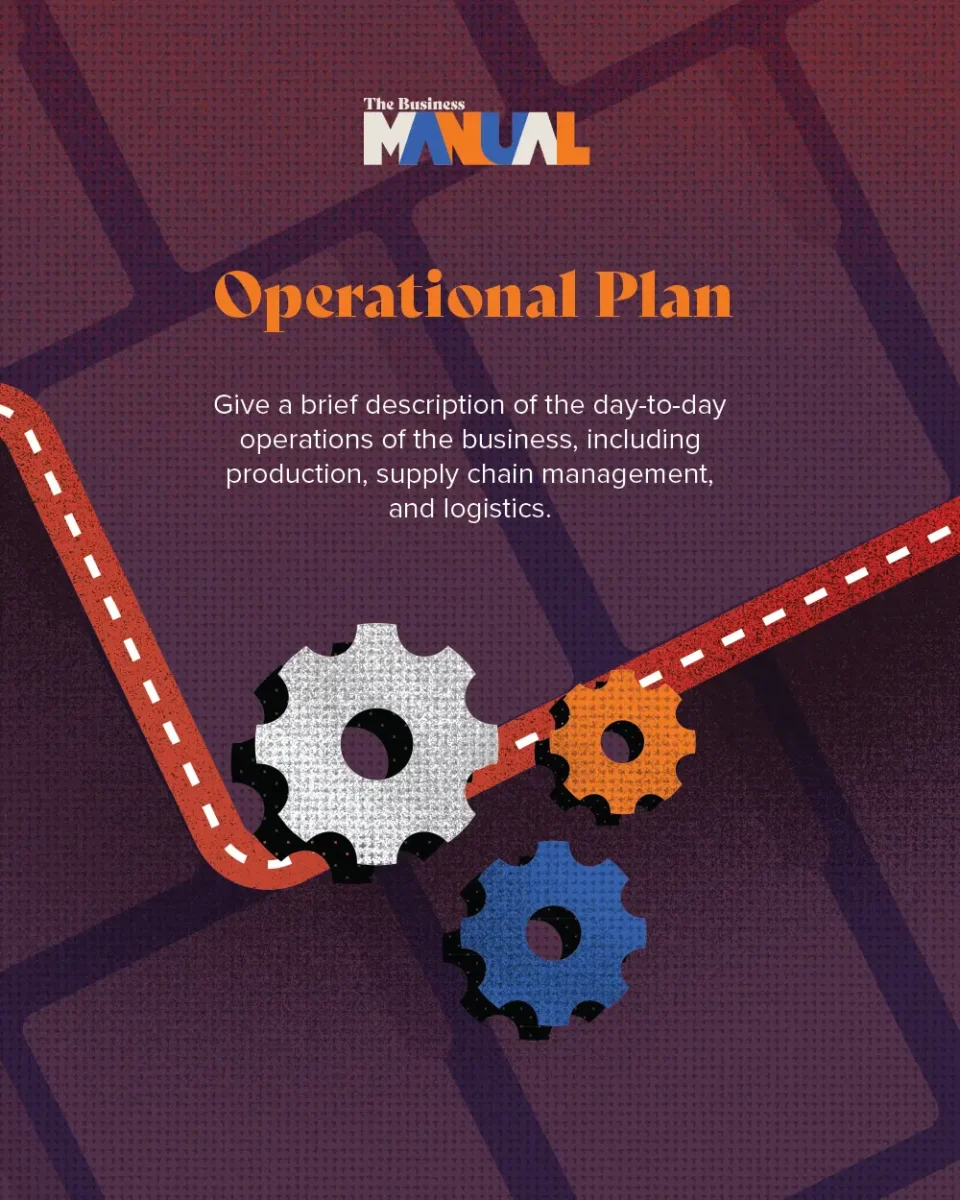

Entrepreneurs should remember that a business plan isn’t just more paperwork. It’s a worthwhile exercise to define your business and what you are setting out to do. With that in mind, your business plan should be your business’ constant companion and its guide, evolving as your business evolves.
Jojo says, “The plan must evolve—period. In every venture I’ve led, we treated the business plan as a live artifact. We built in quarterly retrospectives, synched dashboards, and internal reviews to test assumptions constantly. Execution is where strategy meets reality, so your plan should reflect what you’re learning. Don’t be afraid to rewrite it. The best pivots I’ve seen came not from panic, but from insight.”
Frequently Asked Questions
A business plan serves as a strategic roadmap, outlining your company’s goals, operational structure, and financial projections to guide decision-making and attract potential investors or partners.
Key sections include an executive summary, company description, market analysis, organization and management structure, product or service offerings, marketing strategy, and detailed financial forecasting and funding requirements.
While traditional plans were lengthy, a modern, effective business plan is often concise, focusing on clarity and actionable insights that can be easily updated as your business grows.
Thorough market research validates your business idea, identifies your target audience, analyzes competitors, and helps you determine the viability of your product or service in the industry.
Your plan should be a living document; review and adjust it at least annually or whenever significant changes occur in your operations, funding, or the overall market landscape.