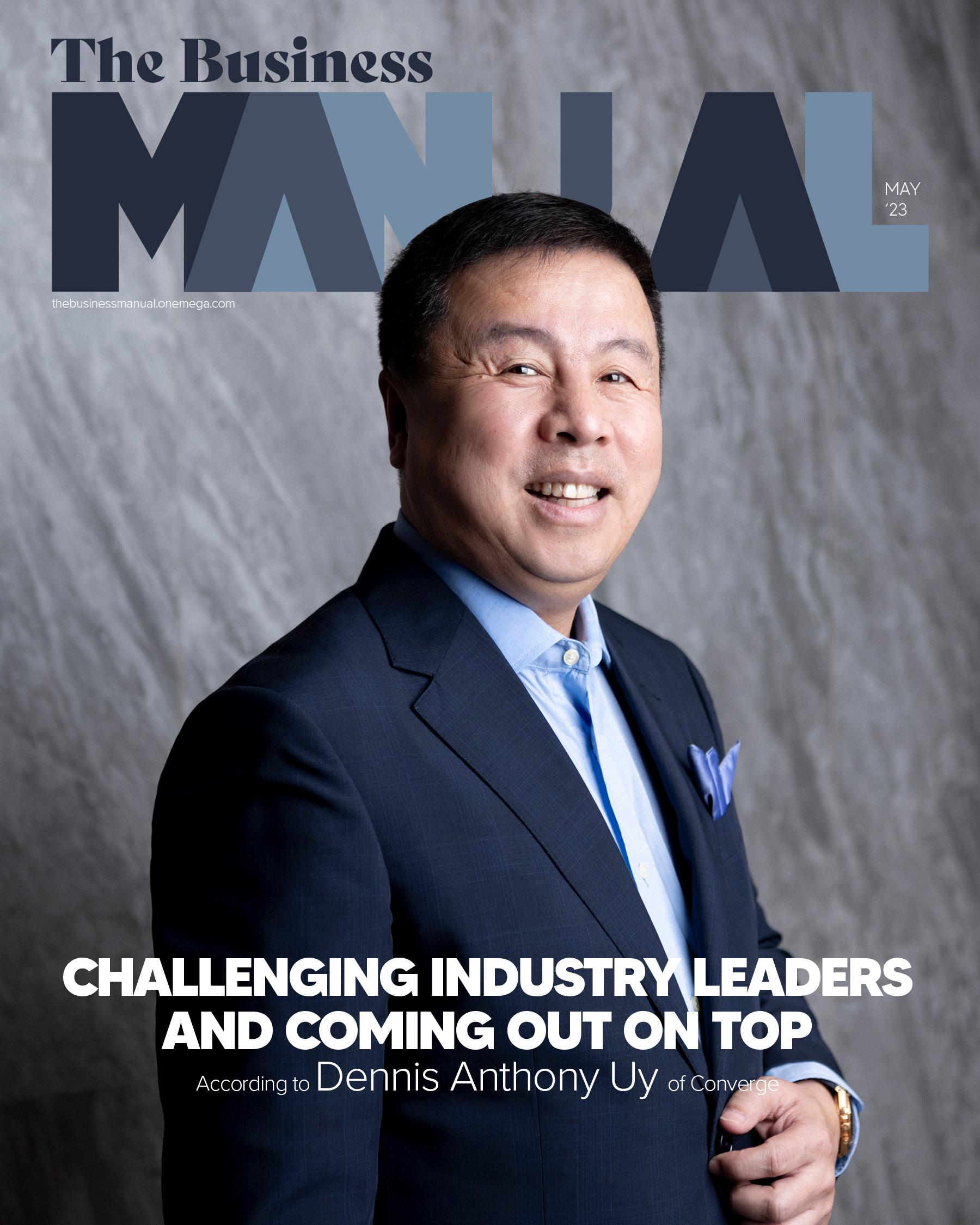
Challenging Industry Leaders and Coming Out on Top, According to Dennis Anthony Uy of Converge



Going up against legacy brands is not easy, but Dennis Anthony Uy, the Co-Founder and CEO of Converge, shares strategies that give your business a fighting chance.
Successful business stories are told, time and time again, but the iconic narratives feature small businesses—built from the ground up—that go against the industry giants. Take for example the story of Converge, a telecommunications company founded in 2007 by Dennis Anthony Uy and his wife, Maria Grace Uy.
The businessman's first venture in the broadband and fiber optics business, Converge, saw its humble beginnings in Angeles, Pampanga. To date, however, the company boasts of a PHP 33.70 billion revenue, 1.8 million subscribers, a 54% market share, and a far reach of 600,000 kilometers in its fiber network—spanning more than 400 cities and municipalities across the country—as of the year 2022.
This, however, was no easy feat. After all, in the telecommunications playing field, Converge needed to go up against two major companies that dominated the market—both legacy brands that were carefully built over the years. Despite the stiff competition, this underdog was able to rise up and compete with the giants.
How? In this exclusive interview with The Business Manual, Dennis Anthony Uy tells all.
How it All Started
While Uy's net worth is currently in the billions, he started from nothing. Hailing from a province in China called Fujian, he and his family migrated to the Philippines in 1977—seeking a better life. Eventually, his family made it big in Pampanga due to his uncle’s long-standing businesses, including Johnny’s Supermarket, which still stands to this day.
And like most Filipino-Chinese sons, entrepreneurship was ingrained in him growing up. "When you grow up, [being business-minded] by nature...it’s already there," Uy begins. "Especially since I grew up in a [Filipino-Chinese] family. My uncle has groceries and everything. In terms of tech, it’s a passion."
Uy's love for gadgets started from a young age, as he was seen tinkering with electronics and gadgets to know how they work. This transitioned to working for that same uncle as a cold storage handyman when he was 11. "When I was still in my high school days, kung makikita niyo, nagtatrabaho ako sa supermart, tumutulong. [If you saw me, I was working at the supermarket—helping]," he shares.
But even then, he took vocational classes—seeking to constantly learn and broaden his horizons. "I [still went] to high school where I was still old compared to my classmates. I had spare time, but I went to tech schools. Yung mga vocational. Yung mga computer programming, including electronic vocational school. I think the school is called Lorraine Technical School in Angeles City."
"That’s what got me passionate. [That's what] let me understand tech," he says proudly. "And during my other free time, because they have a working freezer in the supermart so… mahilig ako mangalikot. [I liked tinkering with it.] So until such a time na naging head ako ng maintenance [That I became head of maintenance.]"
"Natuto na ako mag-rewind ng makina [at mag-ayos ng] malalaking working freezers. Ako na nagrerepair lahat. Refrigeration. Air conditioning. Then came out the electronic na… uso na ngayon itong mga Pac-Man, Galaxian. Yung hinuhulugan ng coin. Including that chip programming...Pati yun naabutan ko yun. Ginawa ko yun. Natuto ako mag-electronics, programming. All of that," he adds.
[Translation: I learned how to reset machines and big work freezers. I'd repair all that: refrigeration and air conditioning. Then electronics like Pac-man and Galaxian became popular. The ones that you'd drop a coin in. Even that chip programming...I reached that. I worked on that. I learned about electronics, programming...all of that.]
Eventually, he graduated from Holy Angel University in Angeles with a bachelor's degree in electrical engineering in 1992. And by then, he was able to bring together two seemingly conflicting schools of thought: business and engineering.
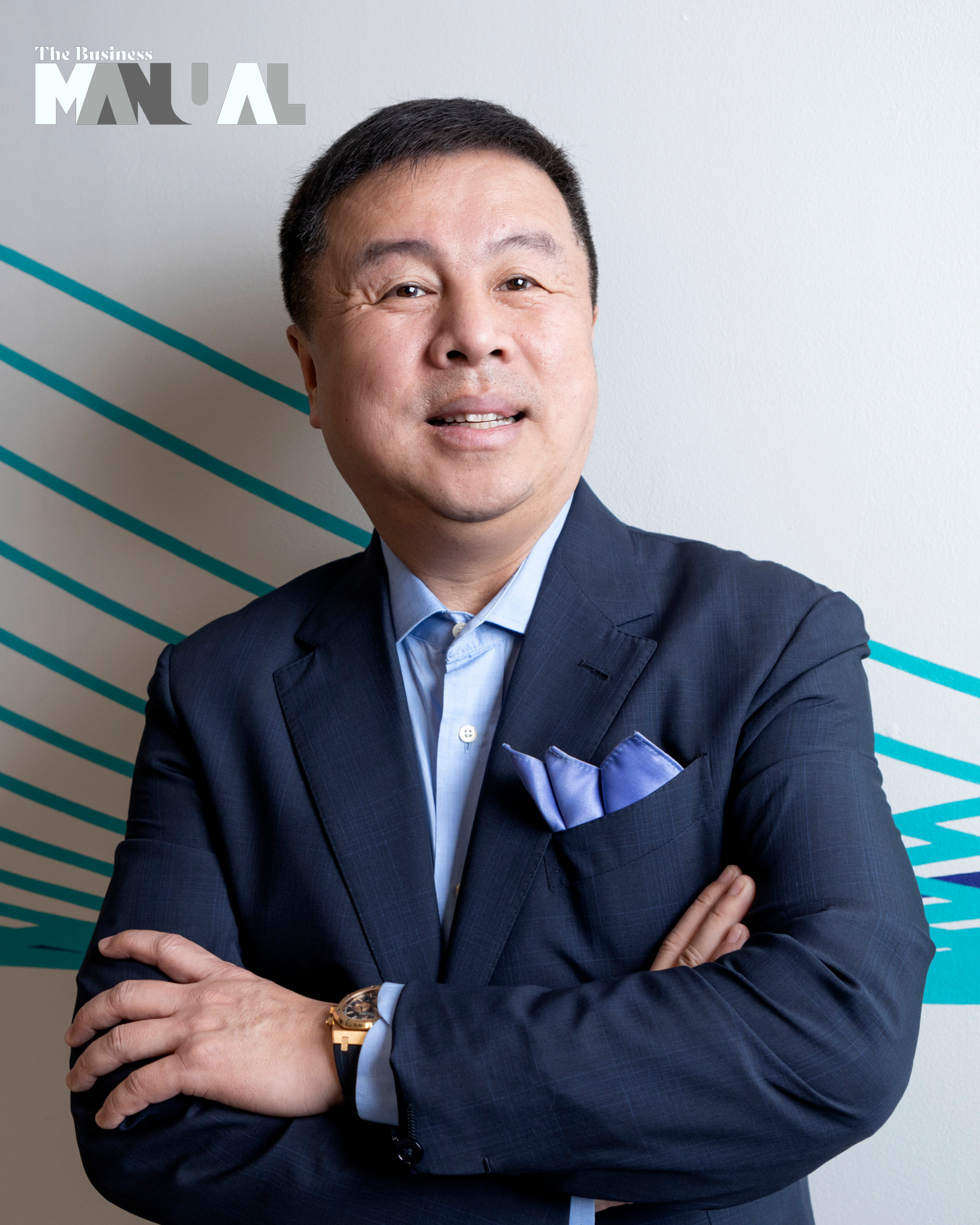
Bringing Together Business and Tech
Aside from working at his uncle's grocery store, Uy also sold Betamax and VHS tapes, which he sourced from Greenhills and brought back with him to Pampanga when he was in high school. And just as he grew older and wiser, so did the technology that accompanied him.
"You can see in the early days, nandiyan yung video, laser disc, computer. Lahat ‘yan. Repair. Diyan naguumpisa yung sa Greenhills eh," he recounts. "So you can see how the trend of technology evolved. So di ko binitawan ‘yan. Image, from Betamax, now it’s Netflix."
[Translation: You can see in the early days that video, laser disc, and computers...they were all there. Even repairs. They all started in Greenhills. So you can see how the trend of technology evolved. I won't let that go. Images—for example, used to be Betamax. Now, it's Netflix."]
"Bago ka makarating ‘yan, you need to have the infrastructure. Paano dumaan ‘yan? Meron kang network to be able to do that. Servers. So ‘yung trend, [goes through a lot of changes] before reaching that technology."
[Translation: Before you get to that point, you need to have the infrastructure. How does it go through that? You need a network. Servers. The trend goes through a lot of changes before reaching that technology.]
Ever so vigilant with the changes in technology, Uy would then make a business out of every opportunity he spotted. "Well, nakasabay din ‘yung… hunger for one to do business because [I am an] entrepreneur," he admits. "Yung una nga, sabi ko yung mga uso sa mga balikbayan from Saudi...iilang tapes lang. Betamax lang. Ang mamahal pa. So I started [a business] with my brother… 70 tapes in the supermart of my uncle. Doon kami nagtayo."
[Translation: This went hand-in-hand with the hunger for one to do business because I am an entrepreneur. At first, I said that it was popular for returning Filipinos from Saudi with Betamax tapes. And they were so expensive! So I started a business with my brother. 70 tapes in my uncle's supermart. That's where we set up our shop.]
Eventually, the evolution of technology caught up with them. "Nag-close ako ng 500 na reproduction machines," he says. "When the technology came—the cable TV—nakita ko ‘yun ang papatay sa Betamax and tapes. So ang ginawa ko, binenta ko lahat ‘yan. That’s my capital to start cable TV. I’m the Sky Cable of the province of Pampanga before. Sa Angeles ako nag-start."
[Translation: I closed with 500 reproduction machines. When technology came—cable TV—I saw that this was going to kill Betamax and tapes. So what I did was to sell everything. That was my capital to start a new business: cable TV. I'm the Sky Cable of the province of Pampanga before. I started in Angeles.]
"Then after that, [it] evolved to the digital, cable box, cable modem… and before cable modem—[which was] too expensive—we went to prepaid. Dial-ups," Uy goes on. "So ‘yung mga technology, di ko binitawan, including the distribution of the IT products, especially [the] products of Sun Microsystems—once bought by Oracle."
Not one to stay behind in all these advancements, the businessman even reveals that he brought in and sold different pieces of technology—even going so far as to supply telco companies before owning a telco company himself. "Itong mga PC, printer, all these branded products, I brought it to the Philippines. I’m the first distributor. Even the switches, binebenta ko sa network. Including the telco, nabebentahan ko before—bago ako naging telco."

On Spotting an Opportunity
The passion for technology—paired with Uy's well-honed business acumen—served as building blocks that led to many innovations and eventually, business ideas involving the internet.
Not to be left behind in the developments in internet technology, Uy also once offered prepaid internet service under the name of Instanet. Soon after, he saw an opportunity in the fiber optical business. This was his real claim to fame, as he was the first to bring the technology to the Philippines. In fact, long before fiber connections were common, Uy had laid out a network in Clark to serve hotels and businesses.
In 1996, Dennis Anthony Uy would go on to create ComClark Network and Technology Corp. (ComClark) in Angeles City, which formed Converge ICT Solutions, Inc. as a subsidiary in 2007 together with his wife, Maria Grace Uy.
"The telco kasi, especially my executives, ang alam nila, [they know about] investment—how much is the return," the Filipino-Chinese businessman explains. "My difference is [that] everything I invest [in] goes to the infrastructure. I personally know."
"Ako mismo kasi, I have a deep understanding of the technology, and I understand, at the same time, meron siyang [that it interplays with] business. Not necessarily how long will be the return," he adds.
A deep-set understanding of technology with a background in technology to show for it. While all internet CEOs boast of a strong business background, this is what sets Uy apart from them—along with a good understanding of the Filipino market, especially the low-income bracket. "The Philippines is totally a unique country compared to the rest of Asia Pacific kasi yung income level ng Filipino people is lower than other countries," he says. "So you cannot put, like, Rolls Royce, Mercedes Benz in the infrastructure [when] your recovery is too low."
But even so, he stresses the importance of quality. "Hindi mo naman pwedeng investan ng di maganda. But you can get [the technology] naman kasi you will always be behind compared to other countries."
Moreover, the businessman recounts when he and his wife’s first foray into the internet service provider (ISP) sector, saying that while he sourced his machines from the US, they weren’t brand new—a measure that allowed him to save on capital. This not only gave him the leverage to invest in better technology today, but it also allowed the company to cater to the mass market—something his competitors could not do.
“In fact, [back then], I sold all the telcos—three of them major [companies]—all the equipment kasi may available stock ako eh,” he adds. “So binibili namin per lot and we really make sure that the condition is working well, and we deploy."
Despite the low investment in technology, performance was key. And this has served Uy well as he was able to provide an affordable and accessible internet connection. "So, imagine, [our] investment against the new vendor itself is ten times [less]. The same performance, the same everything," the businessman says proudly.
"But you need to personally know and understand how this technology [works] to be able to compete with these brand new everything. But [being] behind a bit—a year or two—is fine [since] the function is there."

Going Up Against a Legacy Brand
Converge then faced its next hurdle: going up against industry leaders. In the telco industry, this translated to three major internet companies—legacy brands that have been built over the years. But was Uy afraid? "No. At the end of the day here, execution is very important," he says simply.
"Speed to the market and customer satisfaction. All these, you need to invest in, especially the technological advantage. If you bring the new technology, you [have an] edge over the competition," he continues. "So, as of today, sabi ko, our network is all optical, unlike yung iba, nagtatransform pa. [They're still transitioning to this new kind of network.]"