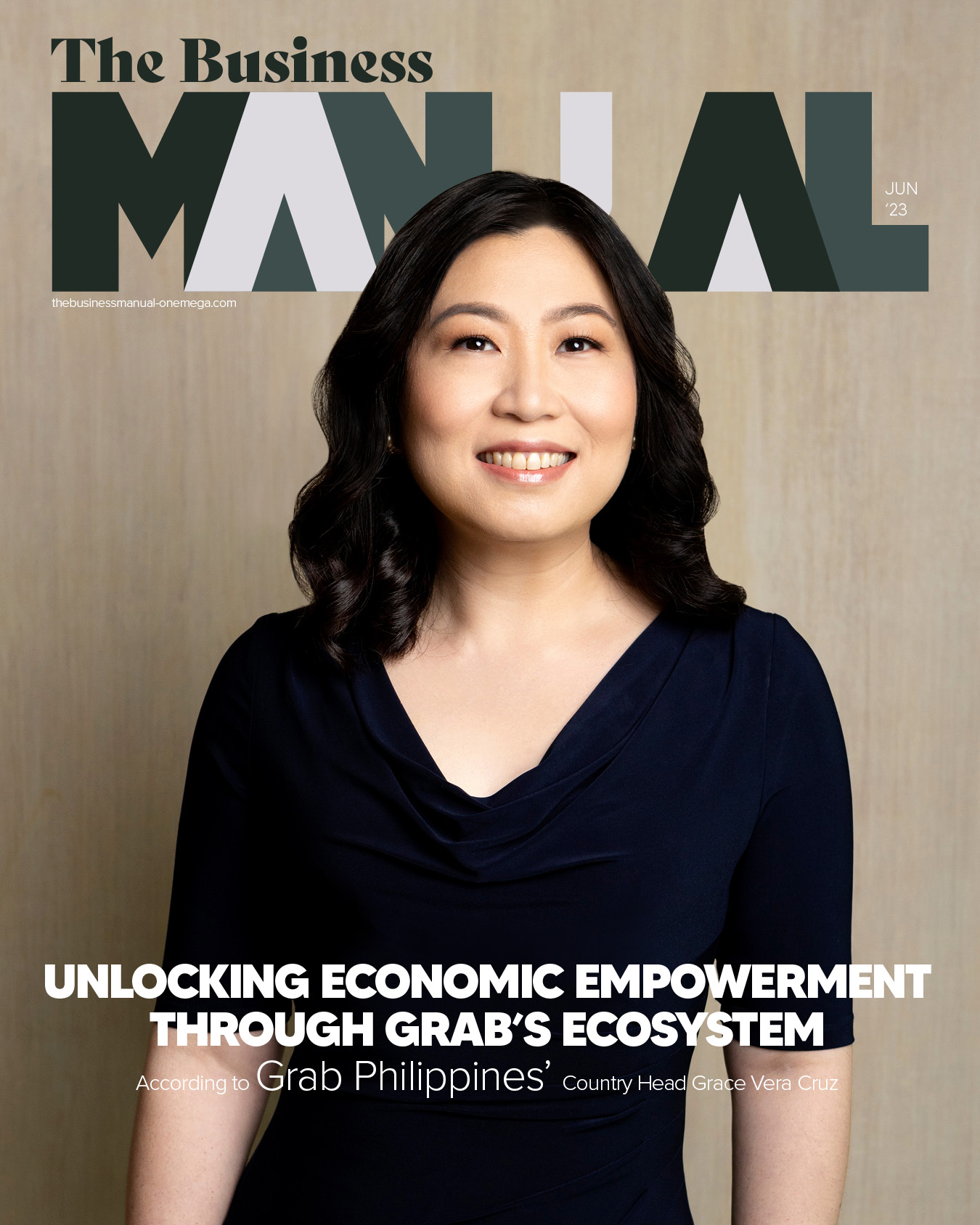
Unlocking Economic Empowerment Through Grab’s Ecosystem, According to Grab Philippines’ Country Head Grace Vera Cruz


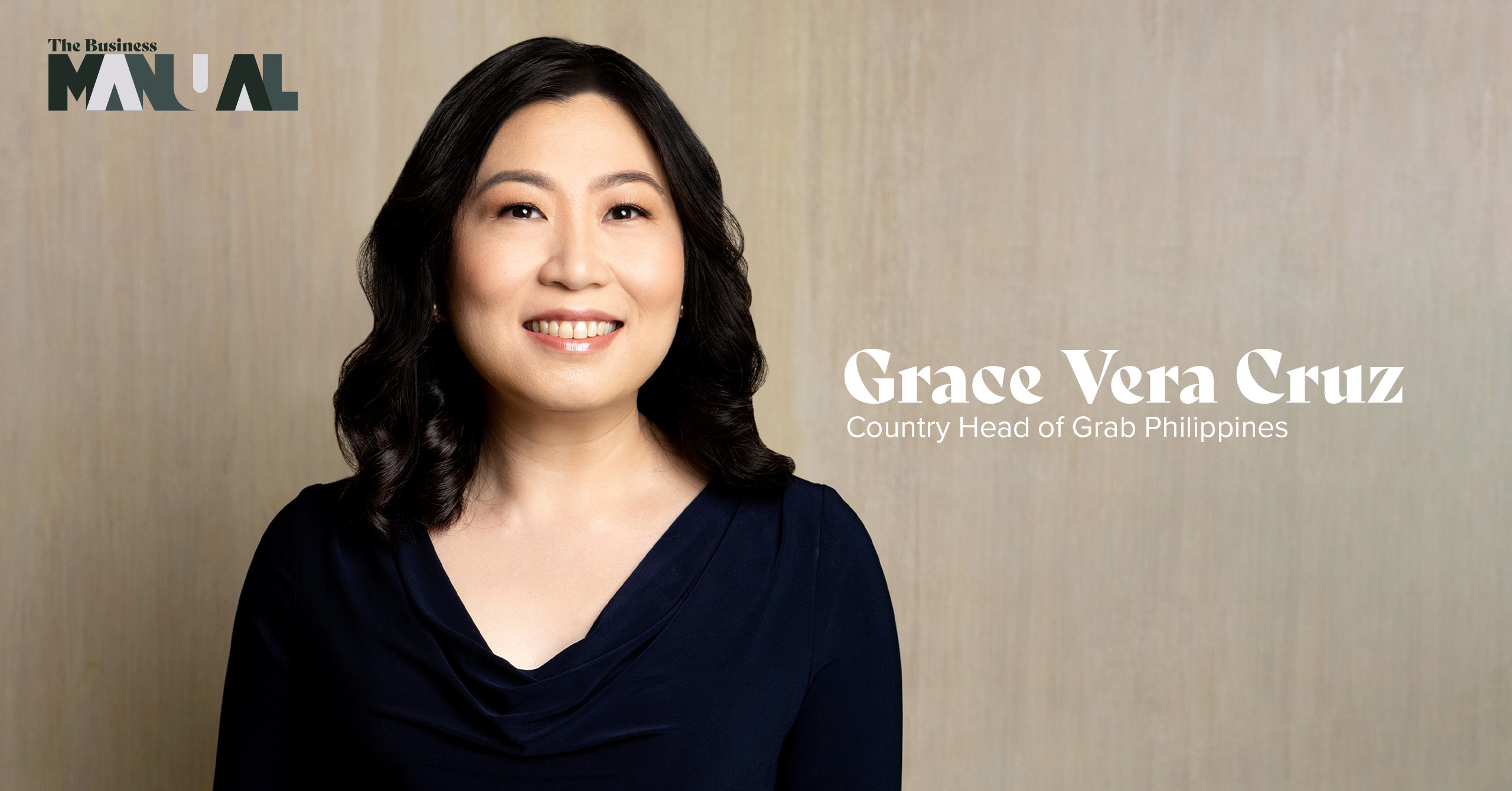
From providing livelihood opportunities for everyday entrepreneurs to uplifting the quality of life of many Filipinos, Grab’s Filipino-first approach has made it the leading superapp in the Philippines.
As the leading super-app in Southeast Asia, Grab has undeniably become a top-of-mind brand and the go-to choice for many with 214 million mobile downloads as of 2021. What’s more, Grab has a strong reach in Southeast Asia, as it can be found in 500 cities, across eight countries—Cambodia, Indonesia, Malaysia, Myanmar, Philippines, Singapore, Thailand, and Vietnam.
While Grab’s claim to fame started from its ride-hailing services—taking over a lion’s share of the overall ride bookings in the Southeast Asian region and millions in the average monthly bookings, the app has since then diversified its services to include providing food, groceries, and package delivery, concierge services, bill payments, and financial services.
As the only superapp in the Philippines and SEA that offers everyday services like mobility, deliveries, and financial services all in one app, Grab has won over the hearts and minds of Filipinos. And although the app grew to fame during the pandemic, when its services sustained the needs of almost every Filipino in lockdown, Grab Philippines’ business strategy proves that the company is more than just a one-hit-wonder.
In this exclusive interview with The Business Manual, Grace Vera Cruz, the Country Head of Grab Philippines reveals how they have succeeded through its Filipino-first thrust.
From Corporate Companies to Grab Philippines
Born and raised in the Philippines with a degree from the University of the Philippines, Grace is an accomplished multi-hyphenated woman in her own right. She is no stranger to the corporate world, having held key positions in companies like McKinsey & Co., CLSA Exchange Capital, and Shell—prior to being in Grab Philippines.
“I began my career as an intern at Shell before working for them full-time as a Retail Territory Manager. I did finance for so many years and management consulting for a few more. Then there was Grab Philippines,” Grace shares.
As the country head of Grab Philippines, Grace brings more than 15 years of business experience and vast industry knowledge from her many corporate endeavors to drive Grab’s mission in the Philippines.
Assuming command—during the height of the pandemic, no less—meant being exposed to a fast-paced environment that was full of risks. “I just gave birth to my second son and I knew that it was a tough environment for Grab and any business for that matter. It was a real challenge and I came in eyes wide open to the risks that came with the job,” Grace shares.
“As soon as I joined Grab, I realized how much responsibility we had—to our consumers, driver- and rider-partners, and merchants,” she continues. “And that we had the opportunity to impact and change lives for the better. It was a big realization and it is something that I carry with me until today.”
Addressing a Pain Point
To date, Grab has been in the Philippines for 11 years and since its arrival, its portfolio has grown in leaps and bounds. And even more so its brand presence here in the country! In fact, Grace notes that Manila was the second city that Grab entered after Kuala Lumpur, where both founders came from.
“The last 11 years have been wonderful for Grab Philippines,” Grace enthuses. “When I started in 2020, I knew I wanted to bring the company to the next level of growth.”
A Grab user herself, Cruz had big plans in mind for the platform—which meant laying the groundwork for the next 10 years. “Because I’ve had a long career, I’ve seen so much,” the country head explains. “Even before I joined Grab, I started to do my own research to know what it needs to bring it to the next level. So that’s what I really wanted to do. I wanted to bring Grab to the next level of growth [because] Grab has seen outstanding growth over the last ten years.”
During her first few months in Grab Philippines, however, the COVID-19 pandemic was at its peak. Strict lockdowns and rising cases meant limited access to basic needs. This was what greeted Grace the moment she took on the role. “At that time, it was very important [to] focus on our deliveries business. When I joined, our deliveries business was a fledgling business—it was just starting,” Grace reveals.
“During the pandemic, it grew quite a lot. In multiples,” she adds. “And delivering that service to both our merchants and our consumers in a very sustainable way was something that I wanted to achieve over the next two to three years.”
Looking back, many would lament the closures and the losses they’ve faced. But Grace faced the challenge head-on—spotting opportunities for growth and improvement that made Grab sustainable then. “The pandemic was the opportunity to grow our deliveries business and to partner with tens of thousands of merchants who wanted to survive and thrive in the new normal,” she explains. “Post-pandemic, we are seeing deliveries continue to hold and significant growth from enabling safe, reliable modes of transport for Filipinos.”
“We are also focused on serving more and more kababayans, near and far,” she continues. “Grab is now present in more than 100 cities and municipalities and is looking to grow this even further. Expanding sustainably is key.”
How Deliveries Paved the Way for Opportunities
Deliveries effectively bridged the gap from business to customer during the pandemic—and even until now—as they are accessible and convenient. But this also paved the way for more business opportunities. People could become riders and drivers, while business owners and merchants could bring their products to people, no matter what part of the country they were in.
With that in mind, Grace formulated a three-step plan for her sustainable business model. “Even during the pandemic, we were very focused on how sustainable the business should be,” Grace notes.
“Sustainability was number one not just for our people, but also for the people that we serve—our merchants [and] our drivers. When we put plans and structures in place, it has to be planned such that sustainability is one of our key goals both for the financial side and also for the environmental, social, and governance, or the ESG side of things. So that’s one.”
“The second is we really wanted to help the Filipino people,” she continues. “We [had] one of the longest lockdowns in the whole world—and actually a lot of uncertainty. We wanted to make sure that our delivery partners and our drivers and our merchants had the business or had their own livelihoods even after the pandemic. The question was, ‘How do we do that?’ That was a key thing for us that we put our plans around.”
“The third is really how do we partner with the government to make things better? And we do that quite a lot. We just promised 500,000 livelihoods to the President. We are super committed to that. Every single Grabber is working towards that big—very audacious goal—but we really believe that through the partnership that we have with this government, we could make it happen,” Grace says.

Sustainable Strategies for Grab Philippines
While deliveries and concierge—pabili—services thrived during the pandemic, the mobility side of Grab Philippines took a huge hit. This meant that its post-recovery was directly proportional to the country’s recovery from the pandemic. “At the same time, when your mobility business turns to zero, bringing it back up was such a big challenge,” she admits.
“And so, bringing that from zero to 100 is something that I’m still enjoying,” Grace says—not one to back down from a challenge. “We’re not there yet. We’re not yet at pre-pandemic levels.”
“Actually, at that point, it was all about survival, and one of the things we did was to create products around how they could survive,” Grace says.
“For our merchants, one of the things that we really thought about was during the pandemic, they really couldn’t build structures,” she continues. “They either had to work from home or they had to work inside their restaurants, but they couldn’t take on consumers. So we had to think—’How do we help them survive and thrive?'”
This meant diversifying its portfolio to go beyond transport and deliveries. These measures include:
Adding New Services
To create a sustainable business model that revolved around deliveries, Grace knew that she had to branch out. After all, in order to be a super app, Grab Philippines had to encapsulate and provide every single kind of service to answer the needs of every Filipino.
Take for example deliveries, which was a broad concept in itself. This led to the introduction of more specific services—GrabExpress for delivering packages, GrabFood for food and drink, as well as GrabMart for groceries and everyday essentials.
Long-distance Deliveries
GrabFood grew in popularity during the pandemic, as restaurants needed a platform to get their food and drink to people. Likewise, GrabMart was there to help people get their much-needed supplies and groceries.
However, another factor needed to be addressed: accessibility.
“We have long-distance deliveries. It’s one of the things we really pushed for—without any additional costs for our merchants during that time,” Grace says. “How can a merchant from Antipolo deliver to Makati? How can the merchant deliver from their house to the consumer at the lowest possible cost?”
Going Beyond Metro Manila
Metro Manila, being the hotspot for business, was thriving with Grab’s plethora of services. But the more far-flung areas needed help, too. And this was what Grace set out to do.
“The second thing we did during the pandemic for our merchants is really open up new cities,” she says. “So even as we [were] locked down throughout the Philippines, we opened [in] new cities during the pandemic because we believe as a marketplace—as someone who facilitates the delivery of food and other basic goods to our consumers—we need to bring this service to more people around the Philippines, not just Metro Manila.”
Grace Vera Cruz on Remaining Relevant—Post-pandemic
The COVID-19 pandemic may have brought more harm than good to businesses, but it did come with its share of lessons—some of which have already been expected, given that other countries have bounced back from the pandemic much earlier than the Philippines.
“First of all, we expected it,” Grace reveals. “The benefit of working in different countries is you get to share trends and information, and you get to share best practices. We were the last to open up across all of Southeast Asia, and that actually brought a lot of knowledge and wisdom on how to better handle the reopening of the economy.”
This meant remaining relevant to a world that was opening up. After all, in order to be a sustainable business, Grab Philippines needed to bring together practices that worked pre-pandemic, during the pandemic, and post-pandemic, too. “First, we stayed true to our mission, so we don’t want to be very focused on Grab. We want to be focused on our goal of driving everyone forward,” Grace points out.
“The merchants were actually struggling a little bit because the demand for dine-in went up significantly high,” she goes on to add. “So how do you balance dine-in and delivery? That was one of the things we brainstormed with our merchants. Do you increase [operating] time? Do you let them schedule their order? Do you give promotions in low time so they order there versus at peak periods like lunch? Those are the things we work with our merchants.”
To do so, Grab Philippines needed to help merchants ease in towards the overall reopening of the economy. “We brought the best knowledge we had from the other countries that have opened up before us and brought those to the Philippines. And actually, the results are good. We are, believe it or not, still growing our deliveries business,” the country head says proudly.
Opportunities for Success
Part of creating a sustainable plan for Grab Philippines meant spotting opportunities that the company can leverage or work on. According to Grace, these include:
Education and Road Safety
Overall, Grace envisions a collaborative relationship between businesses and Grab Philippines. And for that to happen, she lists opportunities that can help give Filipinos—not only a source of livelihood but also opportunities for personal growth and a renewed sense of purpose.
“I’ll start with the drivers. One of the things I realized was that a lot of our drivers lack formal education,” Grace laments. “So education is, I think, one focus area we should have as a country over the next few years. We need to go back and put back up our literacy levels.”
This strong need for education goes hand-in-hand with safety—specifically, road safety. “Motorcycle drivers, four-wheel drivers—they all need continuous safety training. It’s not a one-time thing. Safety is a mindset that, of course, we know, but I think that while we do the very best that we can, it will improve over time.”
Motorcycle Taxis
With mobility on the road to a slow but sure recovery, this meant exploring options beyond the existing GrabCar services. After all, catering to lower-income Filipinos means providing affordable and accessible services that will get them to where they need to be.
“For our mobility business, I see a lot of opportunities,” Grace says confidently. “We’re still undersupplied when it comes to our four-wheeled business, [but] we’re pushing for the legalization of motorcycle taxis.”
“This is something that we really hope enables many entrepreneurs to do their own livelihood outside of employment. So this is something that we believe improves transportation and also the lives of many Filipinos,” she adds.
Helping MSMEs Digitalize
The advancement of technology has given rise to more opportunities for businesses in the digital space. Being a tech company, Grab Philippines wants to give its merchants the opportunity to have a strong online presence and to be tech-savvy enough to adapt.
“For merchants, very few people understand digital advertising,” Grace explains. “I think that’s one of the things that will be very important as we go through the next phase of deliveries. Scan to order, payments online, and things like that will be very, very important as they progress in their delivery journey.”
Future-forward Goals of Grab Philippines
Beyond creating a go-to platform for Filipinos everywhere to get what they need, Grace’s future-forward plan includes putting the well-being and success of Filipinos front and center for Grab Philippines.
“We want to be the largest provider of livelihood and economic empowerment in the Philippines. That’s what we want to be,” Grace reveals. “We want to continue to be relevant to the people that we serve. We want to make sure that we deliver the best value for Filipinos. We want to make sure that we help the Philippine economy grow ‘cause, in our hearts, we’re Filipino.”
“I’m in Grab because I love the Philippines. I love our country and I want to use this platform to progress our country,” she declares.
And to do so, Grace needs to implement the three pillars that encompass Grab Philippines: profit, planet, and purpose. “We’re very purpose-driven—even when we started. It’s just that right now, the environment that we have [emphasizes] profits. Investors are looking at Grab to deliver profitability.”
But even so, the wheels of motion have been set. “We really want to drive Southeast Asia forward,” she declares. “That’s really what we’ve espoused, but let me translate that to the Philippines. The reason why we committed to 500,000 livelihoods in the Philippines is because we really believe that the Philippines will benefit from it.”
The country head also notes how the coming of Artificial Intelligence (AI) can affect this goal of providing livelihood opportunities. “We believe that there should be another form of livelihood for people that may be affected by AI,” Grace explains.
“We believe also that by providing livelihoods to many more Filipinos,” she continues. “We make the Philippines more prosperous, and that’s something that inspires all of [us at] Grab—not just in the Philippines but in the rest of Southeast Asia. The whole company works for the Philippines because the vision is so clear. We want to provide 500,000 livelihoods. So it’s something that we are all striving to do.”
Doing so also means tackling their mobility arm. “For the near future, we’re really focused on bringing mobility back up. We will have a lot of innovation in our deliveries business, and in our financial services, but mobility is very special—not just because it came from zero. It’s also because we need it as a nation,” she emphasizes.
“We need mobility options. The Philippines needs mobility options from Luzon to Mindanao. It’s being clamored by a lot of our consumers, and that’s something that we’re tirelessly working on.”
Wise Words of Advice
Having many years of experience under her wing, Grace comes with a wealth of experience that she is more than happy to share with aspiring entrepreneurs and young professionals, as she believes that they can and will make waves in both businesses and the country as a whole.
“Maybe not success hacks, but I would encourage everyone to dream big,” Grace says. “You know, I didn’t realize how big the world was until I went to business school—and now being with Grab because you interact with so many more people and expose yourself to the wider community that’s very global.”
“So I would really love for a lot of us who have seen the world to inspire others because I believe in dreaming big, and I believe in giving back. And that’s something we should do in this lifetime,” she ends.

Text DIANE NICOLE GO
Photography CYRUS PANGANIBAN
Videography EXCEL PANLAQUE and JR RAMIREZ assisted by KIM SANTOS of KLIQ, INC.
Video Producer GRANT BABIA
Art Direction MARC YELLOW assisted by DENIELLE CARAG
Sittings Editor RJ LEDESMA
Stylist CARL PABILONA
Hair and Makeup ANGIE CRUZ
Shoot Coordination GODWIN DOMINGO, SAMANTHA ABIERA, and TONI CALINGASAN
Shot on Location GRAB PHILIPPINES HEADQUARTERS
More From Leadership Lessons