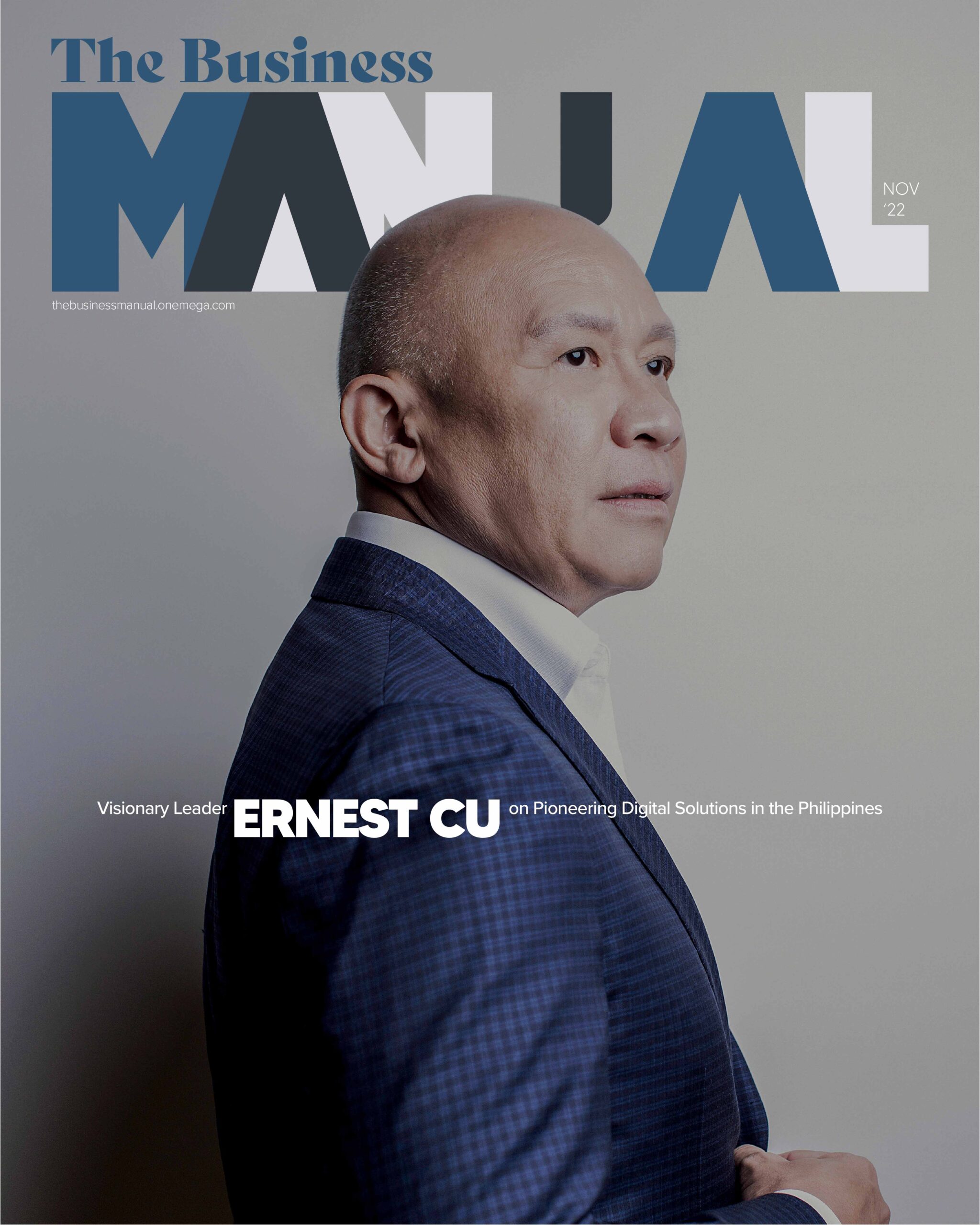
Visionary Leader Ernest Cu on Pioneering Digital Solutions in the Philippines


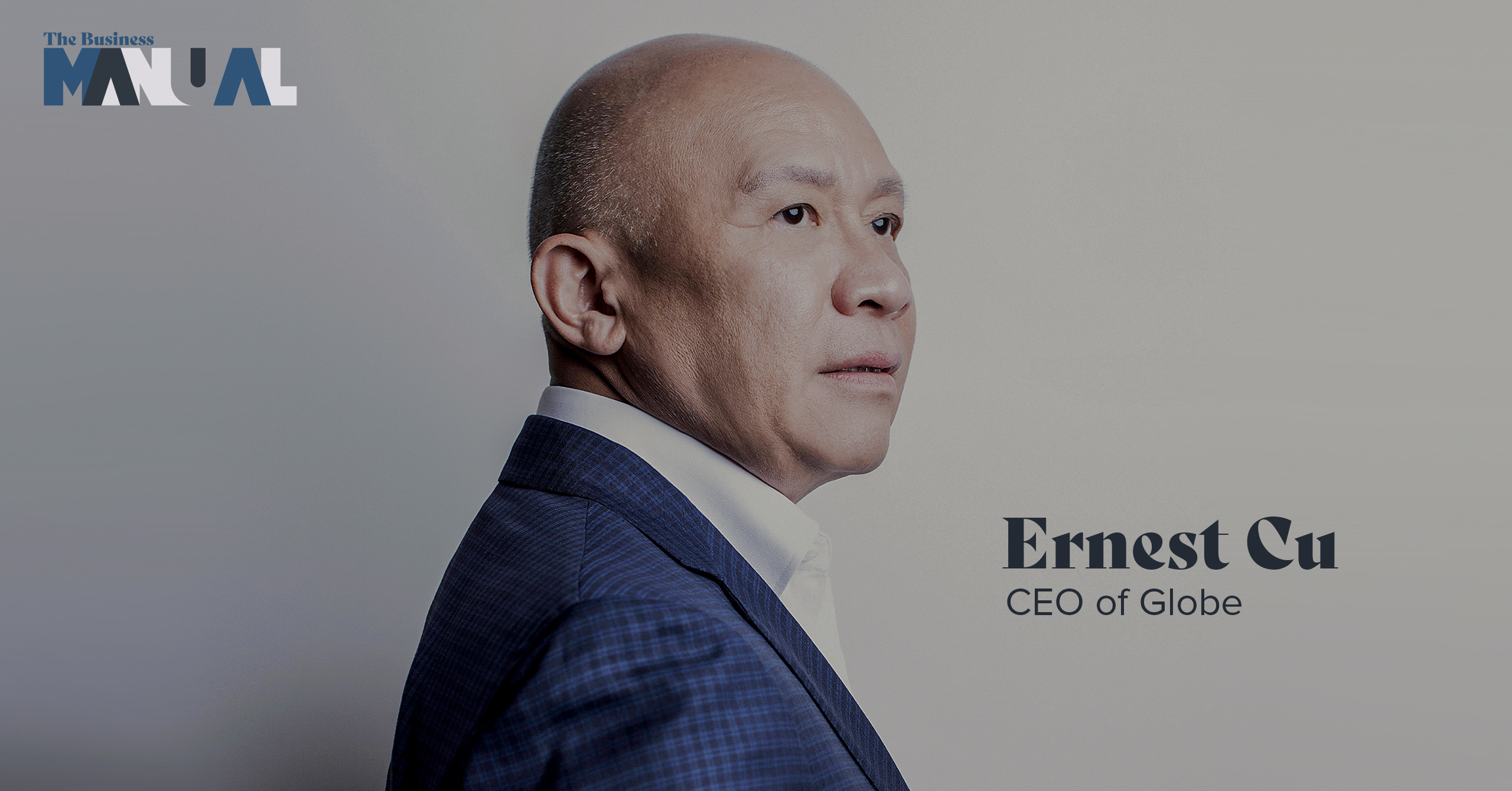
Globe Group President and CEO Ernest Cu has made his mark in the business world by redefining the BPO, Telco, and Fintech industries. Here's what he has planned next.
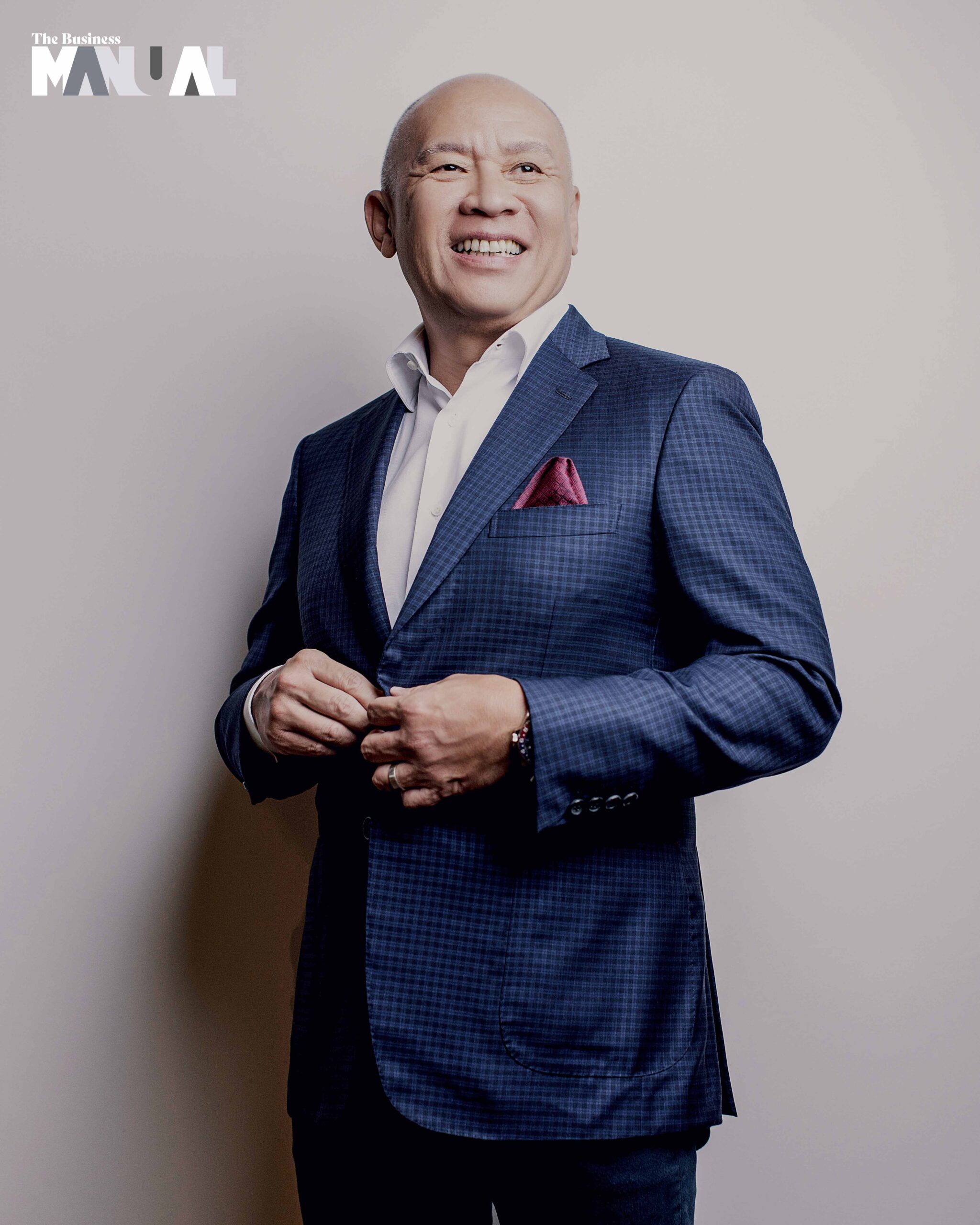
Who has not heard of Ernest Cu? A man with many achievements and credentials to his name, he is foremost known as the current President and CEO of Globe Telecom—the largest mobile network and digital solutions provider in the Philippines.
Before making waves in the telecommunications company, he was credited for pioneering the Business Process Outsourcing (BPO) model in the Philippines, which earned him recognition as one of its founding fathers. From there, his successes translated into many awards, which include being named the Best Telco CEO by London-based business magazine The Global Economics just this year.
These, however, are not a first for the serial awardee, as he too has been named the Best Telecommunications CEO at the 2021 International Finance Awards; Asia’s Best CEO by Corporate Governance Asia at their 10th Asian Excellence Awards in 2020; and CEO of the Year at the Asia Communications Awards in 2017, among many others.
All this stemmed from a journey that Cu himself shares with us in this exclusive feature.
An Entrepreneurial Spirit
While most study to be businesspeople, for Ernest Cu, it was ingrained in him while growing up. "I was trained to be an entrepreneur at an early age—handling my father's company employees while I was still in college," he reveals. "I had a leg up on the aftermarket business and had seen my father build it from scratch."
Armed with a Bachelor of Science Degree in Industrial Management Engineering from De La Salle University in Manila, and an MBA from the J.L. Kellogg Graduate School of Management at Northwestern University, the world was his oyster. But instead of setting his roots in the Philippines, he first sought greener pastures, where he began to build a life of his own in the US.
"I had experienced working as an employee in the Bank of America. In a short period of time, I found myself running the largest account in Southern California," he shares. "My first independent venture is a franchise of a printing company. Within our first year of operation, my partners and I found ourselves in the top 10 percent of the company's franchise network."
Things, however, weren't always smooth sailing, since he—like many others—was affected by the recession, where more than one and a half million jobs were lost, especially in the manufacturing and construction sectors.
Not one to back down from a setback, he persisted. Challenges like these, after all, come with lessons for growth. "If there is anything that I have learned from my father's business and my first own venture, it is [to] 'adapt or die.' Start young, and learn from past mistakes. I had made my first missteps, but knew I still had a long road ahead to make up for them."
The Catalyst for What's to Come
Soon after, Cu returned to the Philippines, where he was given an opportunity to be part of SPi Technologies—a technology and data science company—from 1997 to 2008.
Back then, the playing field was much more different. For one thing, there were only a few players in the BPO industry and there was a lot of room for improvement. "At the time [when] I was offered to be the President & CEO of SPi, there were about 30 people in another BPO then," he explains. "SPi came in with 900 or so people."
Numbers, however, were not everything. Cu needed to set himself apart from everyone else. "We had to define who we were. We had to pitch it to the world—to promote what was called 'IT-enabled services.' The BPO term came and stuck as the industry term for now.”
The result exceeded expectations. Thanks to his sharp business acumen and unparalleled leadership, the BPO industry has put the Philippines on the world's radar. As one of the fastest-growing industries in the country, it plays a significant role in the country's emerging economy, since it contributes over 11% to the Gross Domestic Product (GDP).
Building Blocks for Growth
After his stint as SPi, he took up the reins as the deputy CEO of Globe Telecom in 2008. A year after, he climbed the ranks as the President and CEO, with big dreams and plans in store for the telecommunications company.
"I started changing Globe with a 'Transformation House' in mind," he says, further explaining that this was a rudimentary schematic diagram that showed a triangular roof and four pillars that supported it. "I saw changes happening on multiple fronts—[from] assigning efforts toward Sales Transformation [to] Marketing Transformation, People Transformation, I.T., and Network."
As the catalyst of Globe's many transformations, his framework mainly focused on building. "Culture-building involved continuing to redefine Globe’s service according to its values. Brand-building involved fulfilling that promise to customers of creating wonderful experiences."
"And finally, nation-building enjoined creating a wonderful Philippines where families’ dreams come true, businesses flourish, and the nation is admired," he ends.
Globe's Key to Success
To date, Globe is the country's largest mobile network company in terms of revenues—with over 87.4 million mobile subscribers. The company's success, however, can be credited to Ernest Cu's leadership, which stemmed from many internal transformations and changes—starting with the employees themselves.
"The Circle of Happiness is one of those Globe things that appear simple," he shares. "It shows a cycle of fulfillment and gratification, with no beginning or end, allowing each component to be a cause and an effect. But in this circle, the Globe employee is also firmly situated as a beneficiary."
Storms, however, come and go, and for this chapter of Cu's career, it takes the form of the global COVID-19 pandemic. While most businesses buckle under the pressure, the CEO chose to face it head-on—even adapting, pivoting, and thriving because of it.
"The pandemic has highlighted the importance of digitalization as a way of doing business. Globe’s internal dynamics had a drastic change; however, we were able to adapt quickly as we have prepared digitization inside Globe," he explains.
He cites instances of digitalization within the company—from migrating almost all IT systems to the cloud (both private and public) to numerous system upgrades and using collaboration tools such as Zoom, Workday, and electronic signatures. In fact, Globe does a whopping 88,000 video calls in a month alone!
"The pandemic has not done anything to stall the company’s productivity," he beams. "And these days, video calls are a way of life for almost every person in the world. Globe will remain to be an innovation hub. We want to keep improving our services to stay relevant to the Filipino people."